Understand the Key Differences to Find Better Acoustic Solutions


When people start looking for ways to reduce noise, a common question keeps recurring:


Are acoustic panels and soundproofing the same?
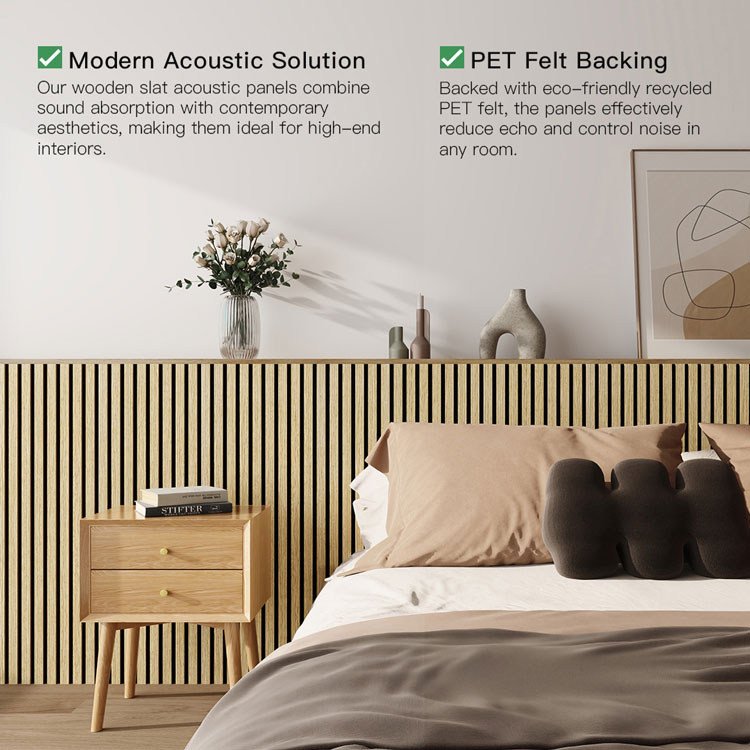
Customizable Acoustic Wood Slat Panels Supplier

In short, the answer is no—but a complete explanation is more valuable. Understanding the difference between acoustic treatments and soundproofing can help you choose the right solution, avoid unrealistic expectations, and allocate your budget wisely.


In this article, we will explain the differences between the two in a clear and easy-to-understand way, combined with expert insights from experienced acoustic panel manufacturers.


What are Acoustic Panels?


Acoustic panels are designed to improve the sound quality of a room by absorbing sound waves. They primarily target mid-to-high frequency reflections, reducing echoes, reverberation, and noise buildup.


Most acoustic panels are made of sound-absorbing materials such as:


Acoustic felt or PET fiber


High-density MDF board with backing


Mineral wool or foam core


Common forms of acoustic panels include wood strip acoustic wall panels, fabric-covered acoustic panels, and decorative acoustic systems.


Advantages of sound-absorbing panels:


Reduces echo and reverberation


Improves speech clarity


Enhances music and audio quality


Creates a more comfortable acoustic environment


What is soundproofing?


Soundproofing focuses on preventing sound from entering or leaving a room.


True soundproofing requires structural solutions to address the following issues:


Sound propagation through walls, floors, and ceilings


Vibration propagation within the building structure


Air gaps around doors, windows, and electrical outlets


Common soundproofing methods include:


Increasing mass (e.g., adding drywall, high-density sound insulation materials)


Structural vibration isolation (e.g., double-wall construction, flexible joists)


Sealing gaps with acoustic sealants


Structural treatment of floors and ceilings


Sound Absorbers vs. Sound Insulation: Key Differences


Aspects: Sound Absorbers, Sound Insulation


Main Uses: Improves indoor acoustics, Blocks sound propagation


Affects: Reflected sound within the room, Sound passing through the building


Installation Methods: Surface mounting, Structural modification


Cost: Medium, High


Typical Applications: Studios, offices, residences, apartments, shared walls, noisy environments


👉 Sound absorbers cannot replace sound insulation, but they are often the first and most practical step.


Why Sound Absorbers are Often Misunderstood as Sound Insulation Materials


Many people find their rooms quieter after installing sound absorbers. This leads them to mistakenly believe they have achieved soundproofing.


However, the reality is:


Echoes and reflections are reduced.


Sound energy is contained within the room.


Noise sounds less harsh and more comfortable.


However, external noise (neighbors, traffic, footsteps) can still be heard because the sound-absorbing panels are not heavy enough to block sound propagation.


How Sound-Absorbing Panels and Soundproofing Materials Can Work Better Together


In professional projects, sound-absorbing panels are often used in conjunction with soundproofing measures.


For example:


Soundproofing the wall structure to reduce noise transmission.


Installing wood strip sound-absorbing panels to optimize sound clarity and aesthetics.


This combination is widely used in:


Recording studios


Home theaters


Office meeting rooms


Hotel and commercial interior spaces


Why Wood Strip Sound-Absorbing Panels Are a Wise Choice


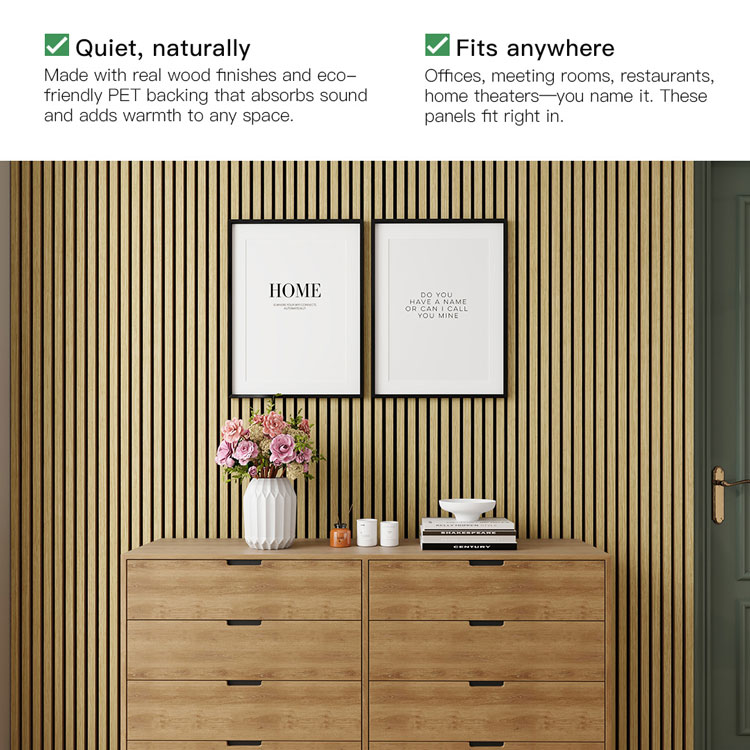
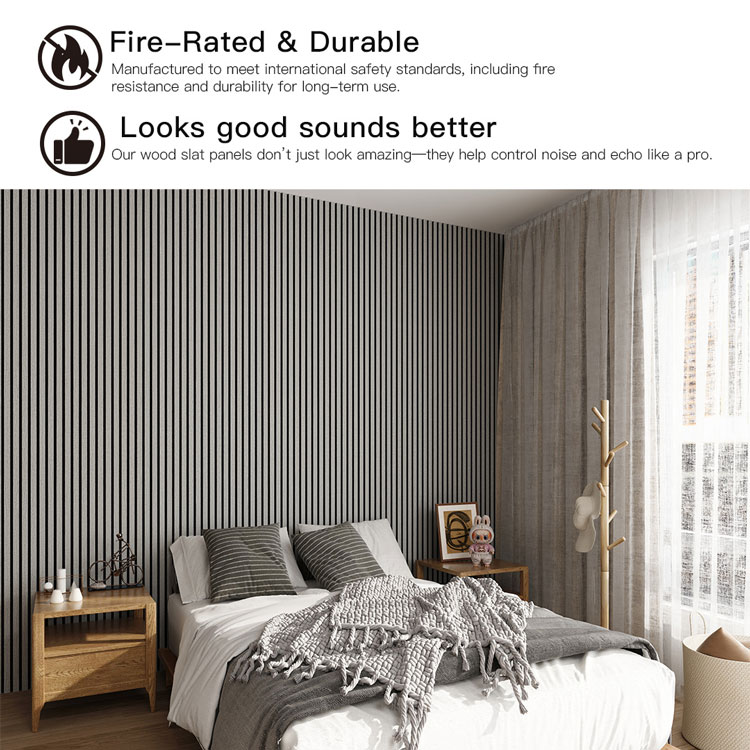
Wood strip wall panels offer unique advantages: they perfectly combine functional sound absorption with modern interior design.


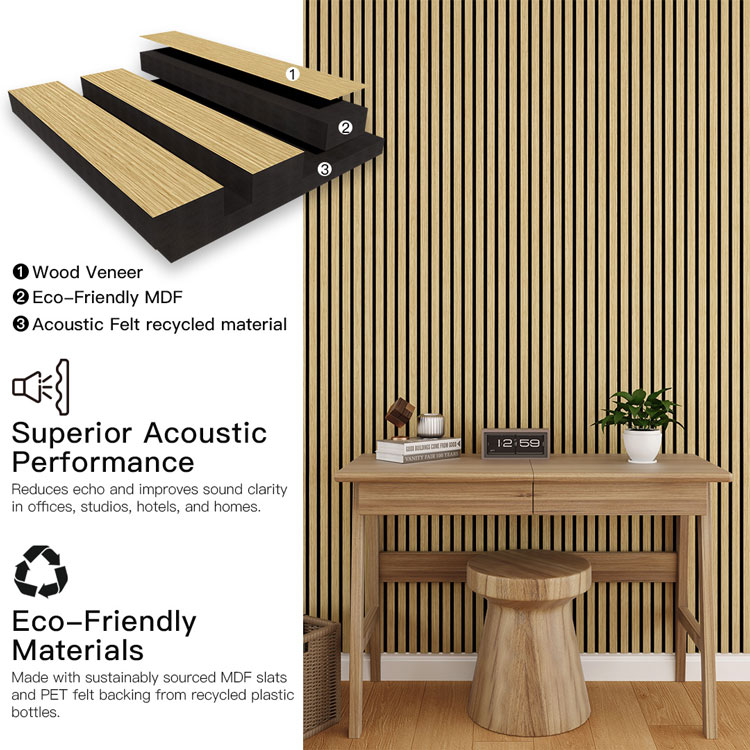
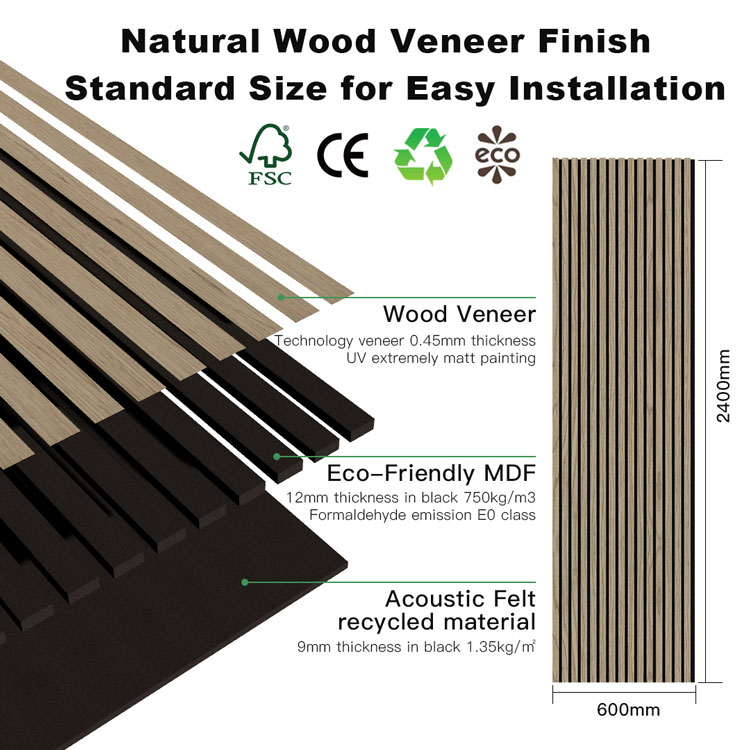
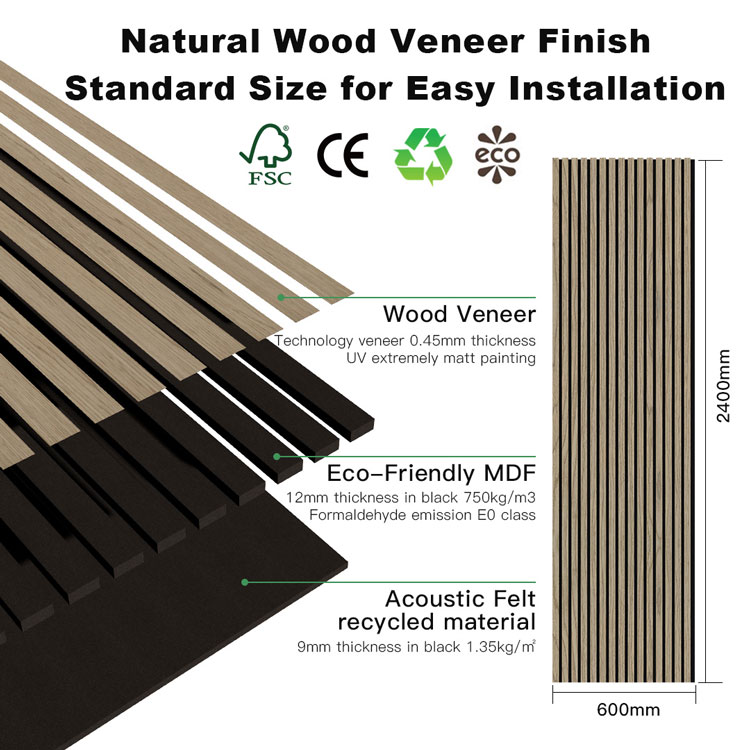
The strip-shaped medium-density fiberboard (MDF) surface helps diffuse sound, while the sound-absorbing felt backing absorbs reflected sound—making it ideal for both performance and aesthetics. Manufacturing Quality is More Important Than You Think


Not all sound-absorbing panels perform the same. Factors such as the density of the medium-density fiberboard (MDF), the thickness of the felt layer, cutting precision, and bonding quality all directly affect sound absorption.


Why Global Customers Choose Our(leeyin) Acoustic Products


🏭 20,000 square meters of modern production facilities


📦 Strong capacity for handling bulk and project orders


🌍 One of China's leading exporters of wood strip wall panels


📐 Strict adherence to international quality management standards


🎯 Stable performance, consistent dimensions, and exquisite craftsmanship


Our products are trusted by distributors, designers, and contractors worldwide.


So, are sound-absorbing panels and sound-insulating panels the same?


No—but they are both crucial.


Acoustic panels:


Improve indoor sound propagation


Enhance comfort, clarity, and usability


Sound insulation panels:


Block noise propagation between spaces


Requires a structural solution


Acoustic panels offer the highest return on investment for most residential and commercial interior spaces, especially when sourced from specialized manufacturers.
What Can and Can't They Do?

Neighbor noise is one of the most common complaints in apartments, townhouses, and shared office buildings. Many people choose acoustic panels as a quick solution—but do they really block neighbor noise?

High-Quality Acoustic Wood Slat Panels

In short: Acoustic panels help, but they don't completely block sound transmission.


To understand why, it's crucial to understand the difference between sound absorption and sound insulation.


Acoustic Panels vs. Sound Insulation: Key Differences


This is where most misconceptions originate.


Acoustic Panels


Reduce echoes, reverberation, and reflected sound


Improve indoor acoustic clarity


Absorb mid-to-high frequency sounds


Doesn't significantly increase wall mass


Sound Insulation Materials


Prevent sound from passing through walls, floors, and ceilings


Requires a certain level of mass, airtight structure, and vibration isolation


Usually requires structural modifications to the walls


Acoustic panels are designed to control sound, not completely block it.


So, do acoustic panels really reduce neighbor noise?


Yes—but the effect is indirect. Sound-absorbing panels can:


Reduce the perceived intensity of indoor noise


Absorb reflected sound, thus reducing noise from neighbors


Improve overall acoustic comfort


Reduce noise from next door, television, and music


However, they cannot completely prevent sound from penetrating shared walls.


Why is neighbor noise so easily transmitted?


Neighbor noise typically enters a room through:


Shared walls


Structural vibrations


Gap around outlets, doors, and ceilings


Thin drywall structures


Because sound travels as vibrations, blocking sound requires a large, airtight barrier, not just absorption.


How Wood Strip Sound-Absorbing Panels Can Help Improve Sound Insulation in Apartments


While sound-absorbing panels are not a complete soundproofing solution, wood strip sound-absorbing wall panels offer many practical advantages for shared living spaces.


Advantages include:


Absorbing reflected noise entering the room


Reducing booming sounds and harsh echoes


Improving speech clarity in home office environments


Creating a calmer, quieter listening environment


When installed on shared walls, they help control indoor sound energy, making neighbor noise less bothersome.


Optimal installation locations for reducing neighbor noise


For best results:


Install the sound-absorbing panels on shared walls


Cover the first reflecting area near seating or beds


Use sound-absorbing panels with high-density sound-absorbing backing


Coordinate with soft furnishings such as curtains and carpets


While this won't completely eliminate noise, it can significantly improve comfort.


When you need more than just sound-absorbing panels


If neighbor noise is severe, sound-absorbing panels should be used as part of a multi-layered soundproofing approach, including:


Sealing wall gaps and electrical outlets


Adding drywall or soundproofing materials


Using soundproof curtains or door seals


Combining sound-absorbing materials with high-density soundproofing materials


Sound-absorbing panels work best when used in conjunction with basic soundproofing measures.


Why is the quality of sound-absorbing panels important?


Not all sound-absorbing panels perform the same way.


Our company's wood strip sound-absorbing panels use the following materials:


High-density medium-density fiberboard (MDF) strips


Precisely cut sound-absorbing slits


High-quality PET sound-absorbing backing


Stable bonding process ensures long-term performance


This guarantees consistent sound absorption in residential and commercial applications.

One of the most frequently asked questions before undertaking any acoustic treatment of a space is:


How many acoustic panels do you need in a room?

Best Price Guarantee Acoustic Wood Slat Panels

In short—it depends on the specific situation.


The appropriate number of acoustic panels depends on the size, function, layout of the room, and the type of acoustic problem you want to solve.


In this guide, we'll explain it in a clear and practical way to help you make the right decision and avoid over- or under-treating.


The Actual Role (and Limitations) of Acoustic Panels


Before discussing specific numbers, it's important to understand one thing:


Acoustic panels absorb sound reflections.


They reduce echoes and reverberation.


They improve sound clarity and comfort.


They do not completely isolate room noise.


This means you don't need to cover all surfaces to achieve the desired effect.


General Principle: Coverage 20%–30%


The generally accepted guideline in acoustics is:


👉 Cover 20%–30% of the total surface area of ​​walls and ceilings.


Such coverage is sufficient to:


Control reflections


Improve speech intelligibility


Balance music and audio playback


For most residential or commercial spaces, it's rarely necessary to exceed this range.


How Room Size Affects the Number of Acoustic Panels


Small Rooms (Bedrooms, Home Offices)


Typical Area: 10–15 square meters


Recommended Number of Acoustic Panels: 4–8


Key Areas:


First Reflection Point


Wall behind the speaker or desk


Rear Wall


Even a small number of well-placed acoustic panels can bring significant improvement.


Medium-sized rooms (living room, home office)


Typical area: 15–30 square meters


Recommended number of panels: 8–16


Additions:


Side walls


Ceiling panels can be installed if needed


Suitable for larger areas with decorative wood strip acoustic panels


Large rooms (studios, meeting rooms, commercial spaces)


Area: 30 square meters and above


Recommended number of panels: 16 or more


Strategy:


Combined wall and ceiling treatment


Use large-size acoustic panels


Combined use of wood strip panels for both aesthetics and performance


Placement is more important than quantity


Using a small number of panels in appropriate locations is far more effective than randomly covering walls.


Priority placement areas:


First reflection point


Front wall (behind the speaker)


Rear wall (behind the listener)


Ceiling above the listening or working area


This method achieves maximum acoustic effect with minimal materials.


Are there too many acoustic panels?


Yes.


Over-processing the acoustics of a room can lead to:


a lifeless or unnatural sound


excessive high-frequency attenuation


creating an uncomfortable listening environment


Therefore, professional acoustic design focuses on balance, not comprehensive coverage.

Want to improve the acoustics of your room but don't have traditional acoustic panels on hand?


Here are some alternatives that can help reduce echoes and improve sound quality—although none of them can match the performance of professional acoustic panels.

Custom Solutions Acoustic Wood Slat Panels

✅ 1. Heavy Curtains


Thick fabrics help absorb mid-to-high frequency sounds.


Perfect for living rooms and bedrooms.


✅ 2. Rugs


Bare floors reflect sound. Laying down a soft rug can instantly reduce echoes.


✅ 3. Bookshelves Filled with Books


Bookshelves filled with books both diffuse and absorb sound—simple and effective.


✅ 4. Upholstered Furniture


Sofas, upholstered chairs, and cushions themselves absorb sound waves.


✅ 5. Homemade Foam Boards


While convenient, they are usually not dense enough and have poor fire resistance.

If you're planning to create a modern home theater or stylish living room, you might be wondering:


"Can I mount the TV directly on a sound-absorbing wall?"


In short: It's not recommended.


Here are the reasons and the correct installation method.

Top Supplier of Acoustic Wood Slat Panels – Factory Direct

❌ Why you shouldn't mount a TV directly on a sound-absorbing panel


Sound-absorbing panels—especially felt-backed wooden slats—are for absorbing sound, not for bearing weight.


Mounting a TV directly on acoustic panels may result in:


Insufficient structural support


Risk of panel damage


Unsafe installation


Degraded acoustic performance


✔ Correct way to install a TV using acoustic panels


You can perfectly combine a TV wall mount with acoustic panels—simply follow these steps:


1. First, mount the TV bracket on a solid wall.


The TV should be securely fixed to the following wall surfaces:


Concrete wall


Brick wall


Use suitable anchors to secure to drywall


Wooden frame


2. Install the acoustic panels around the bracket.


Leeyin's wood slat acoustic panels are precisely cut to perfectly fit the wall mount, providing a seamless, high-quality look.


3. Hide cables behind the panel.


Our panels have small gaps between the wood slats and felt backing—perfect for concealing cable management.

A tranquil bedroom is not accidental, but the result of careful design. Whether you're troubled by neighbor noise, street clamor, or indoor echoes, effective soundproofing can significantly improve your sleep environment.


Guangdong Leeyin Acoustics specializes in wood slat wall panels and acoustic panels, providing reliable professional acoustic solutions to customers worldwide.

Hot Selling Acoustic Wood Slat Panels

✔ 1. Install Acoustic Wall Panels


Installing high-quality acoustic panels—such as Liyin's wood slat acoustic panels—helps reduce echoes and absorb unwanted sound reflections.


They can also add warmth and modern aesthetics to your bedroom.


✔ 2. Soundproof Shared or Exterior Walls


For noise penetrating through walls, upgrading to high-density acoustic panels can significantly improve sound insulation.


Liyin's acoustic panels feature high-density felt backing and durable materials for superior sound insulation.


✔ 3. Seal door and window gaps


Even small gaps can leak sound. Use weatherstripping, bottom door seals, or thicker curtains to block noise transmission.


✔ 4. If the noise is coming from upstairs, address the ceiling


For footsteps or impact sounds from upstairs, combine soundproofing panels with additional soundproofing layers or a suspended ceiling soundproofing solution.


✔ 5. Add carpets, soft furnishings, and curtains


Soft materials help reduce noise reflection, creating a more comfortable acoustic environment.

Absolutely—and they are one of the most effective ways to improve the comfort of your apartment.


If you live in an apartment, you know how common noise problems are:

Custom Solutions Acoustic Wood Slat Panels

🔊 Living room echo


🔊 Neighbors' footsteps or voices


🔊 Traffic noise entering the room


🔊 Poor sound quality on the phone, TV, or music


While soundproofing panels can't completely block building noise, they do make a significant improvement in several important areas.


🎧 How soundproofing panels improve the acoustics of your apartment


✔ Reduce echoes and reverberation


Hard surfaces produce noisy reflections. Soundproofing panels—especially wood slats backed with PET felt—absorb sound, instantly quieting your space.


✔ Improve indoor privacy


By reducing sound reflections within a room, conversations, TV sounds, and everyday activity are less likely to travel through walls.


✔ Enhance work and leisure comfort


Perfect for:


💼 Home office


📺 TV wall


🎶 Music corner


🛏 Bedroom


🐶 Pet-friendly home (reduces dog barking echo)


✔ No major construction required


Sound-absorbing panels are ideal for apartments:


Easy to install


Easy to remove


No major renovations required


Stylish and modern

Neighbor noise can be annoying—footsteps, TV, conversations, even loud music. If you want to effectively insulate, reduce, or block these noises, the key is to use the right acoustic and soundproofing materials.


✔ 1. Add Sound-Absorbing Panels

Leading Acoustic Wood Slat Panel Distributor

Sound-absorbing panels help reduce echoes and control sound reflections within the room, thus reducing the impact of neighbor noise.


Liyin offers:


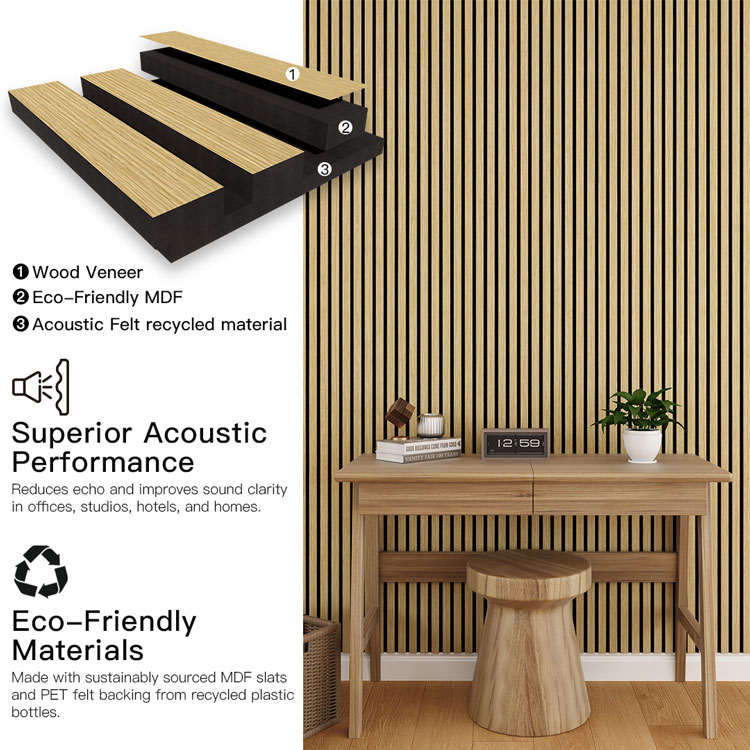
Wooden Strip Sound-Absorbing Panels (PET + MDF Core)


High-Density PET Sound-Absorbing Panels


Decorative Acoustic Solutions for Homes and Offices


✔ 2. Increase Wall Weight to Block Noise


To insulate or block sound, you need heavier materials.


Liyin's high-density MDF structure offers stronger sound insulation than standard MDF, helping to reduce sound propagation through shared walls.


✔ 3. Leave Air Gaps or Use Framing Strips


Leaving a small gap between the wall and the soundproofing panels can improve sound insulation.


Our soundproofing panels can be installed using either joists or clips, enhancing sound insulation without altering the interior style.


✔ 4. Sealing Gaps and Weak Points


Even small gaps can allow noise to penetrate. Seal the following areas:


Sockets


Door frames


Baseboards


Window edges


For even better sealing, use with Liyin soundproofing wall panels.


🪵 Why Choose Wood Slat Acoustic Panels?

At Guangdong Leeyin Acoustics, our wood slat acoustic panels are designed to offer both style and performance.

✔ Superior sound absorption with felt backing.
✔ Natural wood finish for modern, elegant interiors.
✔ Flexible coverage—use as partial wall designs or full feature walls.
✔ Eco-friendly and durable materials.

Our panels are widely used in homes, offices, studios, restaurants, and theaters, trusted by clients worldwide for their acoustic and visual benefits.


🏭 About Guangdong Leeyin Acoustics

As a leading manufacturer and exporter of wood slat wall panels and acoustic panels in China, Guangdong Leeyin Acoustics delivers world-class acoustic solutions.

  • 20,000㎡ modern factory with advanced technology.

  • International quality management standards for every product.

  • Strong global export presence in the acoustic panel industry.


Our mission is to provide clients with high-quality, cost-effective, and aesthetically pleasing soundproofing solutions.

Yes—and doing so is crucial for improving acoustic performance.


Many people believe that acoustic panels should be directly attached to the wall when installing them. However, leaving a small air gap behind the panel can significantly improve low-frequency absorption and enhance overall acoustics.

Premium Acoustic Wood Slat Panels Manufacturer

🔍 Why Leaving an Air Gap is Beneficial


Installing acoustic panels slightly off-wall can:


✔ Enhance low-frequency absorption


✔ Improve overall sound absorption efficiency


✔ Improve indoor acoustics without requiring additional materials


✔ Maximize the performance of wood strips and PET acoustic panels


Even a 1-2 cm gap can make a significant difference.


🎯 Best Practices from Acoustics Experts


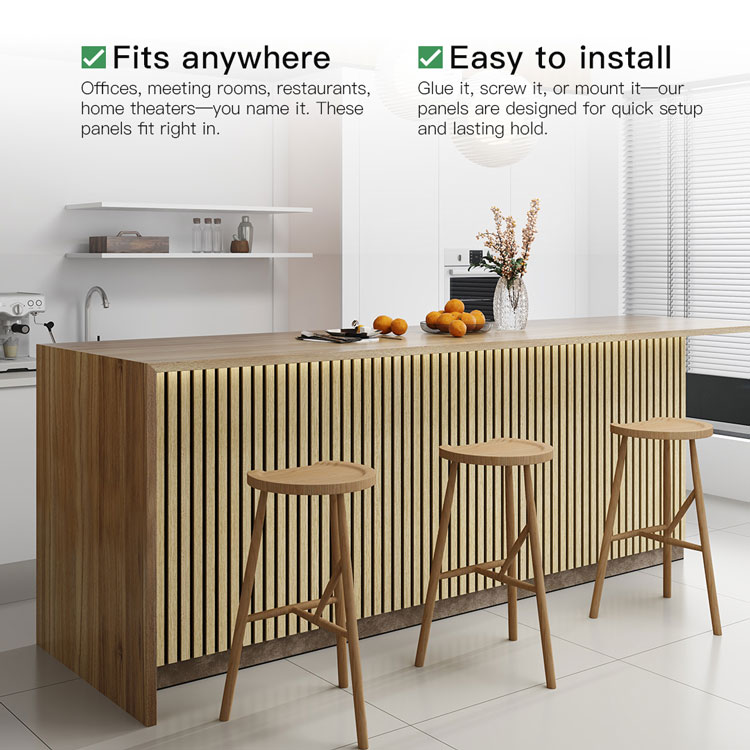
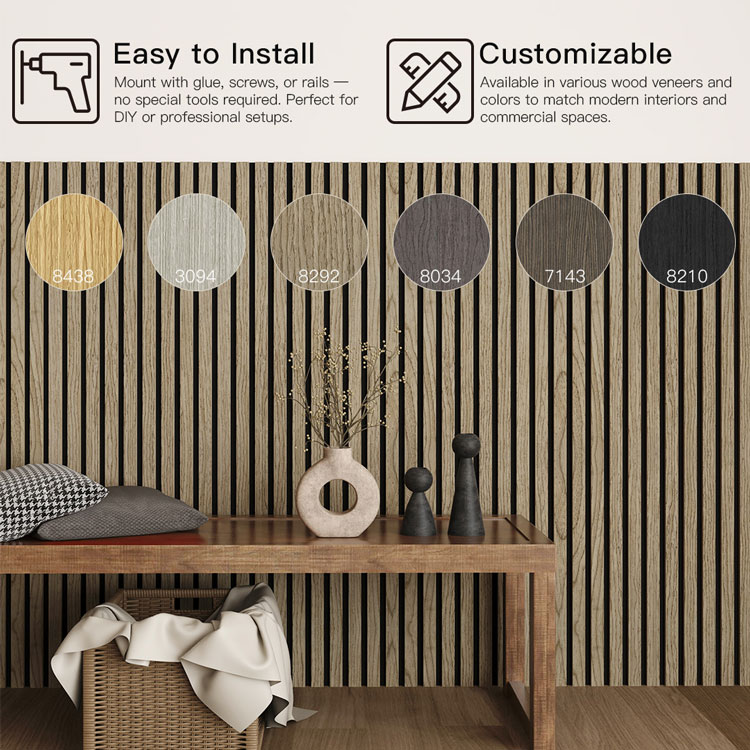
The wood strip wall panels and PET acoustic panels designed by Guangdong Liyin Acoustics Co., Ltd. deliver superior performance whether installed flush or with an air gap. Our panels can be installed using the following methods:


Snap-on


Wooden strips


Adhesive + gaskets


Acoustic frame


This flexible installation method allows users to create their ideal acoustic environment based on space, style, and acoustic needs.


Why Choose Guangdong Liyin Acoustics Technology Co. Ltd.?

1. Industry Leadership

As a leading manufacturer and exporter of Natural Oak Acoustic Slat Panels, our company has set the benchmark in the field, delivering superior quality and innovative designs worldwide.

2. Advanced Production Facility

Our 20,000-square-meter modern factory is equipped with state-of-the-art machinery, enabling us to meet large-scale demands without compromising on quality.

3. Strict Quality Control

We adhere to international quality standards at every stage of production, ensuring every wood slat panel we produce meets the highest expectations.

4. Eco-Friendly Practices

Sustainability is at the core of our operations. From sourcing natural oak to our production methods, we are committed to protecting the environment.

5. Global Trust

Our products, including akupanel and Natural Oak Acoustic Slat Panels, are trusted by customers across the globe for their outstanding performance

If you're planning to upgrade your space with acoustic panels but are worried they might affect your WiFi signal—the good news is: acoustic panels won't block WiFi signals.

Leading Acoustic Wood Slat Panel Manufacturer & Distributor

✔ Why Acoustic Panels Won't Affect WiFi


WiFi signals can easily pass through materials commonly used in acoustic panels, including:


Medium-Density Fiberboard (MDF)


Recycled PET felt


Wood veneer or PET/PVC finish


These materials don't contain metals or dense barriers that interfere with electromagnetic signals. This means your WiFi signal will remain strong even if you install acoustic panels in your room.


⭐ What Do Acoustic Panels Affect?


They improve the acoustic comfort of a room but don't affect WiFi signals.


Liyin Wood Strip Acoustic Panels are designed to:


Absorb echoes and reduce reverberation


Improve sound clarity in homes, offices, and recording studios


Add beauty and warmth with premium wood veneer finishes


Contribute to eco-friendly building using E0 grade MDF and recycled PET materials.

keyboard_arrow_up