When dealing with echo, reverberation, or general noise problems in a room, many people ask:

Should I install acoustic panels or just use heavy curtains?

Both options can improve room acoustics—but they serve different purposes and offer very different performance levels.

In this article, we’ll compare acoustic panels vs curtains, explain how each works, and help you decide which solution is better for offices, restaurants, commercial spaces, or home interiors.
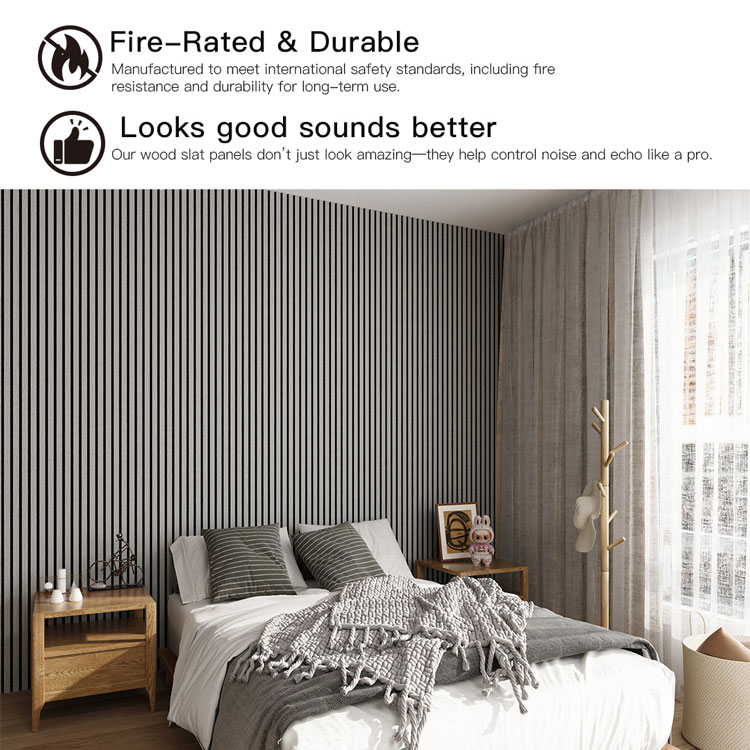
Factory Prices Acoustic Wood Slat Panels


Understanding the Problem: Echo vs Noise

Before comparing solutions, it’s important to clarify what kind of “noise” you are trying to solve.

Most indoor acoustic issues involve:

  • echo

  • reverberation

  • speech clarity problems

  • background noise buildup

  • “hollow” room sound

In open-plan offices, restaurants, conference rooms, and modern homes, the main issue is usually sound reflection, not soundproofing.


How Acoustic Panels Work

Acoustic panels are engineered materials designed to absorb sound waves and reduce reflections.

They typically consist of:

  • polyester fiber

  • mineral wool core

  • acoustic foam

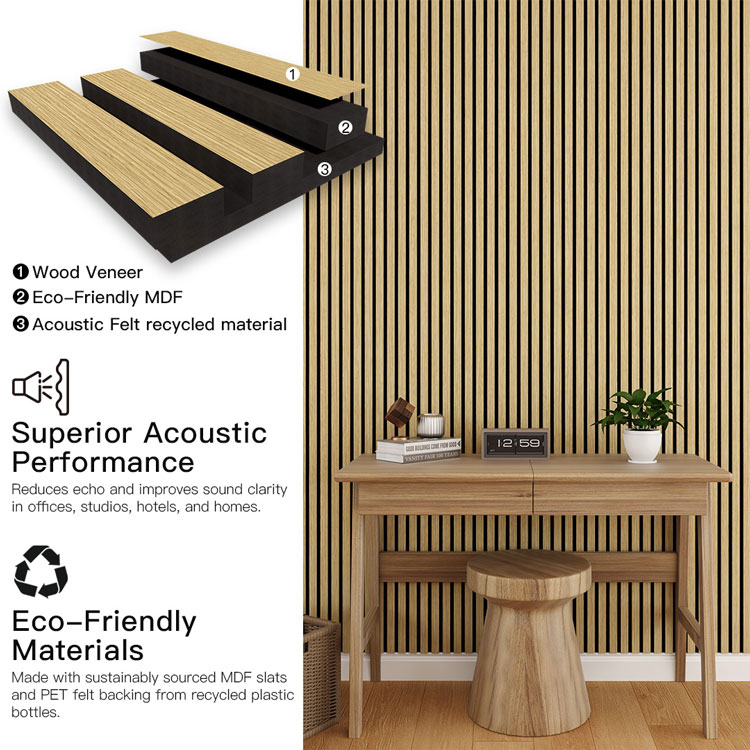
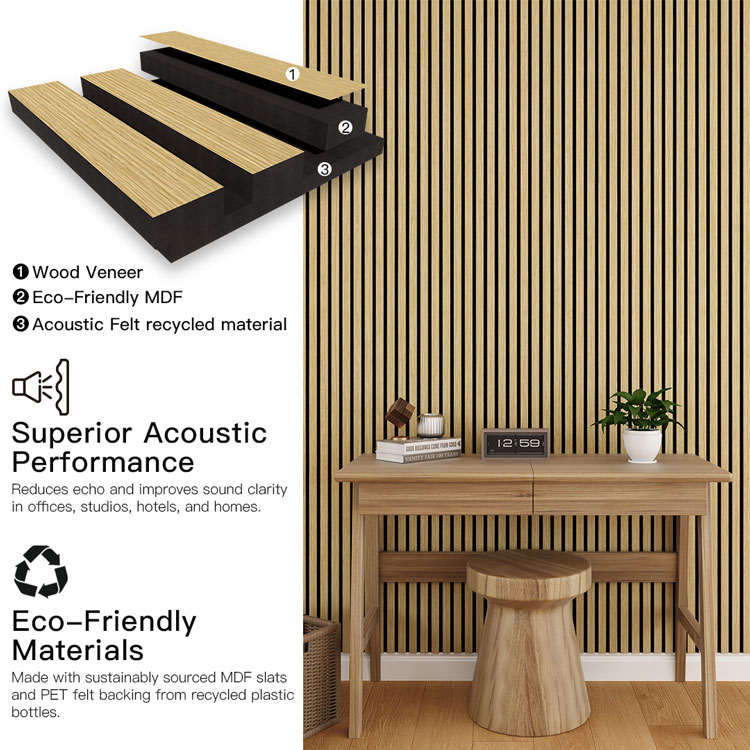
  • wood slats with sound-absorbing felt backing

When sound waves hit these panels, the sound energy is absorbed instead of bouncing back into the room.

Benefits of Acoustic Panels

✅ Significant echo reduction
✅ Improved speech clarity
✅ Reduced reverberation time (RT60)
✅ Professional acoustic performance
✅ Clean and architectural design options
✅ Suitable for walls and ceilings

Acoustic panels are widely used in:

  • open-plan offices

  • meeting rooms

  • restaurants and cafés

  • hotels

  • classrooms

  • home theaters


How Curtains Work for Noise Control

Curtains, especially thick blackout or velvet curtains, can also absorb some sound.

They work by:

  • softening reflections near windows

  • absorbing high-frequency sound

  • reducing minor echo

However, curtains are not specifically engineered for acoustic performance.

Benefits of Curtains

✅ Simple and affordable
✅ Easy to install
✅ Improve window reflection
✅ Add decorative softness to a room

But they also have limitations.


Acoustic Panels vs Curtains: Performance Comparison

Let’s compare them directly.

1. Sound Absorption Performance

Acoustic Panels:
Designed specifically to absorb sound across mid and high frequencies. Some thicker panels also absorb low frequencies.

Curtains:
Mainly absorb high frequencies. Minimal impact on mid-to-low frequency reverberation.

👉 Winner: Acoustic Panels


2. Coverage Flexibility

Acoustic Panels:
Can be installed on walls and ceilings for targeted acoustic treatment.

Curtains:
Usually limited to windows or wall sections with curtain rails.

👉 Winner: Acoustic Panels


3. Speech Clarity Improvement

Acoustic Panels:
Significantly improve speech intelligibility by reducing reverberation.

Curtains:
Provide minor improvement only if large areas are covered.

👉 Winner: Acoustic Panels


4. Design & Aesthetic Appeal

Acoustic Panels:
Modern wood slat designs create high-end architectural features.

Curtains:
Provide softness and fabric elegance but may not fit minimalist or corporate interiors.

👉 Depends on design goals


5. Durability in Commercial Spaces

Acoustic Panels:
Durable, long-lasting, suitable for high-traffic areas.

Curtains:
Require cleaning, can fade, collect dust, and wear over time.

👉 Winner: Acoustic Panels


When Are Curtains Enough?

Curtains may be sufficient when:

  • the room is small

  • echo is minimal

  • budget is very limited

  • the main reflective surface is a large glass window

  • aesthetic softness is the primary goal

In residential bedrooms or living rooms, thick curtains can slightly improve acoustics.

But in larger or commercial environments, curtains alone are rarely enough.


When Are Acoustic Panels the Better Choice?

Acoustic panels are strongly recommended when:

  • the room has hard floors and concrete walls

  • ceilings are high

  • the space is open-plan

  • speech clarity is important

  • noise buildup is noticeable

  • professional acoustic performance is required

In offices, restaurants, conference rooms, and coworking spaces, acoustic panels are far more effective than curtains.


What About Wood Slat Acoustic Panels?

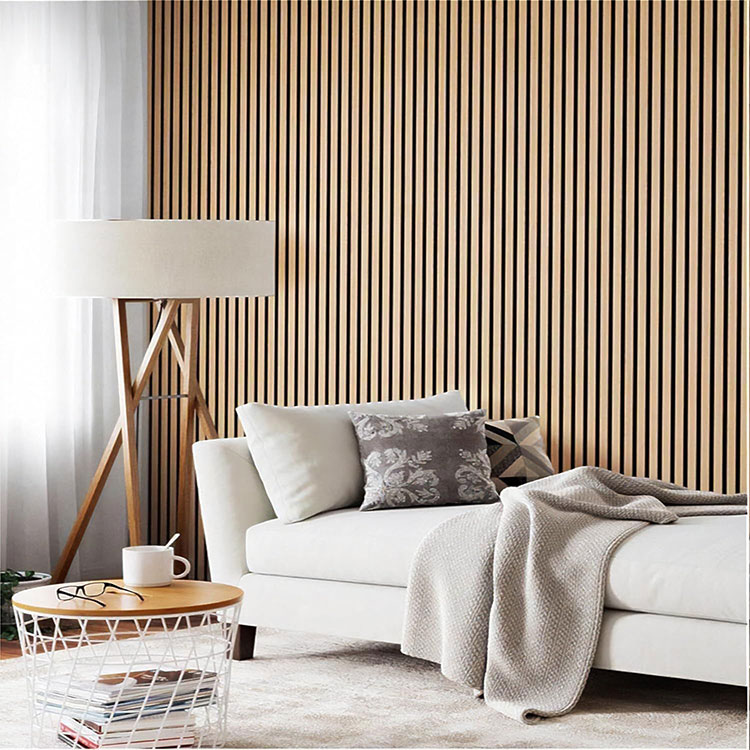
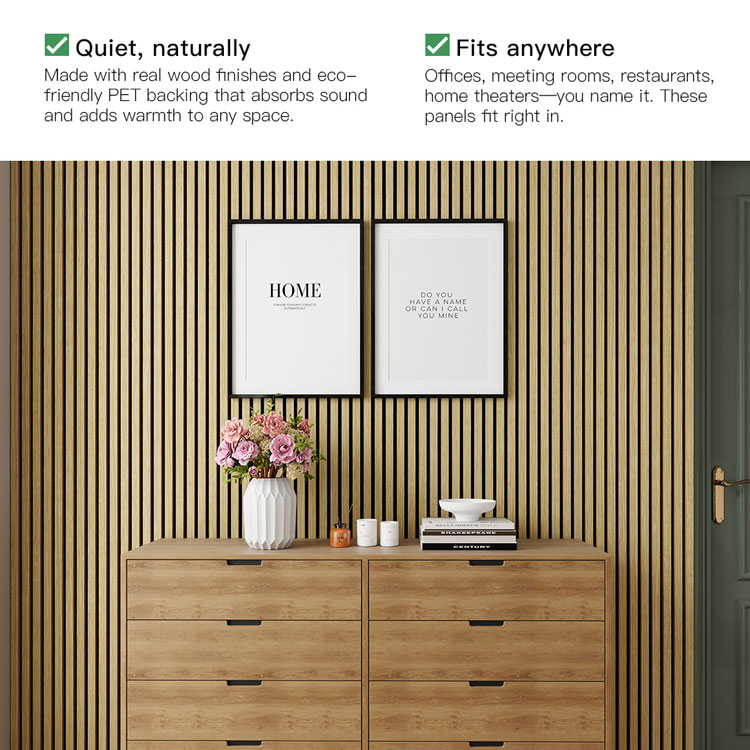
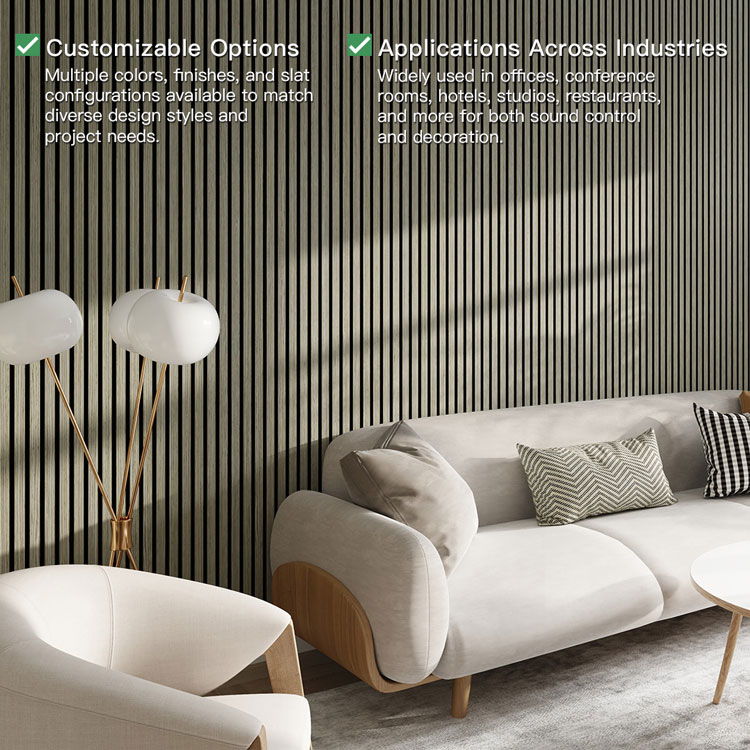
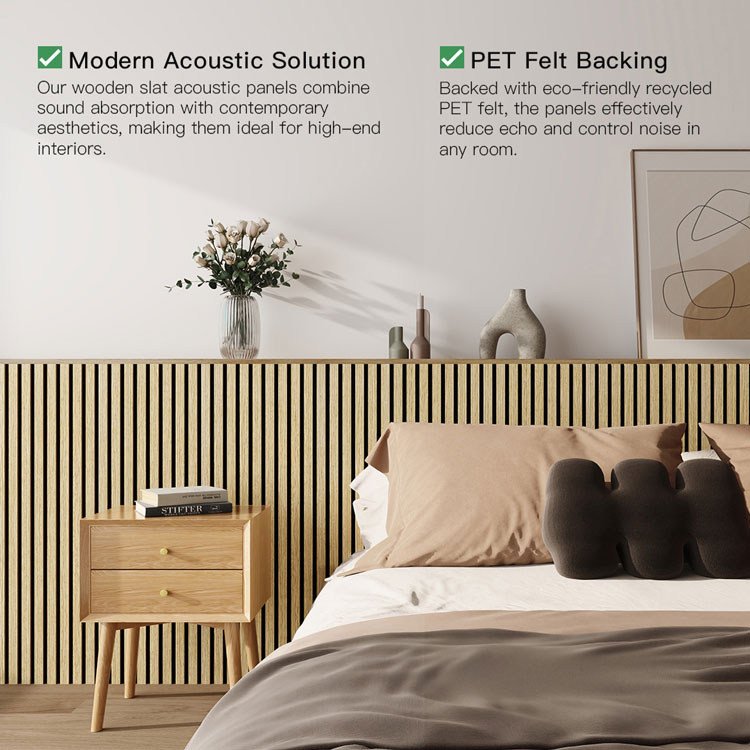
For modern interiors, wood slat acoustic panels are one of the most popular alternatives to fabric panels and curtains.

They combine:

  • decorative wooden slats

  • acoustic felt backing

  • professional sound absorption

  • contemporary architectural style

Unlike curtains, wood slat panels:

  • maintain a clean, structured look

  • do not block natural light

  • provide permanent acoustic treatment

  • improve brand image in commercial spaces

They are widely used in:

  • office feature walls

  • restaurant interiors

  • hotel lobbies

  • reception areas

  • home theaters


Do Acoustic Panels Replace Curtains?

Not necessarily.

In some designs, acoustic panels and curtains can work together:

  • Curtains soften window reflections

  • Acoustic panels treat walls and ceilings

  • Combined treatment produces better overall results

However, if you must choose one for serious acoustic improvement, acoustic panels are the more effective option.


Cost Comparison: Panels vs Curtains

Curtains

  • Lower upfront cost

  • Limited performance improvement

  • May require replacement over time

Acoustic Panels

  • Higher initial investment

  • Long-term durability

  • Stronger acoustic impact

  • Better return in commercial applications

For businesses, the improved comfort and productivity often justify the investment in professional acoustic panels.


Why Commercial Spaces Prefer Acoustic Panels

In offices and hospitality environments, acoustic performance directly affects:

  • employee productivity

  • customer comfort

  • meeting efficiency

  • brand perception

  • overall space value

Curtains cannot provide the level of control required in high-traffic, high-communication spaces.

That’s why professional interior designers and architects typically specify acoustic panels for commercial projects.


Guangdong Leeyin Acoustics: Professional Manufacturer of Wood Slat Acoustic Panels

At Guangdong Leeyin Acoustics, we specialize in manufacturing high-quality wood slat wall panels and acoustic panels for global markets.

As one of China’s leading exporters in the wood slat acoustic panel industry, we provide stable production capacity and consistent quality for distributors, contractors, and commercial project developers.

Our Manufacturing Strength

  • 20,000㎡ modern factory

  • advanced production equipment

  • strong large-scale production capability

  • strict quality management based on international standards

  • precise slat spacing and stable acoustic felt bonding

  • customizable veneer finishes and packaging options

Our wood slat acoustic panels are designed to meet the demands of modern interiors—delivering both aesthetic appeal and professional acoustic performance.


Final Verdict: Acoustic Panels vs Curtains — Which Works Better?

If your goal is serious echo reduction, improved speech clarity, and professional noise control, acoustic panels clearly work better than curtains.

Curtains may provide minor improvement in small spaces, but they cannot replace the performance of engineered acoustic panels.

For offices, restaurants, commercial spaces, and modern homes, wood slat acoustic panels offer:

  • stronger sound absorption

  • long-term durability

  • premium architectural appearance

  • improved comfort and communication

If you’re looking for a long-term solution to indoor noise problems, acoustic panels are the smarter investment.


FAQ: Acoustic Panels vs Curtains

Do curtains reduce echo?

Yes, but only slightly. Thick curtains absorb some high-frequency sound but do not significantly reduce reverberation in large rooms.

Are acoustic panels better than blackout curtains?

Yes. Acoustic panels are specifically engineered for sound absorption, while blackout curtains are designed for light control.

Can I combine curtains and acoustic panels?

Yes. Combining both can improve overall room acoustics.

Are wood slat acoustic panels better than fabric panels?


Both are effective, but wood slat panels provide stronger design impact and durability for commercial interiors.
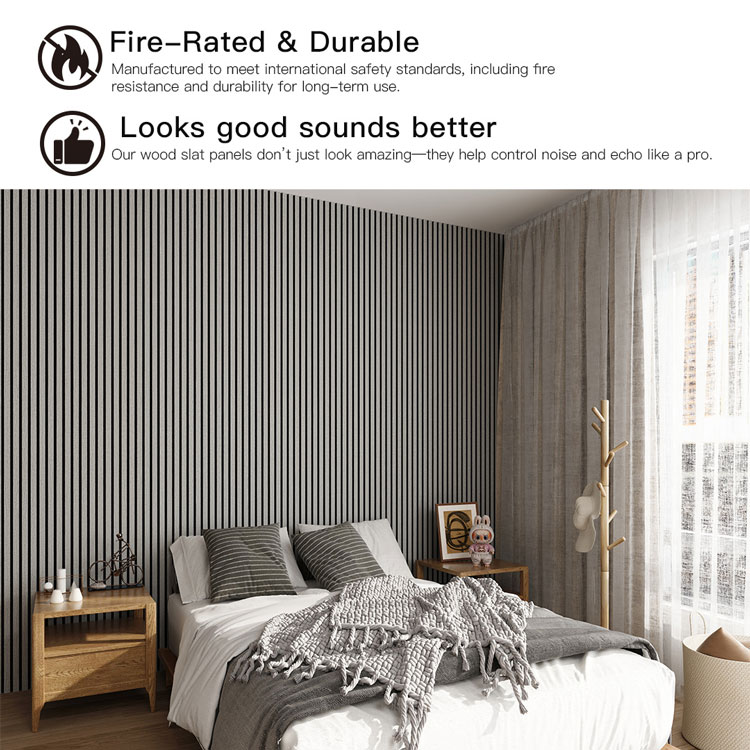
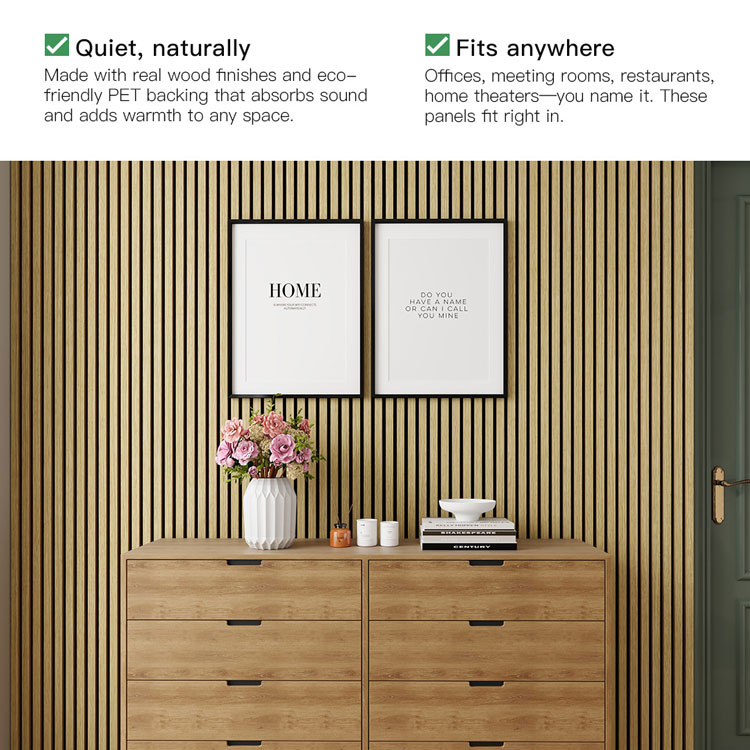
Noise control has become an important part of modern interior design. Whether in homes, offices, studios, or commercial environments, excessive echo and noise can reduce comfort and productivity. When searching for simple acoustic solutions, many people compare acoustic panels and curtains. Both can help improve sound conditions, but they work in different ways and offer different levels of performance.

In this article, we’ll compare acoustic panels vs curtains, explore how each option works, and help you determine which solution works better for your space.

Factory Direct Acoustic Wood Slat Panels – Best Price Guarantee


Understanding the Basics of Sound Control

Before comparing the two, it's helpful to understand how sound behaves indoors. Sound waves reflect off hard surfaces such as walls, ceilings, glass, and floors. These reflections create echo, reverberation, and background noise, which reduce speech clarity and overall acoustic comfort.

Acoustic treatment materials work by absorbing or diffusing sound energy, preventing excessive reflections. The effectiveness of any acoustic solution depends on:

  • Material density

  • Thickness

  • Surface area coverage

  • Installation position

Both curtains and acoustic panels aim to reduce sound reflections, but their design and acoustic performance differ significantly.


How Acoustic Panels Work

Acoustic panels are specifically engineered to control sound reflections. They are typically made from sound-absorbing materials such as polyester fiber, mineral wool, or acoustic foam, often combined with decorative surfaces.

Modern interior designs frequently use wood slat acoustic panels, which combine sound absorption with aesthetic wall decoration. These panels usually consist of:

  • Natural wood veneer or MDF slats

  • Acoustic felt backing

  • Sound-absorbing core materials

This layered structure allows acoustic panels to effectively reduce echo, control reverberation, and improve speech clarity in a room.

Key Benefits of Acoustic Panels

1. High Sound Absorption Performance
Acoustic panels are designed specifically for acoustic treatment, providing significantly better sound absorption than most soft furnishings.

2. Professional Acoustic Control
They help manage mid- and high-frequency sound reflections, making them ideal for offices, studios, meeting rooms, restaurants, and home theaters.

3. Modern Interior Design Appeal
Wood slat panels combine function and style, adding texture and warmth to walls while improving acoustics.

4. Long-Term Durability
Acoustic panels are stable, durable, and maintain their performance for many years without sagging or losing effectiveness.


How Curtains Help with Sound Control

Curtains can also contribute to basic sound absorption, especially when they are thick, heavy, and made from dense fabrics such as velvet or multi-layer polyester.

Curtains primarily work by absorbing a small portion of sound waves and reducing reflections from windows and glass surfaces.

Benefits of Curtains

1. Simple Installation
Curtains are easy to install and require no structural modifications.

2. Multi-Purpose Functionality
They provide privacy, light control, and some degree of sound absorption.

3. Cost-Effective Solution
Curtains can be an affordable option for minor acoustic improvements.

However, their sound absorption ability is relatively limited compared with professional acoustic materials.


Acoustic Panels vs Curtains: Performance Comparison

When comparing the two options, several factors should be considered.

1. Sound Absorption Efficiency

Acoustic panels provide much higher sound absorption performance because they are specifically engineered for acoustic treatment. Curtains mainly absorb high-frequency sounds but have limited impact on overall reverberation.

Winner: Acoustic Panels


2. Acoustic Coverage

Curtains are typically installed only over windows, which limits the total surface area available for sound absorption.

Acoustic panels can be installed on walls, ceilings, or entire surfaces, allowing for better control of room acoustics.

Winner: Acoustic Panels


3. Interior Design Impact

Curtains are mainly used around windows and may not significantly affect the overall design of a room.

Wood slat acoustic panels, however, have become a popular architectural feature, widely used in modern offices, hotels, and residential interiors.

Winner: Acoustic Panels


4. Installation Flexibility

Curtains are easy to install and move, making them convenient for temporary solutions.

Acoustic panels require installation but provide long-term acoustic improvement once installed.

Winner: Depends on application


When Curtains May Be Enough

Curtains may be suitable when:

  • The room has large glass windows causing echo

  • Only minor acoustic improvement is needed

  • Budget is limited

  • Temporary solutions are preferred

However, they rarely provide complete acoustic treatment in larger or more complex spaces.


When Acoustic Panels Are the Better Choice

Acoustic panels are the better solution when:

  • You need professional acoustic control

  • Speech clarity is important (offices, conference rooms)

  • The room has strong echo or reverberation

  • A modern decorative wall design is desired

In these cases, wood slat acoustic panels offer both acoustic performance and architectural beauty, making them a preferred choice for designers and architects.


Why Wood Slat Acoustic Panels Are Growing in Popularity

Wood slat acoustic panels combine natural wood aesthetics with advanced sound absorption technology. They are widely used in:

  • Offices and meeting rooms

  • Hotels and restaurants

  • Home theaters and living rooms

  • Recording studios

  • Commercial buildings

These panels provide a balanced combination of sound control, visual appeal, and durability, making them superior to traditional soft treatments like curtains.


Guangdong Leeyin Acoustics: A Trusted Manufacturer

At Guangdong Leeyin Acoustics, we specialize in the manufacturing and global supply of high-quality wood slat wall panels and acoustic panels.

As a leading exporter of wood slat acoustic panels in China, our company offers:

  • 20,000 square meters of modern production facilities

  • Advanced manufacturing equipment

  • Strict quality management aligned with international standards

  • Strong production capacity for global orders

  • Professional export experience serving clients worldwide


Our acoustic panels are designed to meet the needs of architects, interior designers, distributors, and construction companies, providing reliable acoustic performance and elegant design.

With the growing popularity of acoustic panels and wood slat wall panels, many homeowners, designers, and commercial project managers are incorporating them into living rooms, offices, meeting spaces, and entertainment areas. These panels improve sound quality while adding a modern architectural aesthetic.

However, a common question arises during installation:

Can you mount a TV on an acoustic panel wall?

The good news is yes—you can mount a TV on an acoustic panel wall, but the installation method must be done correctly to ensure safety, stability, and optimal performance. In this guide, we’ll explain how acoustic panels work, the best mounting methods, and practical tips for achieving a professional result.

Hot Selling Acoustic Wood Slat Panels


Understanding Acoustic Panel Walls

Acoustic panel walls are designed to reduce sound reflections, echoes, and background noise within a room. They are commonly used in:

  • living rooms

  • home theaters

  • offices

  • conference rooms

  • hotels

  • restaurants

  • recording studios

One of the most popular options today is the wood slat acoustic panel, which combines decorative wooden slats with sound-absorbing backing materials.

These panels typically consist of:

  • decorative natural wood or wood veneer slats

  • polyester fiber acoustic felt backing

  • a supporting wall structure behind the panels

While the panels themselves enhance acoustic comfort, they are not structural load-bearing materials. This is the key factor to consider when mounting a TV.


Can Acoustic Panels Support the Weight of a TV?

Acoustic panels alone are not designed to hold heavy loads such as televisions or large monitors.

Most acoustic panels are primarily made from:

  • wood veneer slats

  • MDF or solid wood strips

  • acoustic felt or polyester fiber

These materials are excellent for sound absorption but should not be relied on to support the weight of a TV bracket.

Instead, the TV mount must be anchored to the structural wall behind the panels, such as:

  • concrete walls

  • brick walls

  • wooden studs

  • metal framing systems

This ensures that the weight of the TV is supported by the building structure rather than the acoustic panel itself.


Best Method for Mounting a TV on an Acoustic Panel Wall

To safely mount a television, the installation should follow a few professional guidelines.

1. Locate the Structural Support Behind the Panels

Before installation, determine what type of wall is behind the acoustic panels.

Common structures include:

  • drywall with wooden studs

  • concrete or brick walls

  • metal framing systems

Use a stud finder or construction plans to locate the supporting structure.


2. Cut Small Openings for the Mounting Bracket

In some installations, the bracket may need to pass through the acoustic panel layer.

A small opening can be carefully cut in the panel to allow the mounting bracket to attach directly to the wall behind it. This keeps the installation clean while preserving the appearance of the panel wall.


3. Use Long Anchor Screws or Bolts

The screws must be long enough to pass through:

  • the acoustic panel

  • the mounting bracket

  • and securely into the structural wall

This ensures a stable and secure installation.


4. Install the TV Mount Bracket

Once the bracket is securely anchored to the wall structure, the TV can be mounted normally.

Most modern TV mounts—including fixed, tilting, or full-motion brackets—can be used with acoustic panel walls when installed properly.


Advantages of Mounting a TV on an Acoustic Panel Wall

Installing a television on an acoustic panel wall can actually enhance both visual design and sound quality.

Improved Sound Experience

Acoustic panels help reduce sound reflections and echoes, which can improve:

  • dialogue clarity

  • surround sound performance

  • overall listening comfort

This makes them particularly ideal for home theaters and media rooms.

Modern Interior Design

Wood slat acoustic panels create a sleek and contemporary backdrop for televisions.

They are widely used in:

  • luxury living rooms

  • corporate boardrooms

  • hotel suites

  • entertainment lounges

The natural wood texture adds warmth and sophistication to the space.

Hidden Cable Management

Acoustic panel installations often allow cables to be concealed behind the panels, creating a cleaner and more organized look.


Acoustic Panels Are Ideal for Home Entertainment Spaces

When designing a home entertainment wall, combining a mounted TV with acoustic treatment is becoming increasingly popular.

Benefits include:

  • reduced echo during movies and music

  • improved speech clarity in dialogue

  • better overall sound balance

  • a more immersive viewing experience

This combination is commonly used in home theaters, gaming rooms, and media walls.


Choosing High-Quality Acoustic Panels

For projects that combine acoustic performance with modern design, selecting high-quality panels is essential.

Important factors include:

  • durable wood slats

  • high-density acoustic felt backing

  • consistent panel spacing

  • environmentally friendly materials

  • precise manufacturing standards

Working with a professional acoustic panel manufacturer ensures both performance and long-term durability.


Guangdong Leeyin Acoustics: Professional Wood Slat Panel Manufacturer

Guangdong Leeyin Acoustics is a specialized manufacturer of wood slat wall panels and acoustic panels, providing acoustic solutions for residential, commercial, and architectural projects worldwide.

As one of the leading exporters of wood slat acoustic panels in China, our products are widely used in interior design projects across many international markets.

Strong Manufacturing Capabilities

Our company operates a 20,000-square-meter modern production facility, equipped with advanced manufacturing equipment and strict quality management systems that follow international standards.

Our advantages include:

  • large-scale production capacity

  • stable supply for global distributors and contractors

  • precise wood slat processing technology

  • high-performance acoustic materials

  • customizable panel designs and finishes

Our wood slat acoustic panels combine aesthetic architectural design with effective sound absorption, making them ideal for modern interior spaces.


Final Thoughts

So, can you mount a TV on an acoustic panel wall?

Yes—but the key is ensuring the mounting bracket is secured to the structural wall behind the panels, not the acoustic panels themselves.

With the correct installation method, you can safely enjoy the benefits of both:

  • a clean, modern TV wall design

  • improved acoustic comfort


Wood slat acoustic panels provide a perfect balance between functionality and visual elegance, making them an excellent choice for homes, offices, and commercial interiors.

In today’s modern interiors—offices, restaurants, classrooms, home theaters, and open-plan homes—people often complain about the same issue:

“I can hear voices, but I can’t understand what people are saying.”

This problem is not always caused by loud noise. In many cases, it’s caused by poor acoustics, especially excessive echo and reverberation. That’s where acoustic panels become an essential solution.

In this article, we’ll explain how acoustic panels improve speech clarity, why speech intelligibility matters, and how professional solutions like wood slat acoustic panels can create a more comfortable and productive environment.

Customizable Acoustic Wood Slat Panels Supplier


Why Speech Clarity Is a Common Problem in Modern Rooms

Modern architecture often prioritizes minimalism and open space design. While this looks stylish, it also creates acoustic challenges.

Many interiors include hard reflective surfaces such as:

  • glass partitions

  • concrete walls

  • wooden floors

  • ceramic tiles

  • exposed ceilings

  • large empty walls

These materials reflect sound waves instead of absorbing them. When people speak, their voice bounces around the room and overlaps with itself, causing speech to sound unclear or “muddy.”

This is known as reverberation.


What Is Speech Clarity (Speech Intelligibility)?

Speech clarity refers to how easily listeners can understand spoken words in a space. Acoustic engineers often describe this as speech intelligibility.

A room with good speech clarity allows conversations to feel natural, even at a normal speaking volume.

A room with poor speech clarity forces people to:

  • speak louder

  • repeat themselves

  • feel tired during meetings

  • lose focus during lessons

  • misunderstand important information

Over time, this becomes a major comfort and productivity issue.


The Main Enemy of Speech Clarity: Echo and Reverberation

To understand how acoustic panels help, you first need to understand what causes poor speech clarity.

Echo

Echo is a distinct repetition of sound caused by reflections from distant surfaces.

Reverberation (Reverb)

Reverberation is the continuous buildup of reflected sound in a room. It’s more common than echo and often makes voices sound unclear.

When reverb time is too long, spoken words overlap and become difficult to understand—especially in busy environments like offices, restaurants, or classrooms.


How Acoustic Panels Improve Speech Clarity

Acoustic panels are designed to absorb sound energy rather than reflect it. This reduces sound reflections and controls reverberation.

Here’s exactly how they improve speech clarity:

1. Acoustic Panels Reduce Sound Reflections

When sound waves hit a hard surface (like glass or concrete), they bounce back into the room.

Acoustic panels reduce these reflections by absorbing sound, which prevents voice signals from bouncing and overlapping.

Result: Speech becomes sharper and cleaner.


2. Acoustic Panels Lower Reverberation Time (RT60)

Reverberation time (often measured as RT60) is the time it takes for sound to fade by 60 dB after the source stops.

A room with high RT60 makes speech sound blurred.

By installing acoustic panels, RT60 is reduced, creating a clearer listening environment.

Result: Less “room noise” and more intelligible conversations.


3. Acoustic Panels Improve the Signal-to-Noise Ratio (SNR)

In a noisy environment, the listener needs to distinguish speech from background noise. This depends heavily on the signal-to-noise ratio.

When acoustic panels absorb reflections, they reduce the buildup of unwanted noise in the space.

Result: Voices stand out more clearly from ambient sounds.


4. Acoustic Panels Reduce Voice Fatigue

In rooms with poor acoustics, people unconsciously raise their voices to be understood. This leads to vocal strain, especially in:

  • open offices

  • classrooms

  • restaurants

  • meeting rooms

Acoustic treatment helps reduce the need for shouting.

Result: Better comfort for employees, teachers, and guests.


Why Speech Clarity Matters in Different Spaces

Speech clarity is not only about comfort—it impacts performance, safety, and customer experience.

Offices and Meeting Rooms

Poor speech clarity leads to:

  • inefficient meetings

  • communication errors

  • reduced productivity

  • stress and mental fatigue

Acoustic panels help offices create a professional environment where people can communicate clearly.


Restaurants and Cafés

Many customers leave restaurants because they feel the space is too loud. Even when noise levels are not extreme, reverberation can make conversation difficult.

Acoustic panels reduce reverb and improve the dining atmosphere.

Better speech clarity = better customer satisfaction.


Schools and Classrooms

Students need to clearly understand teachers. In classrooms with high reverberation, children struggle to focus, and teachers must speak louder.

Acoustic panels help create an effective learning environment.


Healthcare Facilities

Hospitals and clinics require clear communication between staff and patients. Poor acoustics can increase stress and lead to misunderstandings.

Acoustic panels improve privacy and speech clarity in consultation rooms.


Home Theaters and Living Rooms

Speech clarity is critical when watching movies. If dialogue sounds unclear, people increase volume, which creates discomfort.

Acoustic panels can enhance sound quality and dialogue clarity.


Do Acoustic Panels Work Better Than Soundproofing for Speech Clarity?

This is a common confusion.

Acoustic Panels

  • improve sound inside a room

  • reduce echo and reverb

  • improve speech clarity

  • control reflections

Soundproofing

  • blocks sound from entering/leaving a room

  • requires heavy construction materials

  • focuses on isolation rather than clarity

For improving speech clarity, acoustic panels are the correct solution.


What Types of Acoustic Panels Are Best for Speech Clarity?

Different materials and structures affect acoustic performance.

Fabric-Wrapped Acoustic Panels

These panels absorb mid and high frequencies well, improving speech clarity. They are common in offices and schools.

Polyester Fiber Acoustic Panels

Lightweight, eco-friendly, and effective for commercial interiors.

Wood Slat Acoustic Panels

Wood slat panels combine decorative design with acoustic performance. The slats work with an acoustic felt backing to absorb sound reflections.

They are especially popular in:

  • offices

  • restaurants

  • hotels

  • conference rooms

  • retail spaces

  • modern residential interiors


Are Wood Slat Acoustic Panels Effective for Speech Clarity?

Yes. Wood slat acoustic panels are highly effective in improving speech clarity when designed correctly.

They work by combining:

  • wood slats (for diffusion and design)

  • acoustic felt backing (for absorption)

  • optional insulation behind panels (for stronger performance)

This combination reduces reflections while maintaining a premium architectural appearance.

Unlike basic foam solutions, wood slat panels are suitable for commercial environments because they are:

  • durable

  • easy to maintain

  • visually attractive

  • highly customizable


Where Should Acoustic Panels Be Installed for Better Speech Clarity?

Placement is critical. Even high-quality panels will not work well if installed incorrectly.

Best Installation Areas

  • ceilings in open-plan spaces

  • walls behind seating areas

  • side walls in meeting rooms

  • walls opposite glass windows

  • areas near noise sources (cafés, restaurants, office printers)

A common professional approach is to treat first reflection points, where sound bounces directly back into the listening area.


How Many Acoustic Panels Are Needed to Improve Speech Clarity?

There is no one-size-fits-all answer, but in most cases, improving speech clarity requires treating:

  • 20%–35% of total wall and ceiling surface area

Spaces with hard surfaces and high ceilings may require:

  • 35%–50% coverage for best results

The goal is to reduce reverb without making the room sound “too dead.”


Key Factors That Affect Acoustic Panel Performance

When selecting acoustic panels for speech clarity, consider these key factors:

Panel Thickness

Thicker panels absorb more low-frequency sound, but speech clarity mainly depends on mid-frequency control.

Density and Core Material

High-quality core materials provide stable absorption and long-term performance.

NRC Rating (Noise Reduction Coefficient)

NRC indicates how much sound a panel absorbs on average. Higher NRC usually means better echo reduction.

Installation Method

Mounting directly on walls vs. using an air gap can affect absorption performance.


Guangdong Leeyin Acoustics: Professional Manufacturer of Wood Slat Acoustic Panels

At Guangdong Leeyin Acoustics, we specialize in manufacturing premium wood slat wall panels and acoustic panels for global residential and commercial projects.

We are one of China’s leading exporters in the wood slat acoustic panel industry, providing reliable supply for importers, wholesalers, contractors, and interior designers worldwide.

Why Buyers Choose Guangdong Leeyin Acoustics

  • 20,000㎡ modern production facility

  • strong mass production capacity for large-scale projects

  • strict quality control based on international standards

  • stable veneer finishing and consistent slat alignment

  • customizable colors, sizes, and packaging

  • export-ready logistics support for global markets


Whether your project requires modern acoustic design for offices, hospitality spaces, or home interiors, we provide professional solutions that combine sound performance and architectural

In recent years, wood slat acoustic panels have become one of the most sought-after design elements in residential and commercial interiors. From luxury homes and modern offices to hotels, restaurants, and retail spaces, these panels are appearing everywhere in contemporary architecture. But what exactly is driving their popularity?

The answer lies in their unique ability to combine aesthetic beauty, acoustic functionality, and architectural versatility—three qualities that are essential in modern interior design.

In this article, we’ll explore why wood slat acoustic panels are trending in modern interiors and why they have become a preferred choice for designers, architects, and developers worldwide.


Premium Acoustic Wood Slat Panels ManufacturerThe Rise of Multi-Functional Interior Materials

Modern design is no longer just about creating beautiful spaces—it’s about creating environments that are:

  • Functional
  • Comfortable
  • Sustainable
  • Visually appealing

Today’s clients want materials that do more than simply look good. They expect products to improve the usability and comfort of a space while supporting modern aesthetics.

Wood slat acoustic panels meet all of these demands by offering both decorative appeal and acoustic performance in one product.


1. They Combine Style and Acoustic Performance

One of the biggest reasons for the growing popularity of wood slat acoustic panels is that they provide two major benefits in one solution:

Decorative Appeal

Their sleek linear design and natural wood finishes create a modern, elegant appearance that enhances interior aesthetics.

Sound Absorption

The acoustic felt backing and slatted construction help reduce:

  • Echo
  • Reverberation
  • Background noise

This makes spaces more acoustically comfortable while maintaining visual sophistication.


2. They Match Modern Design Trends Perfectly

Wood slat acoustic panels align seamlessly with today’s most popular design styles, including:

  • Minimalist interiors
  • Scandinavian design
  • Japandi aesthetics
  • Contemporary architecture
  • Biophilic/nature-inspired spaces

Their clean lines and natural textures make them ideal for interiors focused on simplicity, warmth, and balance.


3. Natural Wood Adds Warmth to Interiors

Many modern interiors use materials like:

  • Concrete
  • Glass
  • Steel
  • Stone

While these materials look sophisticated, they can sometimes make spaces feel cold or sterile.

Wood slat acoustic panels help soften these environments by introducing:

  • Warm natural tones
  • Organic textures
  • Visual depth

This creates a more welcoming and balanced atmosphere.


4. They Improve Acoustic Comfort in Open Spaces

Open-plan spaces are highly popular today, but they often come with acoustic challenges due to:

  • High ceilings
  • Hard flooring
  • Large glass windows
  • Minimal partitions

These features can cause sound to bounce excessively throughout the room.

Wood slat acoustic panels help control noise by absorbing sound reflections, making them ideal for:

  • Open offices
  • Conference rooms
  • Restaurants
  • Hotel lobbies
  • Residential living areas

5. They Create Stunning Feature Walls

Wood slat acoustic panels are frequently used to build feature walls that act as visual focal points in a room.

Their textured, dimensional appearance adds:

  • Architectural character
  • Wall depth
  • Premium visual interest

This transforms plain walls into statement design elements.


6. They Offer Versatile Installation Options

Another reason for their popularity is their installation flexibility.

Wood slat acoustic panels can be installed on:

  • Walls
  • Ceilings
  • Partitions
  • Curved surfaces (depending on design)

This versatility allows designers to incorporate them into a wide range of interior concepts.


7. They Support Sustainable Design Goals

Sustainability has become a major priority in modern construction and interior design.

Many wood slat acoustic panels are manufactured using:

  • Eco-friendly materials
  • Recyclable acoustic felt
  • Low-emission adhesives
  • Sustainable wood sources

This makes them a strong choice for environmentally conscious projects.


8. They Enhance Property Value and Perceived Luxury

Wood slat acoustic panels create a premium, upscale look that increases the perceived value of a space.

Their high-end appearance makes interiors feel:

  • More luxurious
  • More professionally designed
  • More architecturally refined

This is especially valuable in:

  • Hospitality projects
  • High-end residences
  • Commercial showrooms
  • Luxury retail spaces

Why Businesses and Designers Prefer Professional Manufacturers

As demand for wood slat acoustic panels continues to rise, quality becomes increasingly important.

Professional manufacturing ensures:

  • Precise slat spacing
  • Consistent acoustic performance
  • Durable construction
  • High-end finishing quality

This is why sourcing from experienced manufacturers is critical for long-term project success.


Guangdong Leeyin Acoustics: Leading the Wood Slat Acoustic Panel Industry

At Guangdong Leeyin Acoustics, we specialize in the production of premium wood slat wall panels and acoustic panels, serving clients around the world.

As one of China’s leading exporters in the wood slat acoustic panel industry, we are trusted by distributors, contractors, and designers for our quality, reliability, and manufacturing expertise.

Our Advantages Include:

  • 20,000㎡ modern production facility
  • Advanced automated manufacturing equipment
  • Strict quality management following international standards
  • Strong production capacity for bulk orders
  • Extensive experience in global export markets

We focus on delivering products that combine:

  • Excellent sound absorption performance
  • Superior craftsmanship
  • Elegant modern design
  • Long-lasting durability


Our wood slat acoustic panels are used in residential, commercial, hospitality, and architectural projects across the globe.

When choosing acoustic panels, most buyers focus on surface design, thickness, or installation. However, one of the most critical factors affecting acoustic performance, durability, and application suitability is the panel core material.

Two of the most commonly used cores today are MDF (Medium-Density Fiberboard) and Polyester Fiber (PET Fiber). But which one is better?

The answer depends on how the panel is used, where it is installed, and what level of performance is required. In this article, we compare MDF and polyester fiber cores in detail to help you make the right decision.

 Custom Solutions Acoustic Wood Slat Panels


Understanding Acoustic Panel Core Materials

The core material of an acoustic panel directly influences:

  • Sound absorption efficiency

  • Structural stability

  • Durability and lifespan

  • Fire resistance and safety compliance

  • Visual and architectural applications

Let’s look at how MDF and polyester fiber perform across these key factors.


What Is MDF in Acoustic Panels?

MDF (Medium-Density Fiberboard) is a highly engineered wood-based material made from compressed wood fibers bonded under high pressure.

In acoustic applications, MDF is commonly used in:

Key Characteristics of MDF:

  • High density and uniform structure

  • Excellent dimensional stability

  • Strong load-bearing capacity

  • Ideal for precision machining and slat spacing


What Is Polyester Fiber in Acoustic Panels?

Polyester fiber (often PET fiber) is a synthetic, non-woven acoustic material made from recycled or virgin polyester.

It is widely used in:

  • Fabric-wrapped acoustic panels

  • Felt acoustic boards

  • Lightweight sound absorption panels

Key Characteristics of Polyester Fiber:

  • Lightweight and flexible

  • Good mid-to-high frequency absorption

  • Easy to install

  • Often eco-friendly (recycled PET)


MDF vs Polyester Fiber: Acoustic Performance Comparison

1. Sound Absorption Efficiency

  • Polyester Fiber
    Excellent at absorbing mid and high frequencies due to its porous structure.

  • MDF (in wood slat panels)
    MDF itself is reflective, but when combined with slat spacing and acoustic backing, it creates a hybrid system that offers controlled diffusion and absorption.

👉 Best Result:
MDF-based wood slat panels with PET felt or mineral wool backing provide balanced acoustic control, not just absorption.


2. Structural Strength and Stability

  • MDF
    High-density MDF offers superior rigidity, ensuring panels remain flat, aligned, and stable over time—especially important for large wall installations.

  • Polyester Fiber
    Lightweight but less rigid; prone to bending or deformation if unsupported.

👉 Winner: MDF
Ideal for architectural wall systems and long-term commercial use.


3. Aesthetic and Design Flexibility

  • MDF
    Perfect for wood veneer finishes, CNC cutting, and precise slat designs. Creates a premium architectural look.

  • Polyester Fiber
    Limited design options; typically flat panels or felt shapes.

👉 Winner: MDF
Preferred for modern interiors where design and acoustics must coexist.


4. Fire Safety and Compliance

  • MDF (treated)
    Can meet international fire standards when produced with certified treatments and finishes.

  • Polyester Fiber
    Fire performance varies significantly by grade and manufacturer.

👉 Key Point:
Fire performance depends heavily on manufacturing standards, not just material type.


5. Durability and Lifespan

  • MDF
    Long-lasting, resistant to wear, ideal for high-traffic commercial spaces.

  • Polyester Fiber
    Softer material; more susceptible to surface damage.

👉 Winner: MDF for commercial and long-term projects.


MDF vs Polyester Fiber: Application Scenarios

Application Better Choice
Wood slat acoustic wall panels MDF
Architectural interiors MDF
Offices & commercial spaces MDF
Lightweight acoustic treatment Polyester Fiber
Temporary installations Polyester Fiber
Budget acoustic solutions Polyester Fiber

Why MDF Is the Preferred Core for Wood Slat Acoustic Panels

In wood slat acoustic panels, MDF plays a critical structural and acoustic role:

  • Maintains precise slat spacing

  • Enhances sound diffusion

  • Supports high-quality veneer finishes

  • Ensures long-term stability

This is why professional manufacturers consistently choose high-density MDF for premium wood slat acoustic systems.


Manufacturing Quality Makes the Real Difference

Material choice alone does not guarantee performance. How the panel is manufactured is just as important.

At Guangdong Leeyin Acoustics, we specialize in:

  • Wood slat acoustic panels

  • MDF-based acoustic wall systems

  • Integrated acoustic panel solutions

Our manufacturing strengths include:

  • 20,000㎡ modern production facility

  • Strict MDF density selection and control

  • Precision CNC machining

  • High-performance acoustic backing integration

  • Quality management aligned with international standards

  • Leading exporter of wood slat wall panels in China

This ensures every panel delivers consistent acoustic performance, structural reliability, and visual excellence.


Final Verdict: MDF or Polyester Fiber?

There is no one-size-fits-all answer—but for wood slat acoustic panels and architectural acoustic applications, MDF is the superior core material.

  • Choose MDF for:

    • Premium wood slat acoustic panels

    • Commercial and architectural projects

    • Long-term durability and design-driven spaces

  • Choose Polyester Fiber for:

    • Lightweight acoustic absorption

    • Simple installations

    • Budget-focused solutions

For projects that demand both acoustic performance and high-end aesthetics, MDF-based wood slat acoustic panels remain the industry standard.

When building a home theater, many people focus only on the screen, speakers, and amplifier, neglecting a crucial factor: the room's acoustic environment.

Acoustic Wood Slat Panels Supplier

So the question is:


Do acoustic panels really improve the sound quality of a home theater?


The answer is yes, and significantly. This article will explain how acoustic panels work in a home theater, their installation location, and why wooden slat acoustic panels are increasingly becoming the preferred solution in modern home theater designs.


Why Room Acoustics Are Crucial for Home Theaters


Even the most expensive audio equipment cannot perform at its best in a room with poor acoustics.


Common problems include:


Echoes and excessive reverberation


Muddled or booming bass


Unclear dialogue


Harsh high-frequency reflections


These problems are caused by sound waves reflecting off hard surfaces such as walls, ceilings, and floors.


How Acoustic Panels Improve Home Theater Sound


Acoustic panels are designed to absorb unwanted sound reflections, allowing you to hear the sound you should hear.


Key advantages of home theater acoustic panels:


✔ Clearer dialogue and vocals


✔ More accurate surround sound imaging


✔ Reduced echo and reverberation


✔ Better bass, midrange, and treble balance


✔ A more immersive movie and gaming experience


You'll get clearer, more controllable sound, not just more volume.


The difference between home theater acoustic panels and soundproofing


Understanding the difference is crucial:


Acoustic panels improve room sound quality


Soundproofing blocks sound from entering or leaving the room


For most home theaters, acoustic treatment is far more important than complete soundproofing, especially when the goal is a better listening experience rather than complete noise isolation.


Why wood slat acoustic panels are ideal for home theaters


Wood slat acoustic panels combine sound absorption, diffusion, and aesthetics, making them a perfect choice for home theaters.


Advantages of wooden acoustic panels:


Effectively absorbs mid-to-high frequency sounds


Aids in sound diffusion, creating a more natural sound field


Delivers a warm, sophisticated visual effect


Integrates perfectly with modern interior design


In home theaters, they are especially suitable for behind the TV, on side walls, and the rear wall.


Where should acoustic panels be installed in a home theater?


For best results, acoustic panels should be installed at the primary reflection points:


The side wall near the front speakers


The wall behind the TV or projector screen


The rear wall behind the seats


The ceiling (optional, for high-end configurations)


Clever installation placement can significantly improve sound quality without covering all surfaces.


How many acoustic panels does a home theater need?


There is no one-size-fits-all solution, but general principles are as follows:


Cover 20%–30% of the total wall area


Prioritize reflection points


Match wall panels with soft furnishings whenever possible


A balanced approach yields optimal performance and visual harmony.

Understand the Key Differences to Find Better Acoustic Solutions


When people start looking for ways to reduce noise, a common question keeps recurring:


Are acoustic panels and soundproofing the same?

Customizable Acoustic Wood Slat Panels Supplier

In short, the answer is no—but a complete explanation is more valuable. Understanding the difference between acoustic treatments and soundproofing can help you choose the right solution, avoid unrealistic expectations, and allocate your budget wisely.


In this article, we will explain the differences between the two in a clear and easy-to-understand way, combined with expert insights from experienced acoustic panel manufacturers.


What are Acoustic Panels?


Acoustic panels are designed to improve the sound quality of a room by absorbing sound waves. They primarily target mid-to-high frequency reflections, reducing echoes, reverberation, and noise buildup.


Most acoustic panels are made of sound-absorbing materials such as:


Acoustic felt or PET fiber


High-density MDF board with backing


Mineral wool or foam core


Common forms of acoustic panels include wood strip acoustic wall panels, fabric-covered acoustic panels, and decorative acoustic systems.


Advantages of sound-absorbing panels:


Reduces echo and reverberation


Improves speech clarity


Enhances music and audio quality


Creates a more comfortable acoustic environment


What is soundproofing?


Soundproofing focuses on preventing sound from entering or leaving a room.


True soundproofing requires structural solutions to address the following issues:


Sound propagation through walls, floors, and ceilings


Vibration propagation within the building structure


Air gaps around doors, windows, and electrical outlets


Common soundproofing methods include:


Increasing mass (e.g., adding drywall, high-density sound insulation materials)


Structural vibration isolation (e.g., double-wall construction, flexible joists)


Sealing gaps with acoustic sealants


Structural treatment of floors and ceilings


Sound Absorbers vs. Sound Insulation: Key Differences


Aspects: Sound Absorbers, Sound Insulation


Main Uses: Improves indoor acoustics, Blocks sound propagation


Affects: Reflected sound within the room, Sound passing through the building


Installation Methods: Surface mounting, Structural modification


Cost: Medium, High


Typical Applications: Studios, offices, residences, apartments, shared walls, noisy environments


👉 Sound absorbers cannot replace sound insulation, but they are often the first and most practical step.


Why Sound Absorbers are Often Misunderstood as Sound Insulation Materials


Many people find their rooms quieter after installing sound absorbers. This leads them to mistakenly believe they have achieved soundproofing.


However, the reality is:


Echoes and reflections are reduced.


Sound energy is contained within the room.


Noise sounds less harsh and more comfortable.


However, external noise (neighbors, traffic, footsteps) can still be heard because the sound-absorbing panels are not heavy enough to block sound propagation.


How Sound-Absorbing Panels and Soundproofing Materials Can Work Better Together


In professional projects, sound-absorbing panels are often used in conjunction with soundproofing measures.


For example:


Soundproofing the wall structure to reduce noise transmission.


Installing wood strip sound-absorbing panels to optimize sound clarity and aesthetics.


This combination is widely used in:


Recording studios


Home theaters


Office meeting rooms


Hotel and commercial interior spaces


Why Wood Strip Sound-Absorbing Panels Are a Wise Choice


Wood strip wall panels offer unique advantages: they perfectly combine functional sound absorption with modern interior design.


The strip-shaped medium-density fiberboard (MDF) surface helps diffuse sound, while the sound-absorbing felt backing absorbs reflected sound—making it ideal for both performance and aesthetics. Manufacturing Quality is More Important Than You Think


Not all sound-absorbing panels perform the same. Factors such as the density of the medium-density fiberboard (MDF), the thickness of the felt layer, cutting precision, and bonding quality all directly affect sound absorption.


Why Global Customers Choose Our(leeyin) Acoustic Products


🏭 20,000 square meters of modern production facilities


📦 Strong capacity for handling bulk and project orders


🌍 One of China's leading exporters of wood strip wall panels


📐 Strict adherence to international quality management standards


🎯 Stable performance, consistent dimensions, and exquisite craftsmanship


Our products are trusted by distributors, designers, and contractors worldwide.


So, are sound-absorbing panels and sound-insulating panels the same?


No—but they are both crucial.


Acoustic panels:


Improve indoor sound propagation


Enhance comfort, clarity, and usability


Sound insulation panels:


Block noise propagation between spaces


Requires a structural solution


Acoustic panels offer the highest return on investment for most residential and commercial interior spaces, especially when sourced from specialized manufacturers.

In short: They cannot completely block sound, but they can effectively reduce noise.


Doors are often the weakest link in a soundproofing system. Hollow cores, gaps, and thin surfaces allow sound to easily penetrate. Sound-absorbing panels can improve this, but only in certain areas.

Acoustic Wood Slat Panels from Reliable Manufacturer

🔊 What benefits do sound-absorbing panels bring to doors?


✔ Reduced echoes and sound reflections


Installing sound-absorbing panels on doors absorbs indoor sound, reducing noise that would otherwise be reflected onto the door.


✔ Improved privacy


By reducing internal reverberation, less sound reaches the door and leaks out.


✔ Quick, aesthetically pleasing, and convenient installation


Sound-absorbing panels—especially wood strip sound-absorbing panels with PET felt—instantly improve soundproofing comfort and aesthetics, even on doors.


🚫 Limitations of soundproofing panels


Soundproofing panels cannot block strong external noise that passes through the door.


To truly achieve sound insulation for your door, you may need:


Door seals


Bottom door seals


Solid door


Soundproofing materials


Combining these materials with soundproofing panels will yield even better results.

Neighbor noise can be annoying—footsteps, TV, conversations, even loud music. If you want to effectively insulate, reduce, or block these noises, the key is to use the right acoustic and soundproofing materials.


✔ 1. Add Sound-Absorbing Panels

Leading Acoustic Wood Slat Panel Distributor

Sound-absorbing panels help reduce echoes and control sound reflections within the room, thus reducing the impact of neighbor noise.


Liyin offers:


Wooden Strip Sound-Absorbing Panels (PET + MDF Core)


High-Density PET Sound-Absorbing Panels


Decorative Acoustic Solutions for Homes and Offices


✔ 2. Increase Wall Weight to Block Noise


To insulate or block sound, you need heavier materials.


Liyin's high-density MDF structure offers stronger sound insulation than standard MDF, helping to reduce sound propagation through shared walls.


✔ 3. Leave Air Gaps or Use Framing Strips


Leaving a small gap between the wall and the soundproofing panels can improve sound insulation.


Our soundproofing panels can be installed using either joists or clips, enhancing sound insulation without altering the interior style.


✔ 4. Sealing Gaps and Weak Points


Even small gaps can allow noise to penetrate. Seal the following areas:


Sockets


Door frames


Baseboards


Window edges


For even better sealing, use with Liyin soundproofing wall panels.


🪵 Why Choose Wood Slat Acoustic Panels?

At Guangdong Leeyin Acoustics, our wood slat acoustic panels are designed to offer both style and performance.

✔ Superior sound absorption with felt backing.
✔ Natural wood finish for modern, elegant interiors.
✔ Flexible coverage—use as partial wall designs or full feature walls.
✔ Eco-friendly and durable materials.

Our panels are widely used in homes, offices, studios, restaurants, and theaters, trusted by clients worldwide for their acoustic and visual benefits.


🏭 About Guangdong Leeyin Acoustics

As a leading manufacturer and exporter of wood slat wall panels and acoustic panels in China, Guangdong Leeyin Acoustics delivers world-class acoustic solutions.

  • 20,000㎡ modern factory with advanced technology.

  • International quality management standards for every product.

  • Strong global export presence in the acoustic panel industry.


Our mission is to provide clients with high-quality, cost-effective, and aesthetically pleasing soundproofing solutions.

keyboard_arrow_up