Low-frequency noise is one of the most challenging acoustic problems in both residential and commercial spaces. Whether it comes from traffic, home theater subwoofers, HVAC systems, or neighboring apartments, low-frequency sound tends to travel farther and penetrate walls more easily than higher frequencies.

Many people ask: Do acoustic panels work for low-frequency noise? The answer depends on the type of acoustic panel, its thickness, and how it is installed. In this article, we’ll explore how acoustic panels interact with low-frequency sound and how to improve acoustic performance in your space.


Understanding Low-Frequency Noise

Low-frequency noise typically refers to sounds in the 20 Hz to 250 Hz range. These sounds include:

  • Bass from music or home theater systems

  • Heavy footsteps or structural vibrations

  • Traffic rumble or construction noise

  • Mechanical equipment or HVAC systems

Unlike higher-frequency sounds such as speech or clattering objects, low-frequency waves have longer wavelengths. Because of this, they can easily pass through walls and reflect around large spaces.

This makes them significantly harder to absorb using standard acoustic treatments.
Leading Distributor of Acoustic Wood Slat Panels


How Acoustic Panels Work

Acoustic panels are designed to absorb sound energy and reduce reflections within a room. Most panels use materials such as:

  • Polyester fiber

  • Mineral wool

  • Acoustic foam

  • Felt-based sound-absorbing cores

When sound waves hit the surface of the panel, the porous material converts sound energy into small amounts of heat, reducing echo and reverberation.

However, standard acoustic panels are most effective at mid- and high-frequency sound absorption, which includes speech, office noise, and everyday household sounds.


Are Acoustic Panels Effective for Low-Frequency Noise?

The short answer is: standard acoustic panels only partially help with low-frequency noise.

Because low-frequency waves are longer and more powerful, they require thicker and denser acoustic materials to be effectively absorbed. Thin decorative panels or lightweight materials may not significantly reduce deep bass sounds.

However, acoustic panels can still contribute to improved sound control in several ways.

1. Reducing Overall Room Resonance

Even if they do not fully absorb deep bass, acoustic panels reduce reflections and reverberation in the room. This helps prevent bass buildup and acoustic imbalance, improving the overall listening experience.

2. Improving Sound Clarity

By controlling mid- and high-frequency reflections, acoustic panels make voices and music clearer, even when low-frequency sounds are present.

3. Supporting a Complete Acoustic Treatment System

In many cases, acoustic panels work best when combined with other acoustic solutions such as:

  • Bass traps

  • Acoustic ceiling panels

  • Sound insulation materials

Together, these elements create a balanced acoustic environment.


How to Improve Low-Frequency Noise Control

If low-frequency noise is your main concern, several strategies can improve performance.

Use Thicker Acoustic Panels

Panels with greater thickness and density can absorb lower frequencies more effectively. Thicker panels provide deeper sound absorption and help manage bass reflections.

Install Panels with Air Gaps

Mounting acoustic panels slightly away from the wall can improve low-frequency absorption. The air gap allows sound waves to penetrate deeper into the panel, increasing acoustic efficiency.

Combine with Bass Traps

Bass traps are specifically designed to absorb low-frequency sound. They are typically placed in room corners where bass energy tends to accumulate.

Increase Surface Coverage

The more acoustic treatment installed in a room, the more effective it becomes. Covering multiple surfaces—walls, ceilings, and corners—helps control both high and low frequencies.


Why Wood Slat Acoustic Panels Are a Popular Choice

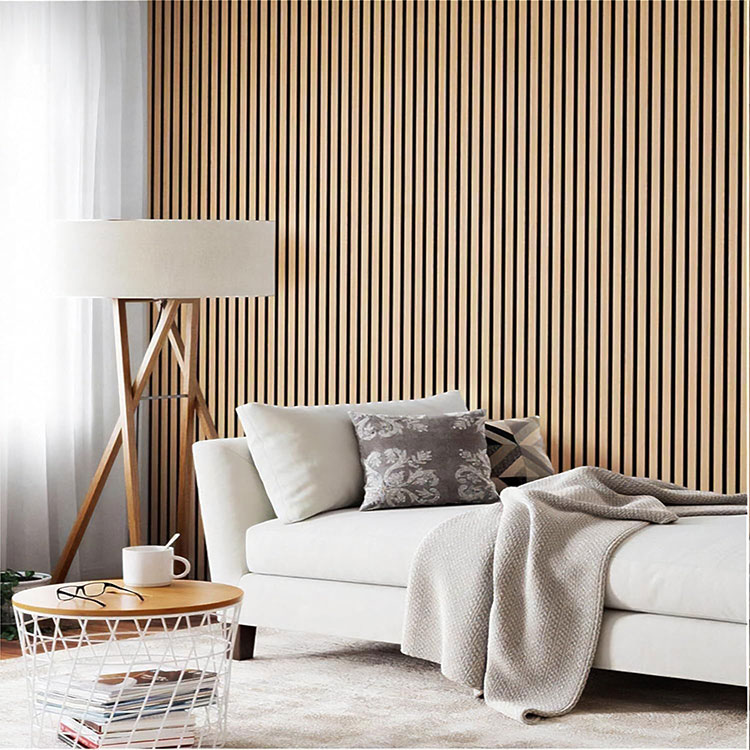
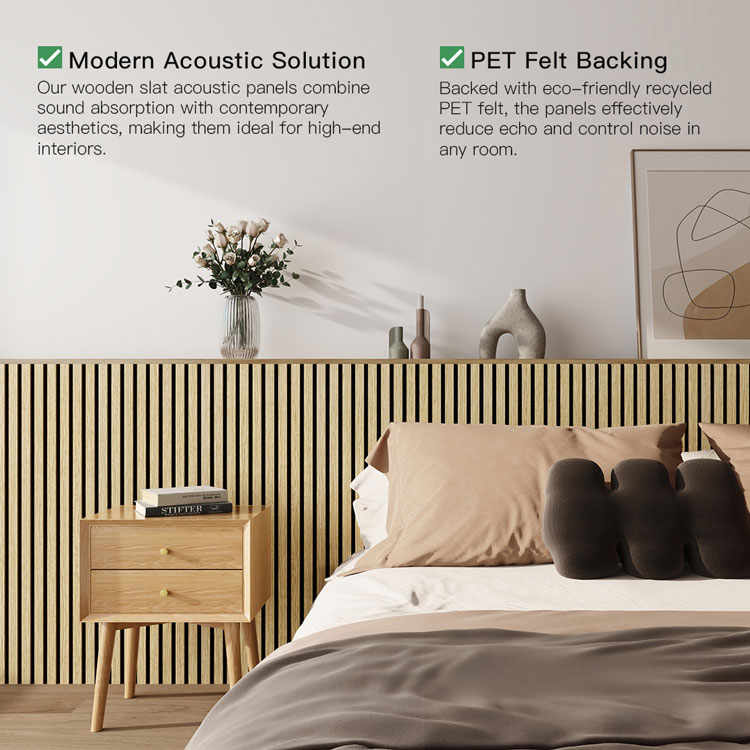
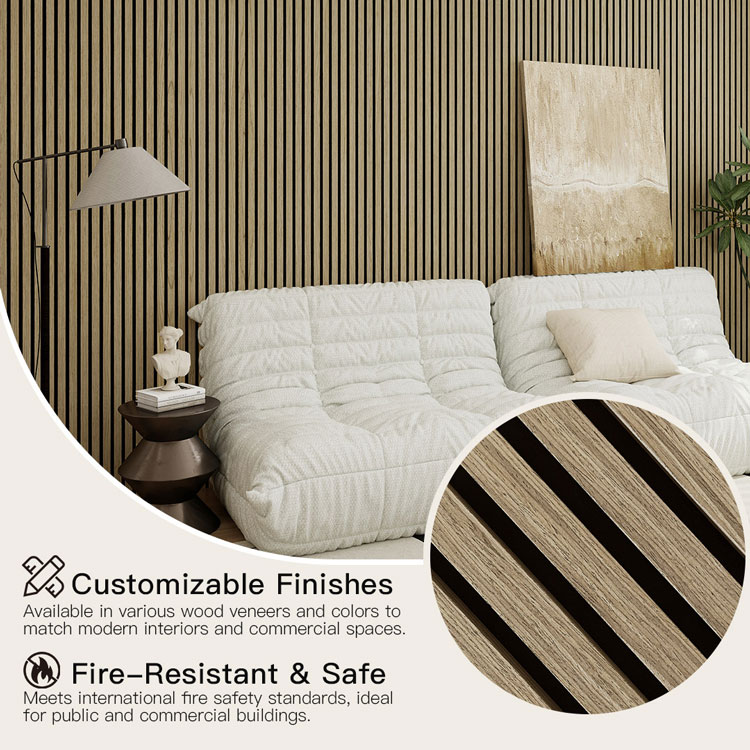
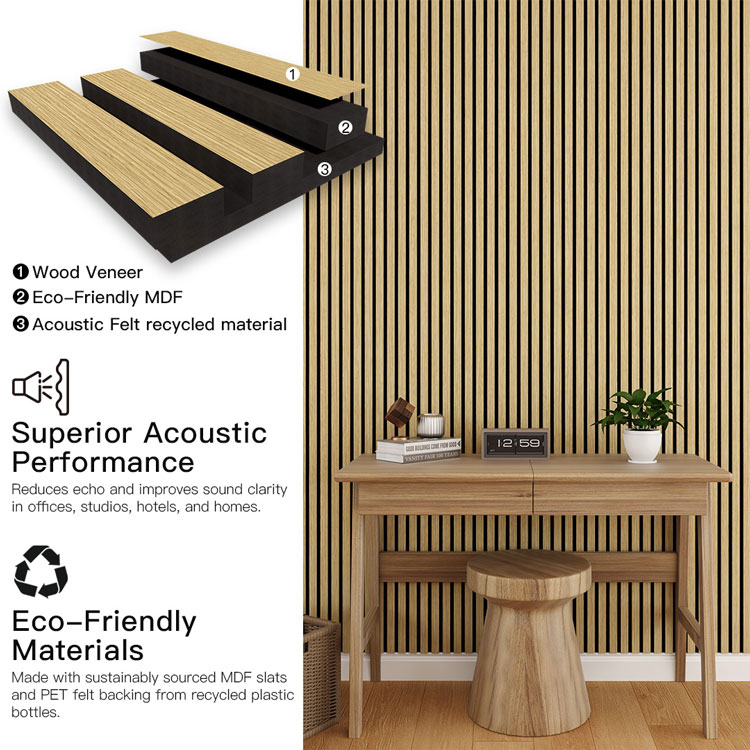
Modern wood slat acoustic panels offer a combination of sound absorption and interior design enhancement. These panels typically consist of:

  • Decorative natural wood or MDF slats

  • Sound-absorbing acoustic felt backing

  • Precision-engineered spacing for improved acoustic performance

This structure allows the panels to reduce echo and reverberation while maintaining a sophisticated architectural appearance.

While they primarily target mid- and high-frequency sound, when installed correctly and combined with other acoustic treatments, wood slat panels can contribute to a more balanced acoustic environment.


Applications of Acoustic Panels in Real Spaces

Acoustic panels are widely used in spaces where sound quality and comfort are important, including:

  • Home theaters

  • Recording studios

  • Offices and meeting rooms

  • Restaurants and cafés

  • Hotels and commercial interiors

  • Residential living spaces

In these environments, controlling reflections and reverberation significantly improves speech clarity, listening comfort, and overall acoustic quality.


Guangdong Leeyin Acoustics: Professional Wood Slat Panel Manufacturer

At Guangdong Leeyin Acoustics, we specialize in the design and manufacturing of wood slat wall panels and acoustic panels for global markets.

As one of the leading exporters of wood slat acoustic panels in China, we provide high-quality products backed by strong production capabilities.

Our advantages include:

  • 20,000 square meters of modern manufacturing facilities

  • Advanced production equipment and technology

  • Strict quality management following international standards

  • Large-scale production capacity for global distribution

  • Extensive experience supplying architectural and commercial projects worldwide

Our wood slat acoustic panels are designed to combine acoustic performance, durability, and modern architectural aesthetics, making them ideal for designers, contractors, and distributors.


Final Thoughts

So, do acoustic panels work for low-frequency noise?

Standard acoustic panels are most effective at reducing mid- and high-frequency reflections, but they can still play an important role in managing overall room acoustics. When combined with thicker materials, proper installation techniques, and additional acoustic treatments such as bass traps, they can contribute to better control of low-frequency sound.

For projects that require both sound control and modern interior design, wood slat acoustic panels offer an excellent solution.


If you are looking for high-quality acoustic panels for residential or commercial projects, Guangdong Leeyin Acoustics provides professional manufacturing, reliable quality, and strong global supply capabilities.
In today’s modern interiors—offices, restaurants, classrooms, home theaters, and open-plan homes—people often complain about the same issue:

“I can hear voices, but I can’t understand what people are saying.”

This problem is not always caused by loud noise. In many cases, it’s caused by poor acoustics, especially excessive echo and reverberation. That’s where acoustic panels become an essential solution.

In this article, we’ll explain how acoustic panels improve speech clarity, why speech intelligibility matters, and how professional solutions like wood slat acoustic panels can create a more comfortable and productive environment.

Customizable Acoustic Wood Slat Panels Supplier


Why Speech Clarity Is a Common Problem in Modern Rooms

Modern architecture often prioritizes minimalism and open space design. While this looks stylish, it also creates acoustic challenges.

Many interiors include hard reflective surfaces such as:

  • glass partitions

  • concrete walls

  • wooden floors

  • ceramic tiles

  • exposed ceilings

  • large empty walls

These materials reflect sound waves instead of absorbing them. When people speak, their voice bounces around the room and overlaps with itself, causing speech to sound unclear or “muddy.”

This is known as reverberation.


What Is Speech Clarity (Speech Intelligibility)?

Speech clarity refers to how easily listeners can understand spoken words in a space. Acoustic engineers often describe this as speech intelligibility.

A room with good speech clarity allows conversations to feel natural, even at a normal speaking volume.

A room with poor speech clarity forces people to:

  • speak louder

  • repeat themselves

  • feel tired during meetings

  • lose focus during lessons

  • misunderstand important information

Over time, this becomes a major comfort and productivity issue.


The Main Enemy of Speech Clarity: Echo and Reverberation

To understand how acoustic panels help, you first need to understand what causes poor speech clarity.

Echo

Echo is a distinct repetition of sound caused by reflections from distant surfaces.

Reverberation (Reverb)

Reverberation is the continuous buildup of reflected sound in a room. It’s more common than echo and often makes voices sound unclear.

When reverb time is too long, spoken words overlap and become difficult to understand—especially in busy environments like offices, restaurants, or classrooms.


How Acoustic Panels Improve Speech Clarity

Acoustic panels are designed to absorb sound energy rather than reflect it. This reduces sound reflections and controls reverberation.

Here’s exactly how they improve speech clarity:

1. Acoustic Panels Reduce Sound Reflections

When sound waves hit a hard surface (like glass or concrete), they bounce back into the room.

Acoustic panels reduce these reflections by absorbing sound, which prevents voice signals from bouncing and overlapping.

Result: Speech becomes sharper and cleaner.


2. Acoustic Panels Lower Reverberation Time (RT60)

Reverberation time (often measured as RT60) is the time it takes for sound to fade by 60 dB after the source stops.

A room with high RT60 makes speech sound blurred.

By installing acoustic panels, RT60 is reduced, creating a clearer listening environment.

Result: Less “room noise” and more intelligible conversations.


3. Acoustic Panels Improve the Signal-to-Noise Ratio (SNR)

In a noisy environment, the listener needs to distinguish speech from background noise. This depends heavily on the signal-to-noise ratio.

When acoustic panels absorb reflections, they reduce the buildup of unwanted noise in the space.

Result: Voices stand out more clearly from ambient sounds.


4. Acoustic Panels Reduce Voice Fatigue

In rooms with poor acoustics, people unconsciously raise their voices to be understood. This leads to vocal strain, especially in:

  • open offices

  • classrooms

  • restaurants

  • meeting rooms

Acoustic treatment helps reduce the need for shouting.

Result: Better comfort for employees, teachers, and guests.


Why Speech Clarity Matters in Different Spaces

Speech clarity is not only about comfort—it impacts performance, safety, and customer experience.

Offices and Meeting Rooms

Poor speech clarity leads to:

  • inefficient meetings

  • communication errors

  • reduced productivity

  • stress and mental fatigue

Acoustic panels help offices create a professional environment where people can communicate clearly.


Restaurants and Cafés

Many customers leave restaurants because they feel the space is too loud. Even when noise levels are not extreme, reverberation can make conversation difficult.

Acoustic panels reduce reverb and improve the dining atmosphere.

Better speech clarity = better customer satisfaction.


Schools and Classrooms

Students need to clearly understand teachers. In classrooms with high reverberation, children struggle to focus, and teachers must speak louder.

Acoustic panels help create an effective learning environment.


Healthcare Facilities

Hospitals and clinics require clear communication between staff and patients. Poor acoustics can increase stress and lead to misunderstandings.

Acoustic panels improve privacy and speech clarity in consultation rooms.


Home Theaters and Living Rooms

Speech clarity is critical when watching movies. If dialogue sounds unclear, people increase volume, which creates discomfort.

Acoustic panels can enhance sound quality and dialogue clarity.


Do Acoustic Panels Work Better Than Soundproofing for Speech Clarity?

This is a common confusion.

Acoustic Panels

  • improve sound inside a room

  • reduce echo and reverb

  • improve speech clarity

  • control reflections

Soundproofing

  • blocks sound from entering/leaving a room

  • requires heavy construction materials

  • focuses on isolation rather than clarity

For improving speech clarity, acoustic panels are the correct solution.


What Types of Acoustic Panels Are Best for Speech Clarity?

Different materials and structures affect acoustic performance.

Fabric-Wrapped Acoustic Panels

These panels absorb mid and high frequencies well, improving speech clarity. They are common in offices and schools.

Polyester Fiber Acoustic Panels

Lightweight, eco-friendly, and effective for commercial interiors.

Wood Slat Acoustic Panels

Wood slat panels combine decorative design with acoustic performance. The slats work with an acoustic felt backing to absorb sound reflections.

They are especially popular in:

  • offices

  • restaurants

  • hotels

  • conference rooms

  • retail spaces

  • modern residential interiors


Are Wood Slat Acoustic Panels Effective for Speech Clarity?

Yes. Wood slat acoustic panels are highly effective in improving speech clarity when designed correctly.

They work by combining:

  • wood slats (for diffusion and design)

  • acoustic felt backing (for absorption)

  • optional insulation behind panels (for stronger performance)

This combination reduces reflections while maintaining a premium architectural appearance.

Unlike basic foam solutions, wood slat panels are suitable for commercial environments because they are:

  • durable

  • easy to maintain

  • visually attractive

  • highly customizable


Where Should Acoustic Panels Be Installed for Better Speech Clarity?

Placement is critical. Even high-quality panels will not work well if installed incorrectly.

Best Installation Areas

  • ceilings in open-plan spaces

  • walls behind seating areas

  • side walls in meeting rooms

  • walls opposite glass windows

  • areas near noise sources (cafés, restaurants, office printers)

A common professional approach is to treat first reflection points, where sound bounces directly back into the listening area.


How Many Acoustic Panels Are Needed to Improve Speech Clarity?

There is no one-size-fits-all answer, but in most cases, improving speech clarity requires treating:

  • 20%–35% of total wall and ceiling surface area

Spaces with hard surfaces and high ceilings may require:

  • 35%–50% coverage for best results

The goal is to reduce reverb without making the room sound “too dead.”


Key Factors That Affect Acoustic Panel Performance

When selecting acoustic panels for speech clarity, consider these key factors:

Panel Thickness

Thicker panels absorb more low-frequency sound, but speech clarity mainly depends on mid-frequency control.

Density and Core Material

High-quality core materials provide stable absorption and long-term performance.

NRC Rating (Noise Reduction Coefficient)

NRC indicates how much sound a panel absorbs on average. Higher NRC usually means better echo reduction.

Installation Method

Mounting directly on walls vs. using an air gap can affect absorption performance.


Guangdong Leeyin Acoustics: Professional Manufacturer of Wood Slat Acoustic Panels

At Guangdong Leeyin Acoustics, we specialize in manufacturing premium wood slat wall panels and acoustic panels for global residential and commercial projects.

We are one of China’s leading exporters in the wood slat acoustic panel industry, providing reliable supply for importers, wholesalers, contractors, and interior designers worldwide.

Why Buyers Choose Guangdong Leeyin Acoustics

  • 20,000㎡ modern production facility

  • strong mass production capacity for large-scale projects

  • strict quality control based on international standards

  • stable veneer finishing and consistent slat alignment

  • customizable colors, sizes, and packaging

  • export-ready logistics support for global markets


Whether your project requires modern acoustic design for offices, hospitality spaces, or home interiors, we provide professional solutions that combine sound performance and architectural

As sustainability becomes a core consideration in modern architecture and interior design, many designers, developers, and homeowners are asking an important question: Are acoustic panels eco-friendly and sustainable?

The short answer is yes—when they are designed and manufactured responsibly. In this article, we explore what makes acoustic panels sustainable, which materials matter most, and how professional manufacturers ensure both acoustic performance and environmental responsibility.

Leading Acoustic Wood Slat Panel Distributor


What Makes an Acoustic Panel Eco-Friendly?

An eco-friendly acoustic panel is defined by more than just sound absorption. True sustainability involves the entire product lifecycle, including:

  • Raw material sourcing

  • Manufacturing processes

  • Product durability and lifespan

  • Indoor air quality impact

  • End-of-life recyclability

High-quality acoustic panels are designed to improve acoustic comfort without compromising environmental standards.


Sustainable Materials Used in Acoustic Panels

1. Wood Slat Acoustic Panels from Responsible Sources

Wood slat acoustic panels are highly popular due to their natural appearance and excellent acoustic performance. When produced using:

  • Engineered wood or MDF from sustainable forestry

  • Optimized material usage to reduce waste

  • Long-lasting surface finishes

they become a renewable and eco-conscious wall solution.

Wood-based acoustic panels also store carbon throughout their lifecycle, contributing positively to sustainable building goals.


2. Polyester Fiber Acoustic Panels (PET Panels)

Polyester fiber acoustic panels are widely recognized as one of the most sustainable acoustic materials available today.

Key eco-friendly advantages include:

  • Made from recycled PET plastic bottles

  • Fully recyclable

  • Low VOC emissions

  • Lightweight and energy-efficient to transport

These panels offer excellent sound absorption while supporting circular economy principles.


3. Low-Emission & Safe Indoor Materials

Eco-friendly acoustic panels should contribute to healthy indoor environments by:

  • Minimizing formaldehyde emissions

  • Using non-toxic adhesives

  • Meeting international indoor air quality standards

This is especially important for offices, schools, homes, and public buildings.


Manufacturing Processes Matter

Sustainability is not only about materials—it also depends on how acoustic panels are produced.

Professional manufacturers focus on:

  • Efficient material utilization

  • Energy-saving production lines

  • Waste reduction and recycling systems

  • Consistent quality control to reduce product replacement

Well-made acoustic panels last longer, reducing environmental impact over time.


Guangdong Leeyin Acoustics: Sustainability with Scale and Expertise

As a leading manufacturer and exporter of wood slat acoustic panels in China, Guangdong Leeyin Acoustics integrates sustainability into both product design and production management.

Our Strengths Include:

  • 20,000㎡ modern manufacturing facility

  • Large-scale production capacity for global supply

  • Specialized focus on wood slat wall panels and acoustic panels

  • Strict quality management aligned with international standards

  • Stable, long-term export experience in global markets

By combining efficient manufacturing with responsible material selection, we help clients achieve both acoustic excellence and sustainable building goals.


Are Acoustic Panels Worth It for Green Buildings?

Yes. Eco-friendly acoustic panels:

  • Improve sound comfort and productivity

  • Enhance interior aesthetics using natural materials

  • Support green building certifications

  • Offer long service life with minimal maintenance

For architects and developers, acoustic panels are a functional and sustainable investment.


How to Choose Sustainable Acoustic Panels

When selecting acoustic panels, look for:

  • Recycled or renewable core materials

  • Low-emission certifications

  • Long product lifespan

  • Experienced manufacturers with export and quality control expertise

A reliable supplier ensures sustainability is verified, not just claimed.


Conclusion

So, are acoustic panels eco-friendly and sustainable?
Absolutely—when they are thoughtfully designed and professionally manufactured.


With advanced production facilities, international quality management, and deep expertise in wood slat acoustic panels and sound-absorbing solutions, Guangdong Leeyin Acoustics provides acoustic products that balance performance, aesthetics, and sustainability for modern spaces worldwide.

1. Compliance with International Building Codes

Many countries require acoustic panels used in public and commercial spaces to meet strict fire standards, such as:

  • EN 13501-1 (Europe)

  • ASTM E84 / Class A (USA)

  • BS 476 (UK)

Fire-rated acoustic panels are often mandatory in:

  • Offices and coworking spaces

  • Hotels and hospitality projects

  • Schools and universities

  • Cinemas, theaters, and studios

  • Shopping malls and airports

Choosing non-compliant panels can lead to project delays, failed inspections, or legal risks.

High-Quality Supplier Acoustic Wood Slat Panels


2. Enhanced Safety for Occupants

Acoustic panels cover large surface areas. In the event of a fire, low-quality materials can:

  • Ignite quickly

  • Spread flames rapidly

  • Produce toxic smoke

Fire-resistant acoustic panels help:

  • Slow down fire spread

  • Reduce smoke emission

  • Provide extra evacuation time

This makes them an essential component of responsible architectural and interior design.


3. Essential for Commercial & Public Projects

While residential users may prioritize aesthetics, commercial buyers focus on risk control. Architects, contractors, and developers increasingly demand:

  • Fire-retardant wood slat acoustic panels

  • Tested and certified acoustic materials

  • Full documentation for project approval

Fire resistance is no longer optional—it is a core purchasing criterion.


Fire Resistance in Wood Slat Acoustic Panels

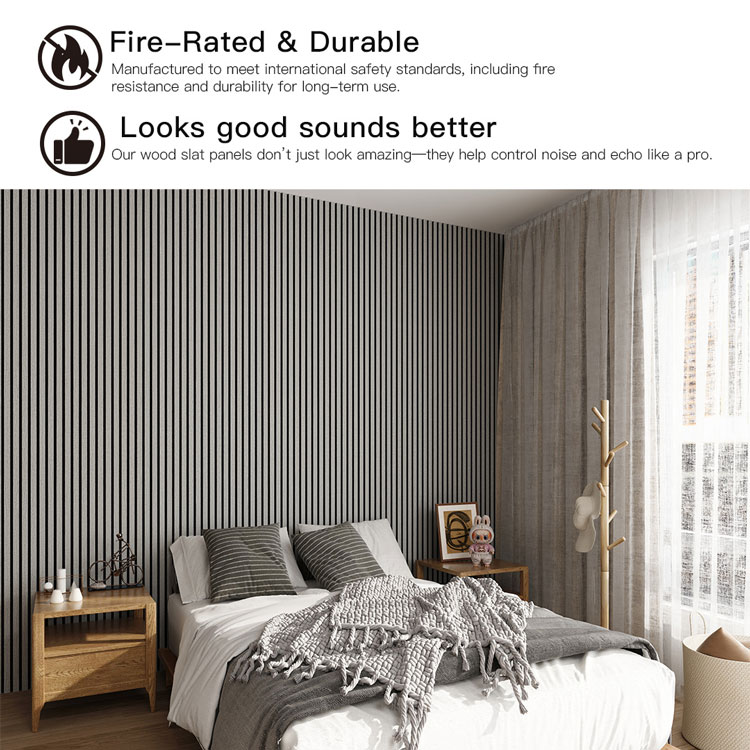
Wood slat acoustic panels combine natural wood aesthetics with acoustic functionality. However, natural wood must be properly treated to meet fire standards.

Professional manufacturers achieve this by:

  • Using fire-retardant MDF or engineered wood slats

  • Applying fire-resistant surface treatments

  • Pairing wood slats with Class B or Class A polyester fiber acoustic backing

When engineered correctly, wood slat panels can offer both excellent sound absorption and reliable fire performance.


How Guangdong Leeyin Acoustics Ensures Fire Safety

As a leading manufacturer and exporter of wood slat acoustic panels in China, Guangdong Leeyin Acoustics integrates fire resistance into every stage of production.

Our Manufacturing Advantages:

  • 20,000㎡ modern factory with large-scale production capacity

  • Advanced production lines for wood slat wall panels and acoustic panels

  • Strict quality control systems aligned with international standards

  • Fire-retardant material options tailored for different market requirements

What We Offer:

  • Fire-rated wood slat acoustic panels

  • Polyester fiber acoustic panels with tested fire performance

  • Customized solutions for commercial and export projects

  • Stable quality for large-volume international orders

Our products are widely exported and trusted by clients seeking safe, compliant, and high-performance acoustic solutions.


What Buyers Should Look for in Fire-Resistant Acoustic Panels

Before purchasing acoustic panels, always confirm:

  • Fire rating classification and test standards

  • Core material fire performance

  • Manufacturer’s quality management system

  • Export experience and certification support


Choosing a professional manufacturer ensures both acoustic effectiveness and safety compliance.

What Can and Can't They Do?

Neighbor noise is one of the most common complaints in apartments, townhouses, and shared office buildings. Many people choose acoustic panels as a quick solution—but do they really block neighbor noise?

High-Quality Acoustic Wood Slat Panels

In short: Acoustic panels help, but they don't completely block sound transmission.


To understand why, it's crucial to understand the difference between sound absorption and sound insulation.


Acoustic Panels vs. Sound Insulation: Key Differences


This is where most misconceptions originate.


Acoustic Panels


Reduce echoes, reverberation, and reflected sound


Improve indoor acoustic clarity


Absorb mid-to-high frequency sounds


Doesn't significantly increase wall mass


Sound Insulation Materials


Prevent sound from passing through walls, floors, and ceilings


Requires a certain level of mass, airtight structure, and vibration isolation


Usually requires structural modifications to the walls


Acoustic panels are designed to control sound, not completely block it.


So, do acoustic panels really reduce neighbor noise?


Yes—but the effect is indirect. Sound-absorbing panels can:


Reduce the perceived intensity of indoor noise


Absorb reflected sound, thus reducing noise from neighbors


Improve overall acoustic comfort


Reduce noise from next door, television, and music


However, they cannot completely prevent sound from penetrating shared walls.


Why is neighbor noise so easily transmitted?


Neighbor noise typically enters a room through:


Shared walls


Structural vibrations


Gap around outlets, doors, and ceilings


Thin drywall structures


Because sound travels as vibrations, blocking sound requires a large, airtight barrier, not just absorption.


How Wood Strip Sound-Absorbing Panels Can Help Improve Sound Insulation in Apartments


While sound-absorbing panels are not a complete soundproofing solution, wood strip sound-absorbing wall panels offer many practical advantages for shared living spaces.


Advantages include:


Absorbing reflected noise entering the room


Reducing booming sounds and harsh echoes


Improving speech clarity in home office environments


Creating a calmer, quieter listening environment


When installed on shared walls, they help control indoor sound energy, making neighbor noise less bothersome.


Optimal installation locations for reducing neighbor noise


For best results:


Install the sound-absorbing panels on shared walls


Cover the first reflecting area near seating or beds


Use sound-absorbing panels with high-density sound-absorbing backing


Coordinate with soft furnishings such as curtains and carpets


While this won't completely eliminate noise, it can significantly improve comfort.


When you need more than just sound-absorbing panels


If neighbor noise is severe, sound-absorbing panels should be used as part of a multi-layered soundproofing approach, including:


Sealing wall gaps and electrical outlets


Adding drywall or soundproofing materials


Using soundproof curtains or door seals


Combining sound-absorbing materials with high-density soundproofing materials


Sound-absorbing panels work best when used in conjunction with basic soundproofing measures.


Why is the quality of sound-absorbing panels important?


Not all sound-absorbing panels perform the same way.


Our company's wood strip sound-absorbing panels use the following materials:


High-density medium-density fiberboard (MDF) strips


Precisely cut sound-absorbing slits


High-quality PET sound-absorbing backing


Stable bonding process ensures long-term performance


This guarantees consistent sound absorption in residential and commercial applications.

The Science Behind Better Sound Control


Echoes and reverberation are two of the most common acoustic problems in modern indoor environments. Whether it's a home office, recording studio, restaurant, or commercial space, excessive sound reflections make a room feel noisy, uncomfortable, and difficult to use.

Top Manufacturer and Wholesaler of Acoustic Wood Slat Panels

So, how exactly do acoustic panels reduce echoes and reverberation? Why are wood slat acoustic panels one of the most effective solutions currently available?


This guide will explain the acoustic principles behind sound absorption and highlight the expertise of Guangdong Leeyin Acoustics, a leading Chinese manufacturer of wood slat wall panels and acoustic panels.


What are Echoes and Reverberation?


Before understanding how acoustic panels work, it's essential to understand their design purpose.


An echo is sound that, after being reflected from a hard surface, returns to the listener's ear with a significant delay.


Reverberation (or echo) is the phenomenon where sound persists due to multiple reflections and merges over time.


Rooms using hard materials such as concrete, glass, drywall, and tile are often most prone to reverberation problems.


Why do exposed rooms have poor sound quality?


Sound waves behave like energy. When they strike a hard surface, they are reflected back into the room, rather than absorbed.


Common problems include:


Speech becoming muffled or "muddy"


Music lacking clarity


Increased background noise


Hearing fatigue in offices and public spaces


Even high-end audio equipment cannot perform to its full potential without proper acoustic treatment.


How acoustic panels reduce echoes and reverberation


Acoustic panels work by absorbing sound energy, not reflecting it.


When sound waves strike an acoustic panel:


Sound penetrates the surface material


Energy is converted into heat through friction within the panel


Reflected sound energy is significantly reduced


This process shortens the reverberation time (RT60) and prevents sound from reflecting uncontrollably within the room.


The role of materials and structure


Not all acoustic panels perform the same way. Its effectiveness depends on several key factors:


1. Sound-absorbing core material


High-performance sound-absorbing panels use the following materials:


PET sound-absorbing felt


Mineral fiber


High-density sound-absorbing backing


These materials are specially designed to effectively absorb sound waves, especially in the mid-to-high frequency range where echoes are most pronounced.


2. Surface design and sound diffusion


In wood strip acoustic wall panels, the strip-shaped MDF surface plays a crucial role.


The gaps between the wood strips allow sound to pass through.


The backing material absorbs sound energy.


The wood strips help to evenly diffuse reflected sound.


This combination achieves balanced acoustic control without making the room feel "dead."


Why wood strip acoustic panels are so effective


Wood strip acoustic panels are becoming increasingly popular because they combine superior acoustic performance with interior design value.


Benefits include:


Excellent echo and reverberation elimination


Improved speech intelligibility


Warm, modern aesthetics


Suitable for residential and commercial spaces


Its performance is particularly significant when installed at the first reflection point, such as the wall behind speakers or seating areas. Proper installation maximizes performance.


Even the best acoustic panels require proper installation to function effectively.


Installation considerations:


Cover 20%–40% of the reflective wall surface.


Focus on the primary reflection point.


Optional air gaps can enhance low-frequency absorption.


For large spaces, combine wall and ceiling installation.


Professional-grade acoustic panels ensure predictable acoustic results in various environments.

For acoustic treatment, proper placement is just as important as the quality of the panels. Even the best acoustic panels won't perform to their full potential if improperly installed.


So, where should acoustic panels be placed for optimal results?

Customizable Acoustic Wood Slat Panels Supplier

The answer depends on how sound travels within a room—and understanding this propagation is key to achieving professional-grade acoustics.


The Importance of Acoustic Panel Placement


Sound travels in waves and reflects off hard surfaces such as walls, ceilings, and floors. These reflections cause:


Echoes and reverberation


Decreased speech intelligibility


Muffled music playback


Hearing fatigue


Acoustic panels work by absorbing reflected sound energy, not blocking it. Therefore, they must be placed where reflections occur most frequently.


The Most Important Placement Areas for Acoustic Panels


1. First Reflection Point (Side Wall)


The first reflection point is the location where sound emitted by a speaker is directly reflected back to the listener after hitting the wall.


Optimal Placement:


1. Walls to the left and right of the speakers


Ear-level (sitting height)


This is one of the most effective and important placements for improving sound clarity in home theaters, recording studios, and offices.


2. Front Wall (Behind the Speakers)


Placing acoustic panels on the wall behind the speakers helps to:


Reduce sound reflections back into the room


Improve stereo imaging


Enhance bass response


Wooden slat acoustic panels are particularly effective here, combining sound absorption with aesthetics.


3. Rear Wall (Behind the Listener)


The wall behind the listener often produces back reflections, resulting in echoes and muddy sound.


Recommended Uses:


Large acoustic panels


Wooden slat acoustic panels with PET backing


Partial or full coverage depending on room size


This installation method significantly improves overall listening comfort.


4. Ceiling Acoustic Panels (Ceiling Clouds)


The ceiling is often overlooked, but it is a major source of sound reflections.


Ceiling acoustic panels are best suited for the following locations:


Home studios


Meeting rooms


Home theaters


Open-plan offices


Installing acoustic panels directly above the listening or working area helps control vertical reflections.


5. Shared walls in apartments or offices


If you share a wall with a neighbor or adjacent room:


Install acoustic panels on the shared wall


Focus on absorbing mid-to-high frequency sounds


For best results, pair with soft furnishings


While acoustic panels don't completely block out sound, they significantly improve perceived noise levels.

A tranquil bedroom is not accidental, but the result of careful design. Whether you're troubled by neighbor noise, street clamor, or indoor echoes, effective soundproofing can significantly improve your sleep environment.


Guangdong Leeyin Acoustics specializes in wood slat wall panels and acoustic panels, providing reliable professional acoustic solutions to customers worldwide.

Hot Selling Acoustic Wood Slat Panels

✔ 1. Install Acoustic Wall Panels


Installing high-quality acoustic panels—such as Liyin's wood slat acoustic panels—helps reduce echoes and absorb unwanted sound reflections.


They can also add warmth and modern aesthetics to your bedroom.


✔ 2. Soundproof Shared or Exterior Walls


For noise penetrating through walls, upgrading to high-density acoustic panels can significantly improve sound insulation.


Liyin's acoustic panels feature high-density felt backing and durable materials for superior sound insulation.


✔ 3. Seal door and window gaps


Even small gaps can leak sound. Use weatherstripping, bottom door seals, or thicker curtains to block noise transmission.


✔ 4. If the noise is coming from upstairs, address the ceiling


For footsteps or impact sounds from upstairs, combine soundproofing panels with additional soundproofing layers or a suspended ceiling soundproofing solution.


✔ 5. Add carpets, soft furnishings, and curtains


Soft materials help reduce noise reflection, creating a more comfortable acoustic environment.

Yes—you can significantly reduce noise from your upstairs neighbor, especially footsteps and impact sounds like objects falling. While achieving 100% soundproofing without altering the structure is difficult, suitable sound-absorbing materials can significantly improve comfort and quietness.

Wholesale High-Quality Acoustic Wood Slat Panels for Sale

🎧 How to Effectively Soundproof Your Ceiling


Here are the most effective methods:


✔ 1. Add Sound-Absorbing Panels


High-density sound-absorbing panels help absorb reflected noise, reducing the sound you hear.


Our PET sound-absorbing panels and wood strip wall/ceiling panels combine sound absorption with aesthetic appeal.


✔ 2. Create a Freestanding Ceiling


Installing a suspended or floating ceiling helps block impact sounds.


Even better when used with soundproofing materials.


✔ 3. Increase Mass


Using high-density boards or layers of high-density materials helps block airborne noise.


✔ 4. Seal Gaps


Even the smallest gaps can allow sound to pass through. Proper sealing can improve overall performance.v

In short: They don't completely stop it—but they can significantly improve sound insulation.


Acoustic panels are designed to absorb indoor sound, reduce echoes, and prevent excessive reverberation. While they don't completely block sound, they do reduce overall noise energy, meaning less sound leaks out through walls, ceilings, and doors and windows.

Customizable Acoustic Wood Slat Panels Supplier

🎧 How acoustic panels help prevent noise leakage


✔ Reduce echoes and reverberation


When sound is absorbed instead of reflected, fewer sound waves reach the walls and escape outside.


✔ Reduce overall room volume


By absorbing mid-to-high frequency noise, acoustic panels help reduce the sound heard by neighbors or in other rooms.


✔ Control specific types of noise


Especially effective for talking, television noise, musical instrument sounds, and office environments.


To achieve complete sound insulation, soundproofing panels can be used in conjunction with the following materials:


🔸 Door seals


🔸 Thickened soundproofing felt


🔸 Double-layer gypsum board


🔸 Shared soundproofing materials within the wall structure

keyboard_arrow_up