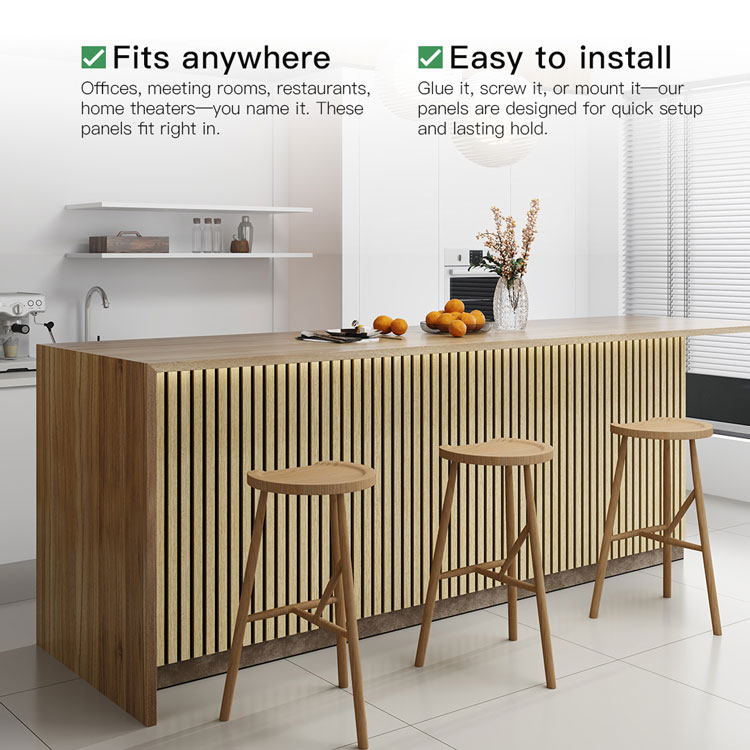
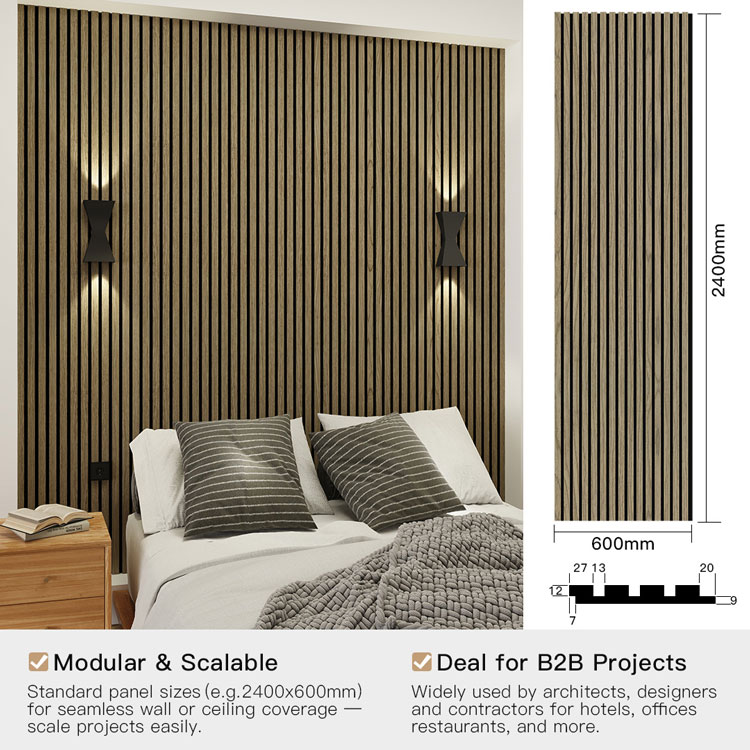
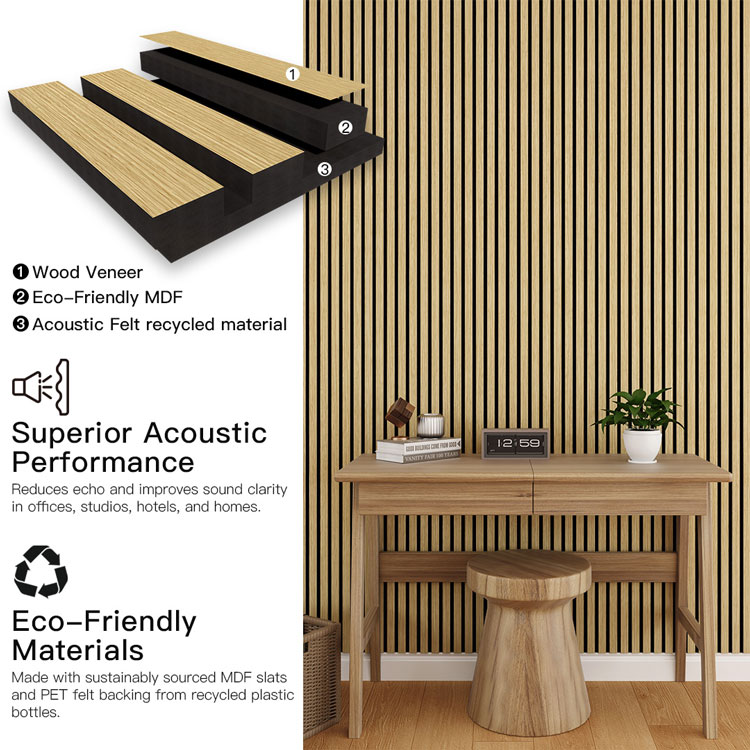
Open-plan spaces have become one of the most popular design trends in modern architecture. From open offices and coworking areas to restaurants, hotel lobbies, and large living rooms, open layouts create a clean, spacious, and modern look.

However, many people quickly realize one major downside:

Open-plan spaces are noisy.

If you’re wondering “Can acoustic panels reduce noise in open-plan spaces?”, the answer is yes—but it depends on the type of noise and how the panels are installed.

In this article, we’ll explain how acoustic panels work in open areas, what kind of noise they can reduce, and how wood slat acoustic panels can create a quieter, more comfortable environment.
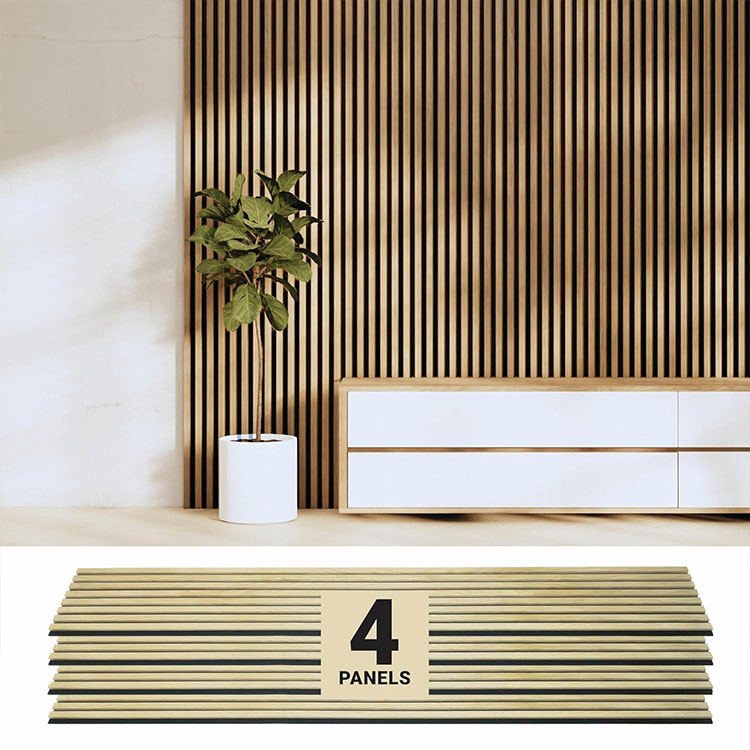
High-Quality Supplier Acoustic Wood Slat Panels


Why Are Open-Plan Spaces So Noisy?

Open-plan layouts typically have fewer walls, fewer partitions, and more hard surfaces. This creates the perfect environment for sound to travel freely.

Common noise problems in open-plan spaces include:

  • loud conversations carrying across the room

  • phone calls disturbing nearby workers

  • footsteps echoing through large areas

  • meeting room sound leaking into work zones

  • general “background buzz” that never disappears

  • poor speech clarity and listening fatigue

The real issue is not always volume. Often, the problem is sound reflection and reverberation.


Can Acoustic Panels Actually Reduce Noise?

Yes—acoustic panels reduce noise perception by controlling sound reflections and absorbing sound energy.

But it’s important to understand one key difference:

Acoustic Panels Reduce Echo, Not True Soundproofing

Acoustic panels are designed for sound absorption, not complete sound blocking.

They help reduce:

✅ echo
✅ reverberation
✅ speech noise buildup
✅ overall noise level inside the space
✅ distractions caused by reflected sound

They do NOT fully block:

❌ noise coming from outside the room
❌ sound traveling through walls, floors, or ceilings

So in open-plan environments, acoustic panels are extremely effective because the main problem is usually reflected sound, not sound transmission through walls.


How Acoustic Panels Reduce Noise in Open-Plan Spaces

1. They Absorb Reflected Sound Waves

In large open rooms, sound waves bounce repeatedly off walls, ceilings, glass, floors, and furniture. This creates a “noise cloud” that builds up over time.

Acoustic panels absorb these reflections, preventing sound from repeatedly bouncing around.

Result: the room feels quieter and more controlled.


2. They Reduce Reverberation Time (RT60)

Reverberation time is the time it takes for sound to fade after the source stops.

Open-plan offices and commercial spaces often have high ceilings and hard surfaces, which leads to long RT60.

Acoustic panels lower reverberation time, which reduces the “constant noise” effect.

Result: less background noise and improved comfort.


3. They Improve Speech Clarity

One major complaint in open-plan spaces is:

“I can hear people talking, but I can’t focus.”

That’s because reverberation makes speech spread across the room and overlap. When acoustic panels absorb mid and high frequencies, conversations become clearer and less chaotic.

Result: speech becomes more understandable nearby, while distant voices become less disturbing.


4. They Reduce Listening Fatigue and Stress

In noisy open-plan environments, the brain works harder to filter unwanted sounds. Over time, this causes fatigue, stress, and reduced productivity.

Acoustic treatment helps create a calmer sound environment, making it easier to work, relax, or communicate.


What Types of Noise Can Acoustic Panels Reduce?

Acoustic panels are best for controlling:

✔ Human Speech Noise

Speech is the biggest noise issue in open offices, restaurants, and coworking spaces. Acoustic panels absorb speech frequencies, making the space feel less overwhelming.

✔ Echo and “Hollow Room Sound”

Large rooms often sound empty and harsh. Panels reduce the “boomy” or “shouting” effect.

✔ General Background Noise

In busy environments, panels lower the overall sound buildup, which improves comfort.


What Noise Can Acoustic Panels NOT Reduce?

Acoustic panels are not designed to solve:

✘ Impact Noise (Footsteps Above)

Footsteps from upstairs require soundproofing solutions like underlayment, floating floors, or ceiling isolation systems.

✘ Mechanical Noise (HVAC, Machines)

Panels help reduce reflections but cannot eliminate noise generated by machines. This may require noise barriers or specialized enclosures.

✘ Full Privacy Between Areas

If you need private meeting rooms, you will need partitions, sealed walls, and soundproof doors.

However, acoustic panels can still improve privacy by reducing sound reflections.


Are Acoustic Panels Worth It for Open-Plan Offices?

Yes. Open-plan offices are one of the most common applications for acoustic panels because they improve:

  • productivity

  • employee comfort

  • meeting quality

  • phone call clarity

  • workplace satisfaction

Many companies invest in open office design for collaboration, but without acoustic treatment, the space often becomes inefficient.

Installing acoustic panels is one of the most cost-effective upgrades for open office noise control.


Best Acoustic Solutions for Open-Plan Spaces

1. Ceiling Acoustic Panels (Highly Recommended)

In open-plan areas, ceilings are usually the largest reflective surface. Installing acoustic panels on the ceiling can significantly reduce echo.

Ceiling treatment is often the fastest way to improve acoustics in large spaces.


2. Wall Acoustic Panels for Reflection Control

Wall panels are effective when installed at:

  • first reflection points

  • large empty walls

  • behind seating zones

  • near meeting areas


3. Wood Slat Acoustic Panels for Design + Performance

For modern interiors, wood slat acoustic panels are one of the most popular choices.

They offer:

  • high-end architectural aesthetics

  • excellent echo reduction

  • improved speech clarity

  • durability for commercial spaces

  • easy installation

Wood slat panels are especially suitable for:

  • open-plan offices

  • coworking spaces

  • hotel lobbies

  • cafés and restaurants

  • shopping malls

  • reception areas


Are Wood Slat Acoustic Panels Effective in Open Spaces?

Yes. Wood slat acoustic panels are highly effective for open-plan noise control when properly designed.

They work through a combination of:

  • wood slats that help diffuse sound reflections

  • acoustic felt backing that absorbs sound energy

  • optional mineral wool or insulation behind panels for enhanced performance

This makes them an excellent solution for large commercial interiors that require both acoustic performance and visual appeal.


Where Should Acoustic Panels Be Placed in Open-Plan Spaces?

For best results, panels should be installed strategically rather than randomly.

Recommended Areas

  • ceilings above workstations

  • walls facing each other (to reduce sound bouncing)

  • behind reception desks

  • near collaborative zones

  • around meeting corners

  • above dining tables in restaurants

  • near hallways and open corridors

A combination of ceiling and wall treatment typically produces the best acoustic improvement.


How Many Acoustic Panels Are Needed for an Open-Plan Area?

There is no fixed number, but for open-plan spaces, many acoustic designers recommend treating:

  • 20%–40% of total surface area (walls + ceiling)

In large open offices with high ceilings and glass walls, coverage may need to be higher.

The goal is to reduce reverberation without making the room feel acoustically “dead.”


Acoustic Panels vs Soundproofing: Which Is Better for Open Spaces?

For open-plan environments, acoustic panels are usually more practical than soundproofing.

Acoustic Panels (Best Choice for Open-Plan)

  • reduce echo and noise buildup

  • improve comfort and speech clarity

  • cost-effective

  • easy installation

  • modern design options

Soundproofing (More Complex)

  • blocks sound transmission

  • requires structural construction

  • expensive and time-consuming

  • not always possible in existing buildings

That’s why acoustic panels are widely used in commercial open spaces.


Why Choose Guangdong Leeyin Acoustics for Acoustic Panels?

At Guangdong Leeyin Acoustics, we specialize in manufacturing high-quality wood slat wall panels and acoustic panels for global projects.

As one of China’s leading exporters of wood slat acoustic panels, we support importers, wholesalers, interior contractors, and project developers with stable production and consistent quality.

Our Manufacturing Advantages

  • 20,000㎡ modern factory

  • strong production capacity for large-scale commercial orders

  • strict quality management based on international standards

  • professional export packaging and logistics support

  • customizable finishes, veneers, sizes, and felt backing colors


Our wood slat acoustic panels are designed to meet the needs of modern interiors where both aesthetics and acoustic performance matter.
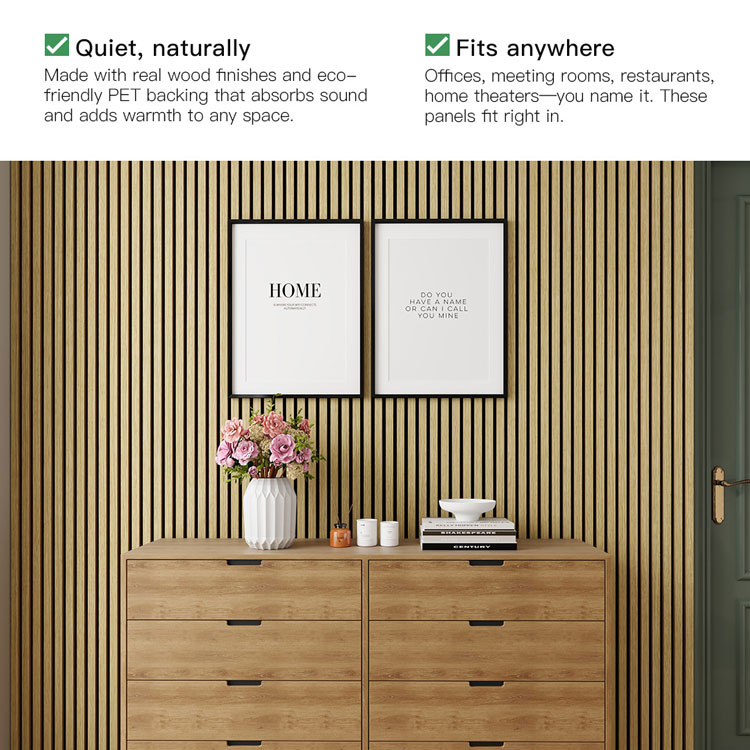
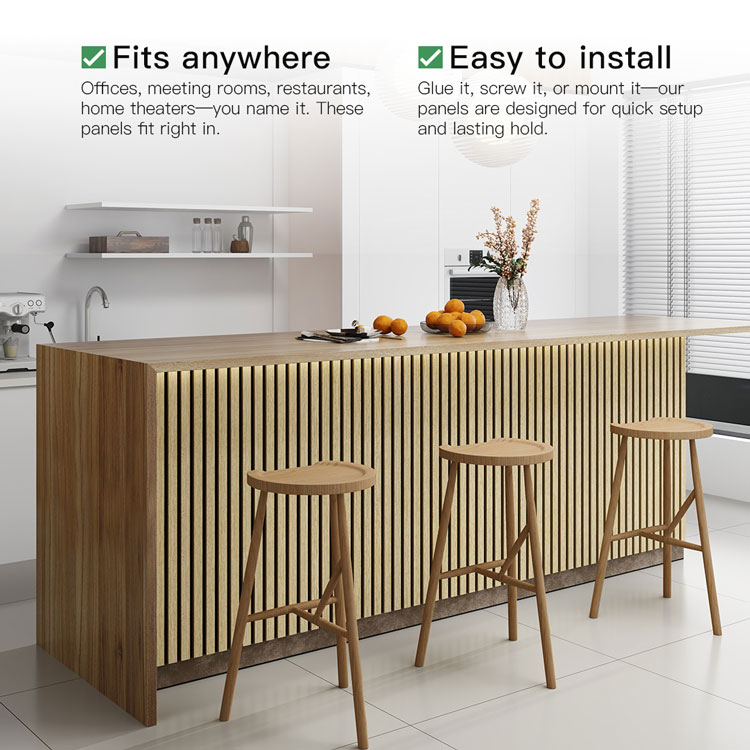
With the growing popularity of acoustic panels and wood slat wall panels, many homeowners, designers, and commercial project managers are incorporating them into living rooms, offices, meeting spaces, and entertainment areas. These panels improve sound quality while adding a modern architectural aesthetic.

However, a common question arises during installation:

Can you mount a TV on an acoustic panel wall?

The good news is yes—you can mount a TV on an acoustic panel wall, but the installation method must be done correctly to ensure safety, stability, and optimal performance. In this guide, we’ll explain how acoustic panels work, the best mounting methods, and practical tips for achieving a professional result.

Hot Selling Acoustic Wood Slat Panels


Understanding Acoustic Panel Walls

Acoustic panel walls are designed to reduce sound reflections, echoes, and background noise within a room. They are commonly used in:

  • living rooms

  • home theaters

  • offices

  • conference rooms

  • hotels

  • restaurants

  • recording studios

One of the most popular options today is the wood slat acoustic panel, which combines decorative wooden slats with sound-absorbing backing materials.

These panels typically consist of:

  • decorative natural wood or wood veneer slats

  • polyester fiber acoustic felt backing

  • a supporting wall structure behind the panels

While the panels themselves enhance acoustic comfort, they are not structural load-bearing materials. This is the key factor to consider when mounting a TV.


Can Acoustic Panels Support the Weight of a TV?

Acoustic panels alone are not designed to hold heavy loads such as televisions or large monitors.

Most acoustic panels are primarily made from:

  • wood veneer slats

  • MDF or solid wood strips

  • acoustic felt or polyester fiber

These materials are excellent for sound absorption but should not be relied on to support the weight of a TV bracket.

Instead, the TV mount must be anchored to the structural wall behind the panels, such as:

  • concrete walls

  • brick walls

  • wooden studs

  • metal framing systems

This ensures that the weight of the TV is supported by the building structure rather than the acoustic panel itself.


Best Method for Mounting a TV on an Acoustic Panel Wall

To safely mount a television, the installation should follow a few professional guidelines.

1. Locate the Structural Support Behind the Panels

Before installation, determine what type of wall is behind the acoustic panels.

Common structures include:

  • drywall with wooden studs

  • concrete or brick walls

  • metal framing systems

Use a stud finder or construction plans to locate the supporting structure.


2. Cut Small Openings for the Mounting Bracket

In some installations, the bracket may need to pass through the acoustic panel layer.

A small opening can be carefully cut in the panel to allow the mounting bracket to attach directly to the wall behind it. This keeps the installation clean while preserving the appearance of the panel wall.


3. Use Long Anchor Screws or Bolts

The screws must be long enough to pass through:

  • the acoustic panel

  • the mounting bracket

  • and securely into the structural wall

This ensures a stable and secure installation.


4. Install the TV Mount Bracket

Once the bracket is securely anchored to the wall structure, the TV can be mounted normally.

Most modern TV mounts—including fixed, tilting, or full-motion brackets—can be used with acoustic panel walls when installed properly.


Advantages of Mounting a TV on an Acoustic Panel Wall

Installing a television on an acoustic panel wall can actually enhance both visual design and sound quality.

Improved Sound Experience

Acoustic panels help reduce sound reflections and echoes, which can improve:

  • dialogue clarity

  • surround sound performance

  • overall listening comfort

This makes them particularly ideal for home theaters and media rooms.

Modern Interior Design

Wood slat acoustic panels create a sleek and contemporary backdrop for televisions.

They are widely used in:

  • luxury living rooms

  • corporate boardrooms

  • hotel suites

  • entertainment lounges

The natural wood texture adds warmth and sophistication to the space.

Hidden Cable Management

Acoustic panel installations often allow cables to be concealed behind the panels, creating a cleaner and more organized look.


Acoustic Panels Are Ideal for Home Entertainment Spaces

When designing a home entertainment wall, combining a mounted TV with acoustic treatment is becoming increasingly popular.

Benefits include:

  • reduced echo during movies and music

  • improved speech clarity in dialogue

  • better overall sound balance

  • a more immersive viewing experience

This combination is commonly used in home theaters, gaming rooms, and media walls.


Choosing High-Quality Acoustic Panels

For projects that combine acoustic performance with modern design, selecting high-quality panels is essential.

Important factors include:

  • durable wood slats

  • high-density acoustic felt backing

  • consistent panel spacing

  • environmentally friendly materials

  • precise manufacturing standards

Working with a professional acoustic panel manufacturer ensures both performance and long-term durability.


Guangdong Leeyin Acoustics: Professional Wood Slat Panel Manufacturer

Guangdong Leeyin Acoustics is a specialized manufacturer of wood slat wall panels and acoustic panels, providing acoustic solutions for residential, commercial, and architectural projects worldwide.

As one of the leading exporters of wood slat acoustic panels in China, our products are widely used in interior design projects across many international markets.

Strong Manufacturing Capabilities

Our company operates a 20,000-square-meter modern production facility, equipped with advanced manufacturing equipment and strict quality management systems that follow international standards.

Our advantages include:

  • large-scale production capacity

  • stable supply for global distributors and contractors

  • precise wood slat processing technology

  • high-performance acoustic materials

  • customizable panel designs and finishes

Our wood slat acoustic panels combine aesthetic architectural design with effective sound absorption, making them ideal for modern interior spaces.


Final Thoughts

So, can you mount a TV on an acoustic panel wall?

Yes—but the key is ensuring the mounting bracket is secured to the structural wall behind the panels, not the acoustic panels themselves.

With the correct installation method, you can safely enjoy the benefits of both:

  • a clean, modern TV wall design

  • improved acoustic comfort


Wood slat acoustic panels provide a perfect balance between functionality and visual elegance, making them an excellent choice for homes, offices, and commercial interiors.

As modern offices, homes, and commercial spaces increasingly adopt acoustic panels to improve sound quality, many people have a practical concern:

Will acoustic panels interfere with WiFi, mobile signals, or wireless communication?

The short answer is no — most acoustic panels do not affect WiFi or wireless signals in any significant way. In fact, the materials used in typical acoustic treatments are designed for sound absorption, not signal blocking.

In this article, we’ll explain how WiFi signals work, how acoustic panels are constructed, and why they generally have little to no impact on wireless connectivity.

Factory Direct Acoustic Wood Slat Panels – Best Price Guarantee


Understanding How WiFi Signals Travel

WiFi works using radio frequency (RF) signals, usually in the 2.4 GHz or 5 GHz bands. These signals travel through the air and can pass through many common building materials.

However, some materials weaken wireless signals more than others.

Materials That Can Block WiFi Signals

Certain dense or conductive materials can interfere with signal strength, such as:

  • reinforced concrete

  • metal structures

  • thick stone walls

  • large metal furniture

  • metal mesh or foil insulation

These materials can reflect, absorb, or block radio signals, reducing network coverage.

This leads many people to wonder whether installing acoustic panels might create a similar problem.


What Acoustic Panels Are Made Of

Most acoustic panels are made from porous, lightweight materials designed to absorb sound waves rather than block them.

Common acoustic panel materials include:

  • polyester fiber

  • acoustic felt

  • mineral wool

  • fiberglass

  • foam

  • wooden slats with acoustic backing

These materials allow air to pass through small internal spaces, which is how they absorb sound energy.

Importantly, these materials are not conductive and do not significantly block radio signals.


Do Acoustic Panels Block WiFi?

In most cases, acoustic panels have virtually no impact on WiFi signals.

Here’s why:

1. Panels Are Lightweight and Porous

Unlike concrete or metal, acoustic panels are not dense enough to block radio waves.

WiFi signals can easily pass through materials like:

  • polyester fiber

  • acoustic felt

  • foam

  • wood veneer

2. Panels Contain Little or No Metal

Wireless interference usually occurs when signals encounter metal surfaces that reflect radio waves.

Standard acoustic panels are designed without metal components, which means they do not reflect WiFi signals significantly.

3. Panels Are Usually Thin

Most acoustic panels range between 9 mm and 25 mm thick, which is far too thin to cause serious signal attenuation.

Even when installed across multiple walls, their impact on wireless networks is minimal.


What About Wood Slat Acoustic Panels?

Wood slat acoustic panels have become increasingly popular in modern interior design. These panels combine decorative wooden slats with sound-absorbing acoustic felt backing.

Despite their structured appearance, they still do not interfere with WiFi signals.

Why Wood Slat Panels Don’t Affect WiFi

Wood is a natural non-conductive material, meaning it does not block or reflect radio frequencies in the same way metal does.

The acoustic felt backing is typically made from polyester fiber, which is also signal-friendly.

Because of this construction, wood slat acoustic panels are widely used in:

  • offices

  • coworking spaces

  • conference rooms

  • restaurants

  • hotels

  • home theaters

without affecting wireless connectivity.


Situations Where Signals Could Be Affected

While acoustic panels themselves rarely cause issues, certain installation conditions might slightly influence signal performance.

Large-Scale Coverage

If an entire room is covered with thick acoustic treatment on every surface, signal reflections may change slightly. However, this is uncommon and rarely noticeable.

Metal-Based Decorative Panels

Some decorative panels may include:

  • aluminum frames

  • metal mesh layers

  • foil backing

These could potentially affect signals, but standard acoustic panels generally do not use these materials.

Weak Router Placement

Often, poor WiFi performance is actually caused by:

  • routers placed behind furniture

  • long distances from the router

  • thick concrete walls

  • outdated network equipment

These factors have a far greater impact than acoustic panels.


Acoustic Panels Can Improve Office Environments Without Affecting Connectivity

Modern workplaces rely heavily on both clear communication and strong wireless networks. Fortunately, acoustic panels support one goal without compromising the other.

In open-plan offices, acoustic panels can:

  • reduce distracting noise

  • improve speech clarity

  • enhance meeting productivity

  • create a more comfortable working environment

At the same time, they allow WiFi, Bluetooth, and mobile signals to pass through normally.


Why Acoustic Panels Are Widely Used in Technology Environments

If acoustic panels significantly interfered with wireless signals, they would not be widely used in technology-heavy environments.

However, they are commonly installed in:

  • tech company offices

  • video conferencing rooms

  • recording studios

  • broadcast facilities

  • coworking spaces

  • educational institutions

These spaces rely on reliable internet connectivity, yet acoustic treatment remains a standard design feature.


Choosing High-Quality Acoustic Panels

While acoustic panels generally do not interfere with signals, selecting high-quality panels ensures optimal performance and durability.

Important factors include:

  • stable acoustic materials

  • precise panel structure

  • consistent manufacturing quality

  • environmentally friendly components

  • reliable installation systems

Working with experienced manufacturers helps ensure both acoustic performance and product reliability.


Guangdong Leeyin Acoustics: Professional Wood Slat Acoustic Panel Manufacturer

Guangdong Leeyin Acoustics is a professional manufacturer specializing in wood slat wall panels and acoustic panels for global markets.

As a leading exporter of wood slat acoustic panels in China, we provide high-quality acoustic solutions for distributors, contractors, and interior designers worldwide.

Our Manufacturing Strength

  • 20,000㎡ modern production facility

  • advanced automated manufacturing equipment

  • strong large-scale production capacity

  • strict quality management following international standards

  • precise slat spacing and durable acoustic felt backing

  • flexible customization options for different interior projects


Our wood slat acoustic panels combine aesthetic design with effective sound absorption, making them ideal for residential, office, and commercial environments.

Low-frequency noise is one of the most challenging acoustic problems in both residential and commercial spaces. Whether it comes from traffic, home theater subwoofers, HVAC systems, or neighboring apartments, low-frequency sound tends to travel farther and penetrate walls more easily than higher frequencies.

Many people ask: Do acoustic panels work for low-frequency noise? The answer depends on the type of acoustic panel, its thickness, and how it is installed. In this article, we’ll explore how acoustic panels interact with low-frequency sound and how to improve acoustic performance in your space.


Understanding Low-Frequency Noise

Low-frequency noise typically refers to sounds in the 20 Hz to 250 Hz range. These sounds include:

  • Bass from music or home theater systems

  • Heavy footsteps or structural vibrations

  • Traffic rumble or construction noise

  • Mechanical equipment or HVAC systems

Unlike higher-frequency sounds such as speech or clattering objects, low-frequency waves have longer wavelengths. Because of this, they can easily pass through walls and reflect around large spaces.

This makes them significantly harder to absorb using standard acoustic treatments.

Leading Distributor of Acoustic Wood Slat Panels


How Acoustic Panels Work

Acoustic panels are designed to absorb sound energy and reduce reflections within a room. Most panels use materials such as:

  • Polyester fiber

  • Mineral wool

  • Acoustic foam

  • Felt-based sound-absorbing cores

When sound waves hit the surface of the panel, the porous material converts sound energy into small amounts of heat, reducing echo and reverberation.

However, standard acoustic panels are most effective at mid- and high-frequency sound absorption, which includes speech, office noise, and everyday household sounds.


Are Acoustic Panels Effective for Low-Frequency Noise?

The short answer is: standard acoustic panels only partially help with low-frequency noise.

Because low-frequency waves are longer and more powerful, they require thicker and denser acoustic materials to be effectively absorbed. Thin decorative panels or lightweight materials may not significantly reduce deep bass sounds.

However, acoustic panels can still contribute to improved sound control in several ways.

1. Reducing Overall Room Resonance

Even if they do not fully absorb deep bass, acoustic panels reduce reflections and reverberation in the room. This helps prevent bass buildup and acoustic imbalance, improving the overall listening experience.

2. Improving Sound Clarity

By controlling mid- and high-frequency reflections, acoustic panels make voices and music clearer, even when low-frequency sounds are present.

3. Supporting a Complete Acoustic Treatment System

In many cases, acoustic panels work best when combined with other acoustic solutions such as:

  • Bass traps

  • Acoustic ceiling panels

  • Sound insulation materials

Together, these elements create a balanced acoustic environment.


How to Improve Low-Frequency Noise Control

If low-frequency noise is your main concern, several strategies can improve performance.

Use Thicker Acoustic Panels

Panels with greater thickness and density can absorb lower frequencies more effectively. Thicker panels provide deeper sound absorption and help manage bass reflections.

Install Panels with Air Gaps

Mounting acoustic panels slightly away from the wall can improve low-frequency absorption. The air gap allows sound waves to penetrate deeper into the panel, increasing acoustic efficiency.

Combine with Bass Traps

Bass traps are specifically designed to absorb low-frequency sound. They are typically placed in room corners where bass energy tends to accumulate.

Increase Surface Coverage

The more acoustic treatment installed in a room, the more effective it becomes. Covering multiple surfaces—walls, ceilings, and corners—helps control both high and low frequencies.


Why Wood Slat Acoustic Panels Are a Popular Choice

Modern wood slat acoustic panels offer a combination of sound absorption and interior design enhancement. These panels typically consist of:

  • Decorative natural wood or MDF slats

  • Sound-absorbing acoustic felt backing

  • Precision-engineered spacing for improved acoustic performance

This structure allows the panels to reduce echo and reverberation while maintaining a sophisticated architectural appearance.

While they primarily target mid- and high-frequency sound, when installed correctly and combined with other acoustic treatments, wood slat panels can contribute to a more balanced acoustic environment.


Applications of Acoustic Panels in Real Spaces

Acoustic panels are widely used in spaces where sound quality and comfort are important, including:

  • Home theaters

  • Recording studios

  • Offices and meeting rooms

  • Restaurants and cafés

  • Hotels and commercial interiors

  • Residential living spaces

In these environments, controlling reflections and reverberation significantly improves speech clarity, listening comfort, and overall acoustic quality.


Guangdong Leeyin Acoustics: Professional Wood Slat Panel Manufacturer

At Guangdong Leeyin Acoustics, we specialize in the design and manufacturing of wood slat wall panels and acoustic panels for global markets.

As one of the leading exporters of wood slat acoustic panels in China, we provide high-quality products backed by strong production capabilities.

Our advantages include:

  • 20,000 square meters of modern manufacturing facilities

  • Advanced production equipment and technology

  • Strict quality management following international standards

  • Large-scale production capacity for global distribution

  • Extensive experience supplying architectural and commercial projects worldwide

Our wood slat acoustic panels are designed to combine acoustic performance, durability, and modern architectural aesthetics, making them ideal for designers, contractors, and distributors.


Final Thoughts

So, do acoustic panels work for low-frequency noise?

Standard acoustic panels are most effective at reducing mid- and high-frequency reflections, but they can still play an important role in managing overall room acoustics. When combined with thicker materials, proper installation techniques, and additional acoustic treatments such as bass traps, they can contribute to better control of low-frequency sound.

For projects that require both sound control and modern interior design, wood slat acoustic panels offer an excellent solution.


If you are looking for high-quality acoustic panels for residential or commercial projects, Guangdong Leeyin Acoustics provides professional manufacturing, reliable quality, and strong global supply capabilities.

Creating a comfortable acoustic environment is essential for many modern spaces, including offices, restaurants, recording studios, home theaters, and commercial interiors. While acoustic panels are one of the most effective tools for reducing echo and improving sound clarity, the best results are often achieved when they are combined with other sound treatment solutions.

In this article, we will explore how to combine acoustic panels with other sound treatments to create a balanced acoustic environment and achieve optimal sound performance.

Factory Direct Acoustic Wood Slat Panels


Understanding the Role of Acoustic Panels

Acoustic panels are designed to absorb sound reflections that bounce off hard surfaces like walls, ceilings, and floors. When sound waves strike these panels, the porous materials inside convert sound energy into small amounts of heat, reducing echo and reverberation.

Acoustic panels are especially effective at controlling mid- and high-frequency sounds, such as:

  • Speech

  • Office noise

  • Music reflections

  • Background chatter

However, in larger or more complex spaces, acoustic panels alone may not fully solve all acoustic problems. That is why combining them with other sound treatments can significantly improve results.


Why Combining Multiple Acoustic Solutions Matters

Sound behaves differently depending on room size, materials, and layout. Some surfaces reflect sound, while others absorb or diffuse it.

Using a combination of acoustic treatments helps control:

  • Echo and reverberation

  • Bass buildup

  • Sound diffusion and balance

  • Speech clarity and listening comfort

A well-designed acoustic system typically includes absorption, diffusion, and sometimes sound isolation elements working together.


1. Combine Acoustic Panels with Bass Traps

One of the most common acoustic challenges is low-frequency buildup, especially in corners of rooms.

Acoustic panels mainly absorb mid- and high-frequency sounds, while bass traps are specifically designed to absorb low-frequency energy.

How They Work Together

  • Acoustic panels reduce echo and reflections on walls.

  • Bass traps absorb deep bass frequencies that accumulate in room corners.

Best Placement

  • Install acoustic panels on walls and ceilings.

  • Place bass traps in vertical corners or ceiling corners where bass energy is strongest.

This combination is especially effective for home theaters, recording studios, and music rooms.


2. Combine Acoustic Panels with Acoustic Ceilings

Ceilings are often one of the largest reflective surfaces in a room, yet they are frequently overlooked when designing acoustic treatments.

Adding ceiling treatments such as acoustic ceiling panels or suspended baffles can significantly improve sound quality.

Benefits

  • Reduces vertical sound reflections

  • Improves speech clarity in large rooms

  • Enhances overall acoustic balance

Ideal Spaces

  • Offices

  • Conference rooms

  • Restaurants

  • Open-plan commercial environments

When wall panels and ceiling treatments are used together, they create a more complete acoustic solution.


3. Combine Acoustic Panels with Diffusers

While absorption materials remove sound reflections, too much absorption can sometimes make a room sound unnaturally dull or flat.

This is where acoustic diffusers play an important role.

Diffusers scatter sound waves in multiple directions, helping to maintain a natural and balanced acoustic environment.

Advantages of Diffusion

  • Preserves natural room ambiance

  • Prevents overly “dead” acoustics

  • Improves sound distribution

Diffusers are commonly used in:

  • Recording studios

  • Home theaters

  • Music rehearsal rooms

When combined with acoustic panels, they create a balanced acoustic design with both absorption and diffusion.


4. Combine Acoustic Panels with Soft Furnishings

Soft materials in a room can also contribute to sound absorption. Items such as:

  • Carpets

  • Rugs

  • Upholstered furniture

  • Thick curtains

can help reduce sound reflections and improve overall acoustic comfort.

While these materials cannot replace professional acoustic panels, they can complement them by providing additional sound absorption throughout the space.


5. Use Decorative Acoustic Wall Systems

Modern architectural design increasingly favors solutions that combine acoustic performance with visual aesthetics.

One of the most popular solutions today is wood slat acoustic panels, which integrate decorative wood elements with sound-absorbing materials.

These panels typically feature:

  • Natural wood veneer or MDF slats

  • Acoustic felt backing

  • Engineered spacing for improved sound absorption

This design allows them to enhance both the visual appearance and acoustic performance of interior spaces.

Wood slat acoustic panels are widely used in:

  • Offices and meeting rooms

  • Hotels and restaurants

  • Residential interiors

  • Retail spaces

  • Corporate reception areas


The Importance of Professional Acoustic Design

Every room has unique acoustic characteristics based on its size, shape, materials, and usage. A successful acoustic solution requires careful planning of:

  • Panel placement

  • Surface coverage

  • Material selection

  • Combination of acoustic treatments

By integrating acoustic panels with other sound treatments, it is possible to create a comfortable and balanced acoustic environment that supports communication, productivity, and enjoyment.


Guangdong Leeyin Acoustics: Expertise in Wood Slat Acoustic Panels

At Guangdong Leeyin Acoustics, we specialize in the manufacturing of high-quality wood slat wall panels and acoustic panels designed for modern architectural spaces.

As one of the leading exporters of wood slat acoustic panels in China, we provide products that combine excellent acoustic performance with elegant interior design.

Our strengths include:

  • 20,000 square meters of modern production facilities

  • Advanced manufacturing technology

  • Strict quality management following international standards

  • Strong production capacity to support large global orders

  • Extensive experience serving international distributors, designers, and contractors


Our wood slat acoustic panels are widely used in commercial buildings, residential interiors, offices, and hospitality projects, delivering both acoustic improvement and modern aesthetics.

Wood slat acoustic panels have become increasingly popular in offices, homes, studios, and commercial interiors. They are praised for their modern design and natural wood appearance—but a common question remains:

Are wood slat acoustic panels really effective for sound absorption, or are they just decorative?

The answer is yes—when properly designed and manufactured, wood slat acoustic panels are highly effective at absorbing sound. In this article, we explain how they work, what affects their performance, and why professional manufacturing makes all the difference.

Leading Acoustic Wood Slat Panel Manufacturer & Distributor


What Are Wood Slat Acoustic Panels?

Wood slat acoustic panels are engineered acoustic systems, not solid wood boards.

A typical high-quality wood slat acoustic panel consists of:

  • Natural wood veneer or finished wood slats

  • High-density MDF core

  • Acoustic backing such as PET felt or mineral wool

This layered construction allows the panel to control sound reflections while maintaining a warm, architectural aesthetic.


How Do Wood Slat Acoustic Panels Absorb Sound?

Unlike soft foam panels, wood slat acoustic panels work through a combination of diffusion and absorption.

1. Slat Spacing Diffuses Sound

The gaps between wood slats:

  • Break up direct sound reflections

  • Reduce flutter echo

  • Improve sound clarity

This diffusion helps prevent harsh reflections, especially in medium and large spaces.


2. Acoustic Backing Absorbs Sound Energy

Behind the slats is the real acoustic engine.

High-quality acoustic backing:

  • Traps sound waves

  • Converts sound energy into heat

  • Absorbs mid and high frequencies effectively

When paired with the right density and thickness, backing materials significantly improve overall absorption.


3. MDF Density Enhances Performance

High-density MDF slats:

  • Improve structural stability

  • Enhance mid-frequency sound control

  • Maintain consistent spacing over time

Low-density materials often warp or lose performance, which is why professional manufacturers carefully control material density.


Are Wood Slat Acoustic Panels as Effective as Traditional Acoustic Panels?

Yes—in many real-world applications, they perform just as well or better, with added design benefits.

Feature Wood Slat Acoustic Panels Foam Panels
Sound Absorption High (engineered systems) Moderate
Aesthetics Premium, architectural Basic
Durability Long-lasting Shorter lifespan
Fire Safety Easier to certify Often limited
Commercial Use Ideal Limited

For offices, meeting rooms, home theaters, restaurants, and apartments, wood slat acoustic panels offer an excellent balance of performance and appearance.


What Affects the Sound Absorption Performance?

Not all wood slat acoustic panels perform the same. Key factors include:

✔ Slat Thickness and Spacing

Proper spacing improves diffusion and absorption efficiency.

✔ MDF Density

Higher density provides better sound control and durability.

✔ Acoustic Backing Material

PET felt and mineral wool perform better than thin foam layers.

✔ Installation Method

Adding a small air gap between the panel and wall can further improve absorption, especially at lower frequencies.


Are Wood Slat Acoustic Panels Suitable for Noise Reduction?

It’s important to clarify:

  • Wood slat acoustic panels absorb sound inside a room

  • They reduce echo, reverb, and noise buildup

  • They do not fully soundproof or block sound transmission

For neighbors’ noise or soundproofing, additional construction methods are required. However, for improving room acoustics and comfort, wood slat acoustic panels are highly effective.


Why Professional Manufacturing Matters

Effective sound absorption depends on precision engineering, not just appearance.

At Guangdong Leeyin Acoustics, we specialize in the production of wood slat wall panels and acoustic panels for global markets.

Our manufacturing advantages include:

  • 20,000㎡ modern production facility

  • Controlled MDF density selection

  • Engineered acoustic backing systems

  • Strict quality management following international standards

  • Leading exporter of wood slat acoustic panels in China

This ensures every panel delivers consistent acoustic performance, durability, and visual quality.


Where Are Wood Slat Acoustic Panels Most Effective?

They are widely used in:

  • Offices and meeting rooms

  • Home theaters and living spaces

  • Recording studios and media rooms

  • Restaurants, hotels, and lobbies

  • Apartments and shared living spaces

In these environments, wood slat acoustic panels significantly improve speech clarity, comfort, and overall sound quality.


Final Verdict: Are Wood Slat Acoustic Panels Effective for Sound Absorption?

Yes—when designed and manufactured correctly, wood slat acoustic panels are highly effective for sound absorption.

They combine:

  • Acoustic performance

  • Architectural aesthetics

  • Structural durability

  • Long-term reliability

This makes them a preferred solution for both residential and commercial projects worldwide.


With professional production, optimized materials, and strict quality control, Guangdong Leeyin Acoustics delivers wood slat acoustic panels that meet both design and performance expectations for global clients.

One of the most frequently asked questions by buyers when choosing acoustic panels is:


Are thicker acoustic panels better?

Custom Solutions Acoustic Wood Slat Panels

In short, the answer is yes—but not always in the way people expect.


Panel thickness does affect sound absorption, but it's only one part of the overall acoustic performance. In this article, we'll explain how thickness works, when thicker panels are more beneficial, and how to choose the right solution for your space.


How Acoustic Panels Absorb Sound


Acoustic panels reduce echoes and reverberation in a room by absorbing sound energy, especially mid-to-high frequency sound waves.


Key factors affecting performance include:


Panel thickness


Material density


Surface design


Installation method


Air gap behind the panel


Thickness alone does not guarantee better results.


Does thickness really improve sound absorption?


Yes—especially for low frequencies.


Generally speaking:


Thicker panels can absorb a wider frequency range.


They are more effective at low frequencies than thinner panels.


For example:


12-25 mm thick panels primarily absorb high frequencies.


40-50 mm thick panels absorb mid-frequency frequencies more effectively.


Thick panels with backing systems help control low-frequency energy.


However, for everyday residential and commercial spaces, ultra-thick panels are often unnecessary.


Thicker with Smarter Design


Modern acoustic solutions are not simply about increasing thickness, but about balancing design.


For example, wood slat acoustic panels use:


Rigid medium-density fiberboard slats for sound diffusion


High-density polyethylene terephthalate (PET) felt for sound absorption


Thickness optimized for the actual space


This combination achieves effective acoustic control without adding excessive volume or visual clutter.


When to Need Thicker Acoustic Panels


Thicker acoustic panels are best suited for:


Recording studios


Music rehearsal rooms


Home theaters


Large open-plan commercial spaces


In these environments, low-frequency control is crucial.


When Thicker Acoustic Panels Are Not Needed


For example:


Living rooms


Bedrooms


Offices


Conference rooms


Restaurants and hotels


Standard-thickness acoustic panels or wood strip acoustic panels, if installed properly, already provide excellent sound absorption.


In these cases, installation location and coverage are more important than thickness.


The Role of Air Gap (Often Overlooked)


An important professional insight:


Adding an air gap behind the acoustic panel can significantly improve low-frequency absorption—sometimes even better than increasing thickness.


This is why wall-mounted wood strip acoustic panels with felt backing are so effective in actual installations.


Why Wood Strip Acoustic Panels are the Ideal Balanced Choice


Wood strip acoustic panels offer the following advantages:


Moderate thickness, suitable for most environments


Natural sound diffusion and absorption


Aesthetically pleasing, perfectly complementing modern interior design


Highly effective sound absorption without excessive space occupation


Achieving an ideal balance between functionality, design, and ease of installation

What Exactly Does Acoustic Panel Do? A Beginner's Guide


If you've ever experienced echoes, noise build-up, or unclear sound in a room, then you've encountered an acoustic challenge. With the growing interest in home studios, modern offices, and high-quality interior design, more and more people are starting to wonder about a simple question: What exactly does an acoustic panel do?

Premium Acoustic Wood Slat Panels Manufacturer

In this beginner's guide, we'll explain how acoustic panels work, what problems they can solve, and how to choose the right solution for your space, from the perspective of a professional acoustic panel manufacturer.


What is an Acoustic Panel?


Acoustic panels are specially designed engineered products designed to control indoor sound. They help reduce echoes, reverberation, and excessive noise reflection by absorbing sound waves, especially mid-to-high frequencies.


Unlike exposed walls, glass, or concrete surfaces that reflect sound, acoustic panels convert sound energy into heat energy through porous materials, such as:


Sound-absorbing PET fibers


High-density MDF boards with felt backing


Mineral wool or sound-absorbing core materials


These materials are commonly used in wood slat wall panels, fabric panels, and decorative acoustic systems.


What are the actual functions of acoustic panels?


1. Reduce Echoes and Reverberation


One of the main functions of acoustic panels is to reduce reverberation time. In an untreated room, sound reflects repeatedly between hard surfaces, creating echoes and a muddy sound. Acoustic panels absorb these reflections, creating a clearer, more controlled acoustic environment.


This is especially important in the following settings:


Home theaters


Music studios


Meeting rooms


Dining rooms and open-plan offices


2. Improve Sound Clarity


By reducing unwanted reflections, acoustic panels improve speech clarity and audio detail. Conversations are easier to understand, music sounds more balanced, and auditory fatigue is reduced.


This is why acoustic panels are widely used in:


Recording studios


Podcast recording studios


Classrooms and training centers


Business meeting spaces


3. Enhance Acoustic Comfort (Not Complete Soundproofing)


People often mistakenly believe that acoustic panels completely block noise from entering and leaving a room. In reality, acoustic panels are designed to absorb sound, not completely isolate it.


They help to:


Reduce indoor noise buildup


Minimize sound reflections


Improve indoor acoustics


To achieve complete sound insulation, additional construction methods such as massing, vibration damping, and sealing are required. However, acoustic panels are a cost-effective and essential first step in most acoustic treatments.


Where are acoustic panels commonly found?


Acoustic panels are suitable for residential and commercial spaces, including:


Living rooms and home theaters


Bedrooms and apartments


Offices and coworking spaces


Hotels, lobbies, and restaurants


Recording studios, rehearsal rooms, and broadcasting studios


In modern interior design, wood slat acoustic wall panels are favored for their combination of sound absorption and modern aesthetics.


Why are wood slat acoustic panels so popular?


Wood slat wall panels achieve a unique balance between design and performance. The strip-shaped medium-density fiberboard (MDF) surface diffuses sound, while the sound-absorbing felt backing absorbs noise, making it both practical and beautiful.


Advantages include:


Highly efficient sound absorption


Warm and modern appearance


Easy wall or ceiling installation


Customizable colors, finishes, and sizes


Specialized manufacturing processes ensure superior quality


The performance of sound-absorbing panels depends heavily on material quality, density, and manufacturing precision.

A tranquil bedroom is not accidental, but the result of careful design. Whether you're troubled by neighbor noise, street clamor, or indoor echoes, effective soundproofing can significantly improve your sleep environment.


Guangdong Leeyin Acoustics specializes in wood slat wall panels and acoustic panels, providing reliable professional acoustic solutions to customers worldwide.

Hot Selling Acoustic Wood Slat Panels

✔ 1. Install Acoustic Wall Panels


Installing high-quality acoustic panels—such as Liyin's wood slat acoustic panels—helps reduce echoes and absorb unwanted sound reflections.


They can also add warmth and modern aesthetics to your bedroom.


✔ 2. Soundproof Shared or Exterior Walls


For noise penetrating through walls, upgrading to high-density acoustic panels can significantly improve sound insulation.


Liyin's acoustic panels feature high-density felt backing and durable materials for superior sound insulation.


✔ 3. Seal door and window gaps


Even small gaps can leak sound. Use weatherstripping, bottom door seals, or thicker curtains to block noise transmission.


✔ 4. If the noise is coming from upstairs, address the ceiling


For footsteps or impact sounds from upstairs, combine soundproofing panels with additional soundproofing layers or a suspended ceiling soundproofing solution.


✔ 5. Add carpets, soft furnishings, and curtains


Soft materials help reduce noise reflection, creating a more comfortable acoustic environment.

Acoustic panels aren't just for recording studios—they're a powerful upgrade for any home looking to reduce noise, improve sound quality, and enhance interior design. Here are some of the best ways to use acoustic panels in your home!

Top Manufacturer and Wholesaler of Acoustic Wood Slat Panels

🛋 1. Living Room


Reduce echoes, make conversations clearer, and enhance the sound of your home theater system.


Liyin wood strip acoustic panels combine aesthetics and performance to create a comfortable and modern living space.


🎶 2. Home Theater or Media Room


Acoustic panels absorb excess reflected sound, delivering cinematic-quality clarity.


Our high-density MDF and PET felt construction provides deep sound absorption while maintaining a premium aesthetic.


🧑‍💻 3. Home Office


Working from home? Benefits of Acoustic Panels:


Reduces interference


Improves call clarity


Creates a professional, sophisticated background


Perfect for video conferencing and a quiet, efficient work environment.


🎧 4. Bedroom


Improves sleep quality by reducing external noise and suppressing echoes.


Liyin Acoustic Panels create a calm and quiet atmosphere, ideal for relaxation.


🎤 5. DIY Music Room or Hobby Area


Whether you're playing guitar or recording a podcast, acoustic panels can:


Improve room acoustics


Reduce noise propagation


Enhance your auditory experience


Liyin Acoustic Panels are favored by musicians, content creators, and enthusiasts worldwide.


👶 6. Children's Room and Play Area


Acoustic panels help soften the noise of playtime while adding a safe, modern design element to the room.

keyboard_arrow_up