1. Historical Evolution
Corrugated steel sheets emerged in the early 19th century as a practical roofing solution for industrial buildings. Their simple roll-formed design made them affordable and widely available, quickly becoming the standard for warehouses, factories, and agricultural structures worldwide.
Sandwich panels are a relatively modern innovation, gaining prominence in the 1960s and 1970s with advances in polyurethane foam technology. The concept of bonding insulating foam between two metal facings revolutionized building envelopes by combining structure, insulation, and finish into one factory-produced component. Today's four-edge grooved panels represent the latest evolution, offering near-curtain-wall aesthetics and superior thermal performance.
2. Structural Composition
|
Aspect |
Corrugated Steel Sheet |
Sandwich Panel |
|
Core |
None, single layer of steel |
Rigid foam (EPS, PU/PIR) or rock wool |
|
Facings |
Galvanized or color-coated steel |
Same, plus premium finishes available |
|
Joint Type |
Simple overlapping or standing seam |
Four-sided tongue-and-groove interlocking |
|
Integrated Sealing |
No,requires separate sealant application |
Yes,pre-installed sealing strips on all edges |
|
Structural Action |
Single-layer cold-formed steel |
Composite action between facings and core |
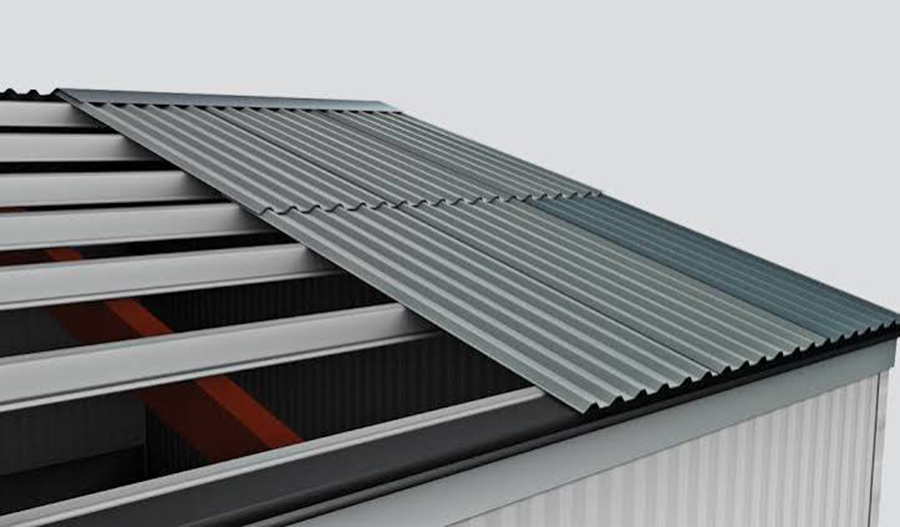
Corrugated steel sheets are essentially single-skin metal panels with no inherent insulation. Their strength comes solely from the ribbed profile created during roll-forming. Sandwich panels, by contrast, achieve composite action,the metal facings and foam core work together, significantly enhancing overall stiffness and load distribution.
3. Installation Sequence Comparison
Corrugated Steel Sheet System (Multi-Layer):
Layout and dimensioning
Marking reference lines on supporting structure
Inner liner sheet installation (if specified)
Insulation layer placement – rigid boards or blanket insulation between purlins
Outer sheet installation – fixed with exposed fasteners
The exposed fasteners (visible screw heads) are characteristic of corrugated sheet installation. Each screw penetration creates a potential leak path. Even with rubber washers, long-term weather exposure eventually degrades the sealing, leading to leakage risks. Installation is labor-intensive, with multiple trades required for each layer.
Sandwich Panel System (Single-Layer):
Layout and dimensioning
Marking reference lines on supporting structure
Direct panel installation – factory-assembled panels fixed to purlins using concealed fasteners
The tongue-and-groove male-female connection creates a hidden fastening system. Self-tapping screws are installed through the panel's female edge, concealed by the overlapping male edge of the next panel. This "dark screw" installation eliminates exposed fasteners, reducing leak paths and creating a cleaner appearance. Leak detection is simpler due to fewer potential entry points.

4.Construction Cycle Comparison
|
Parameter |
Corrugated Steel Sheet |
Sandwich Panel |
|
Installation Stages |
3–5 separate layers |
1 single step |
|
Labor Required |
100 m² / 5 workers |
100 m² / 2.5 workers |
|
Productivity |
Lower, fragmented process |
Higher,integrated factory product |
|
Weather Dependency |
High, multiple layers exposed |
Moderate,single-layer installation |