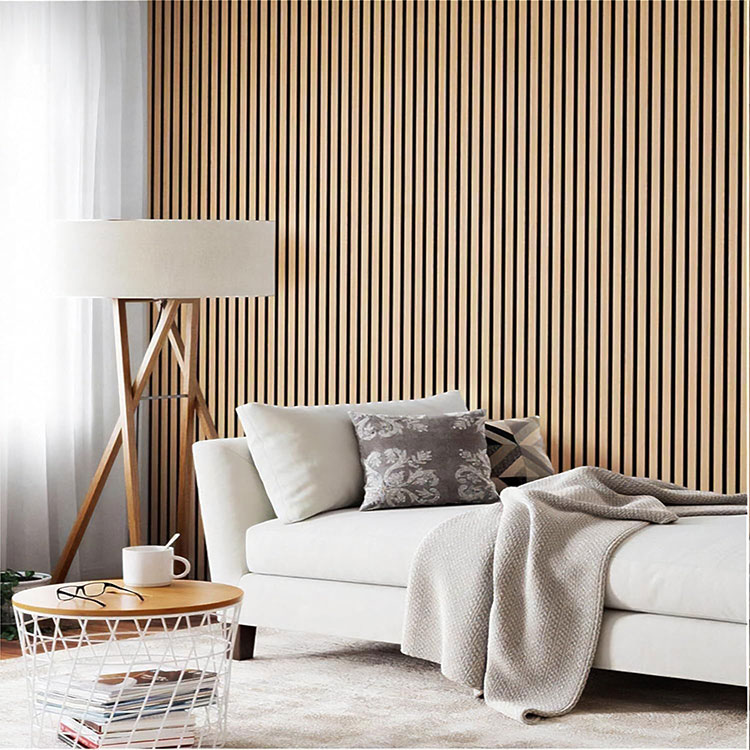
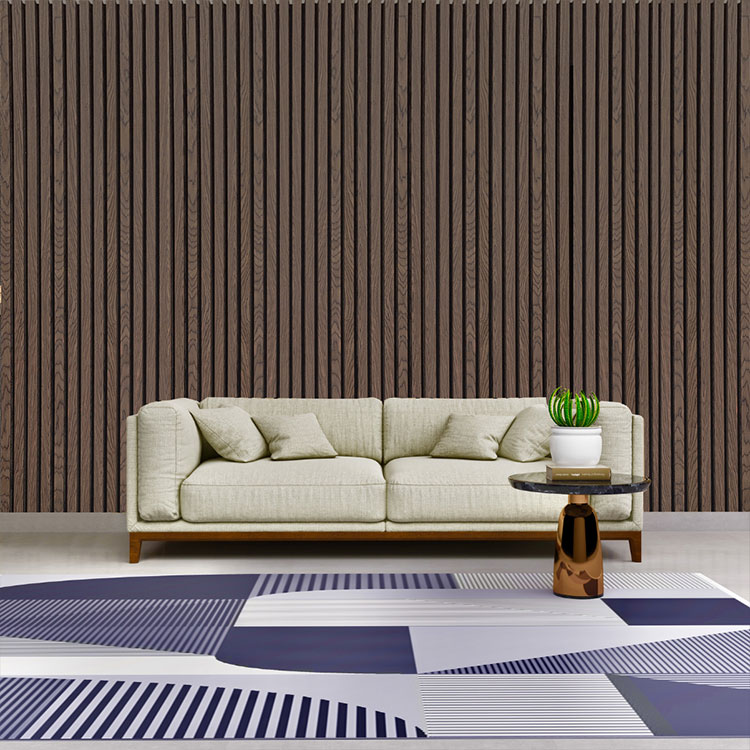
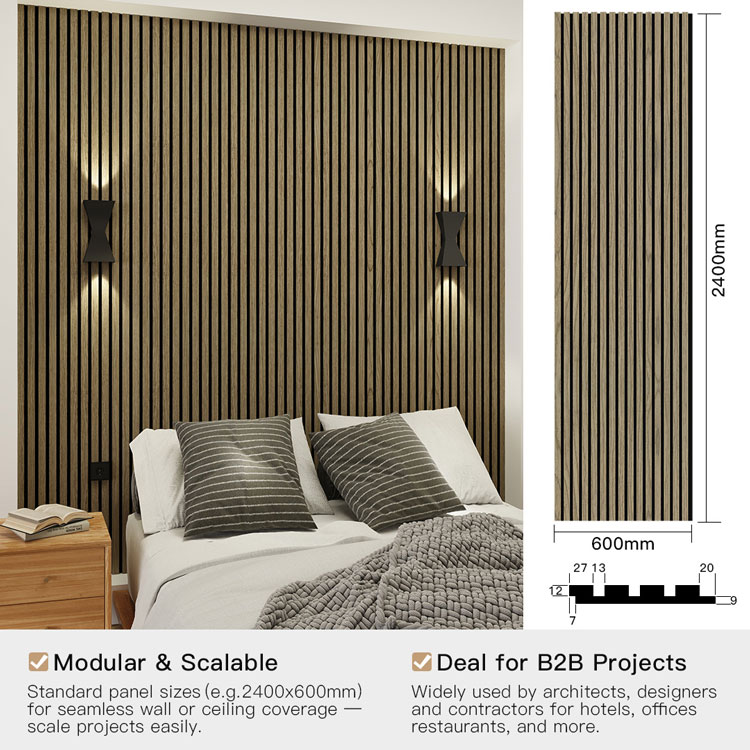
When dealing with echo, reverberation, or general noise problems in a room, many people ask:

Should I install acoustic panels or just use heavy curtains?

Both options can improve room acoustics—but they serve different purposes and offer very different performance levels.

In this article, we’ll compare acoustic panels vs curtains, explain how each works, and help you decide which solution is better for offices, restaurants, commercial spaces, or home interiors.
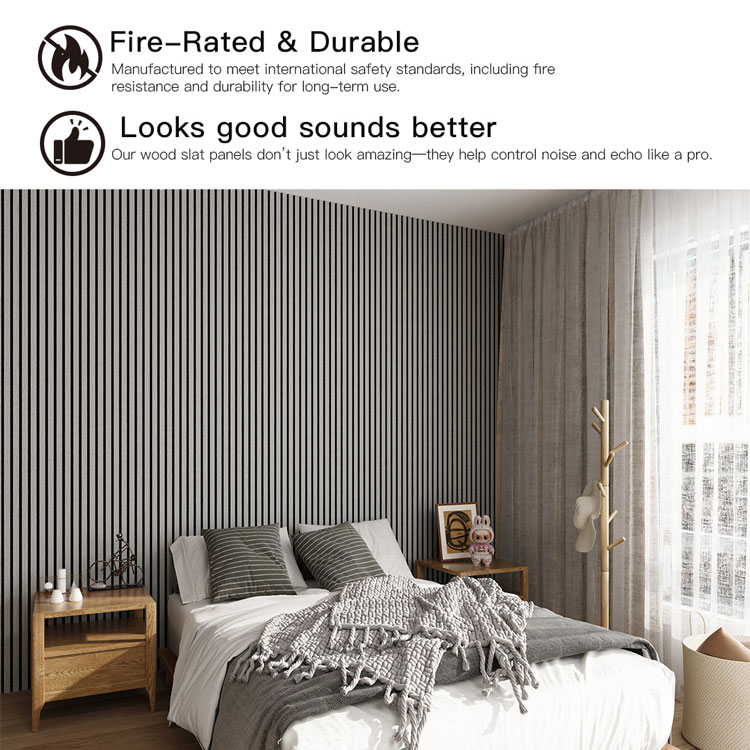
Factory Prices Acoustic Wood Slat Panels


Understanding the Problem: Echo vs Noise

Before comparing solutions, it’s important to clarify what kind of “noise” you are trying to solve.

Most indoor acoustic issues involve:

  • echo

  • reverberation

  • speech clarity problems

  • background noise buildup

  • “hollow” room sound

In open-plan offices, restaurants, conference rooms, and modern homes, the main issue is usually sound reflection, not soundproofing.


How Acoustic Panels Work

Acoustic panels are engineered materials designed to absorb sound waves and reduce reflections.

They typically consist of:

  • polyester fiber

  • mineral wool core

  • acoustic foam

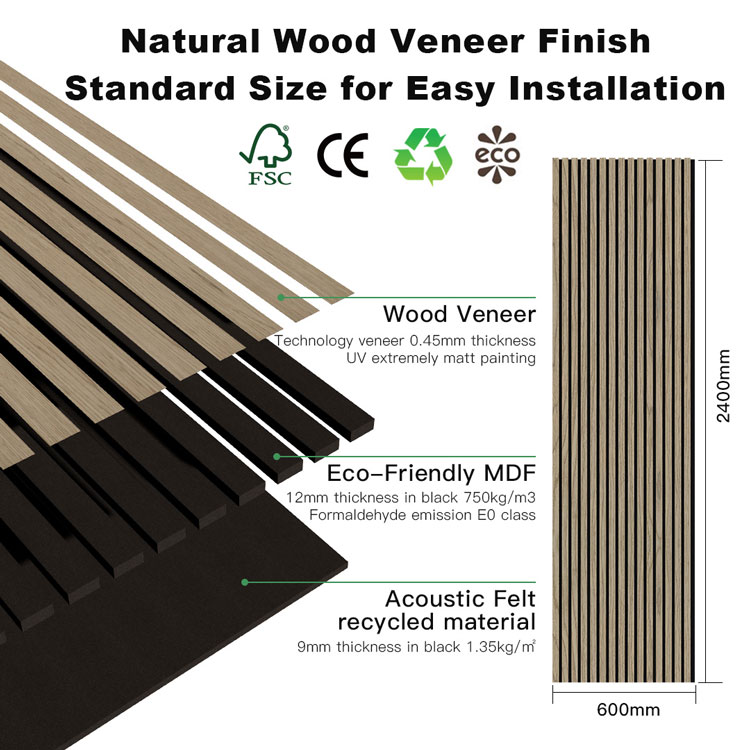
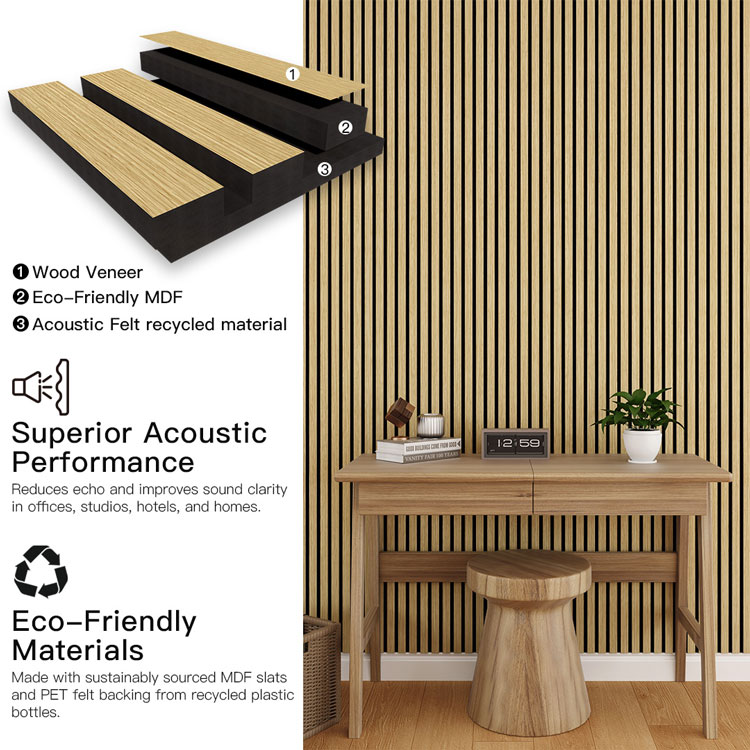
  • wood slats with sound-absorbing felt backing

When sound waves hit these panels, the sound energy is absorbed instead of bouncing back into the room.

Benefits of Acoustic Panels

✅ Significant echo reduction
✅ Improved speech clarity
✅ Reduced reverberation time (RT60)
✅ Professional acoustic performance
✅ Clean and architectural design options
✅ Suitable for walls and ceilings

Acoustic panels are widely used in:

  • open-plan offices

  • meeting rooms

  • restaurants and cafés

  • hotels

  • classrooms

  • home theaters


How Curtains Work for Noise Control

Curtains, especially thick blackout or velvet curtains, can also absorb some sound.

They work by:

  • softening reflections near windows

  • absorbing high-frequency sound

  • reducing minor echo

However, curtains are not specifically engineered for acoustic performance.

Benefits of Curtains

✅ Simple and affordable
✅ Easy to install
✅ Improve window reflection
✅ Add decorative softness to a room

But they also have limitations.


Acoustic Panels vs Curtains: Performance Comparison

Let’s compare them directly.

1. Sound Absorption Performance

Acoustic Panels:
Designed specifically to absorb sound across mid and high frequencies. Some thicker panels also absorb low frequencies.

Curtains:
Mainly absorb high frequencies. Minimal impact on mid-to-low frequency reverberation.

👉 Winner: Acoustic Panels


2. Coverage Flexibility

Acoustic Panels:
Can be installed on walls and ceilings for targeted acoustic treatment.

Curtains:
Usually limited to windows or wall sections with curtain rails.

👉 Winner: Acoustic Panels


3. Speech Clarity Improvement

Acoustic Panels:
Significantly improve speech intelligibility by reducing reverberation.

Curtains:
Provide minor improvement only if large areas are covered.

👉 Winner: Acoustic Panels


4. Design & Aesthetic Appeal

Acoustic Panels:
Modern wood slat designs create high-end architectural features.

Curtains:
Provide softness and fabric elegance but may not fit minimalist or corporate interiors.

👉 Depends on design goals


5. Durability in Commercial Spaces

Acoustic Panels:
Durable, long-lasting, suitable for high-traffic areas.

Curtains:
Require cleaning, can fade, collect dust, and wear over time.

👉 Winner: Acoustic Panels


When Are Curtains Enough?

Curtains may be sufficient when:

  • the room is small

  • echo is minimal

  • budget is very limited

  • the main reflective surface is a large glass window

  • aesthetic softness is the primary goal

In residential bedrooms or living rooms, thick curtains can slightly improve acoustics.

But in larger or commercial environments, curtains alone are rarely enough.


When Are Acoustic Panels the Better Choice?

Acoustic panels are strongly recommended when:

  • the room has hard floors and concrete walls

  • ceilings are high

  • the space is open-plan

  • speech clarity is important

  • noise buildup is noticeable

  • professional acoustic performance is required

In offices, restaurants, conference rooms, and coworking spaces, acoustic panels are far more effective than curtains.


What About Wood Slat Acoustic Panels?

For modern interiors, wood slat acoustic panels are one of the most popular alternatives to fabric panels and curtains.

They combine:

  • decorative wooden slats

  • acoustic felt backing

  • professional sound absorption

  • contemporary architectural style

Unlike curtains, wood slat panels:

  • maintain a clean, structured look

  • do not block natural light

  • provide permanent acoustic treatment

  • improve brand image in commercial spaces

They are widely used in:

  • office feature walls

  • restaurant interiors

  • hotel lobbies

  • reception areas

  • home theaters


Do Acoustic Panels Replace Curtains?

Not necessarily.

In some designs, acoustic panels and curtains can work together:

  • Curtains soften window reflections

  • Acoustic panels treat walls and ceilings

  • Combined treatment produces better overall results

However, if you must choose one for serious acoustic improvement, acoustic panels are the more effective option.


Cost Comparison: Panels vs Curtains

Curtains

  • Lower upfront cost

  • Limited performance improvement

  • May require replacement over time

Acoustic Panels

  • Higher initial investment

  • Long-term durability

  • Stronger acoustic impact

  • Better return in commercial applications

For businesses, the improved comfort and productivity often justify the investment in professional acoustic panels.


Why Commercial Spaces Prefer Acoustic Panels

In offices and hospitality environments, acoustic performance directly affects:

  • employee productivity

  • customer comfort

  • meeting efficiency

  • brand perception

  • overall space value

Curtains cannot provide the level of control required in high-traffic, high-communication spaces.

That’s why professional interior designers and architects typically specify acoustic panels for commercial projects.


Guangdong Leeyin Acoustics: Professional Manufacturer of Wood Slat Acoustic Panels

At Guangdong Leeyin Acoustics, we specialize in manufacturing high-quality wood slat wall panels and acoustic panels for global markets.

As one of China’s leading exporters in the wood slat acoustic panel industry, we provide stable production capacity and consistent quality for distributors, contractors, and commercial project developers.

Our Manufacturing Strength

  • 20,000㎡ modern factory

  • advanced production equipment

  • strong large-scale production capability

  • strict quality management based on international standards

  • precise slat spacing and stable acoustic felt bonding

  • customizable veneer finishes and packaging options

Our wood slat acoustic panels are designed to meet the demands of modern interiors—delivering both aesthetic appeal and professional acoustic performance.


Final Verdict: Acoustic Panels vs Curtains — Which Works Better?

If your goal is serious echo reduction, improved speech clarity, and professional noise control, acoustic panels clearly work better than curtains.

Curtains may provide minor improvement in small spaces, but they cannot replace the performance of engineered acoustic panels.

For offices, restaurants, commercial spaces, and modern homes, wood slat acoustic panels offer:

  • stronger sound absorption

  • long-term durability

  • premium architectural appearance

  • improved comfort and communication

If you’re looking for a long-term solution to indoor noise problems, acoustic panels are the smarter investment.


FAQ: Acoustic Panels vs Curtains

Do curtains reduce echo?

Yes, but only slightly. Thick curtains absorb some high-frequency sound but do not significantly reduce reverberation in large rooms.

Are acoustic panels better than blackout curtains?

Yes. Acoustic panels are specifically engineered for sound absorption, while blackout curtains are designed for light control.

Can I combine curtains and acoustic panels?

Yes. Combining both can improve overall room acoustics.

Are wood slat acoustic panels better than fabric panels?


Both are effective, but wood slat panels provide stronger design impact and durability for commercial interiors.
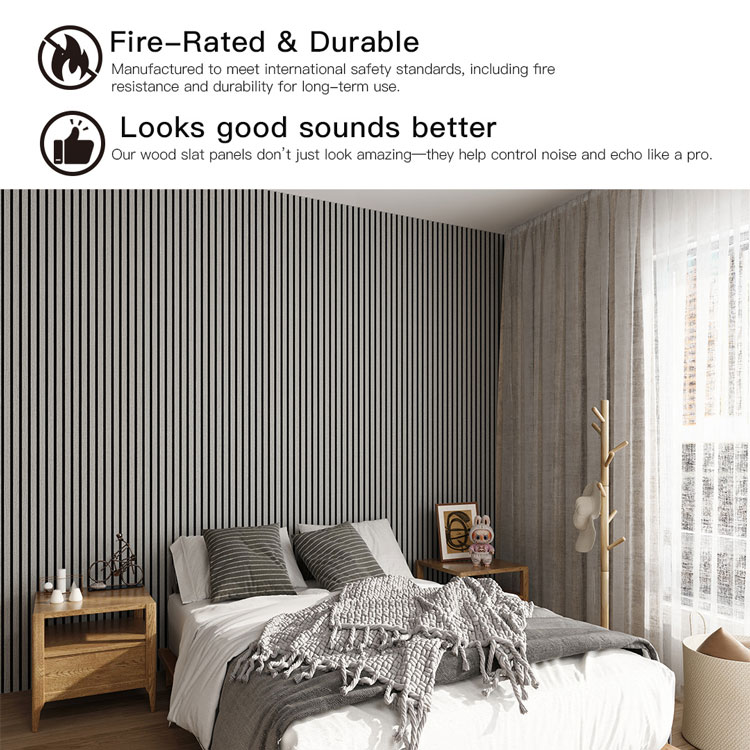
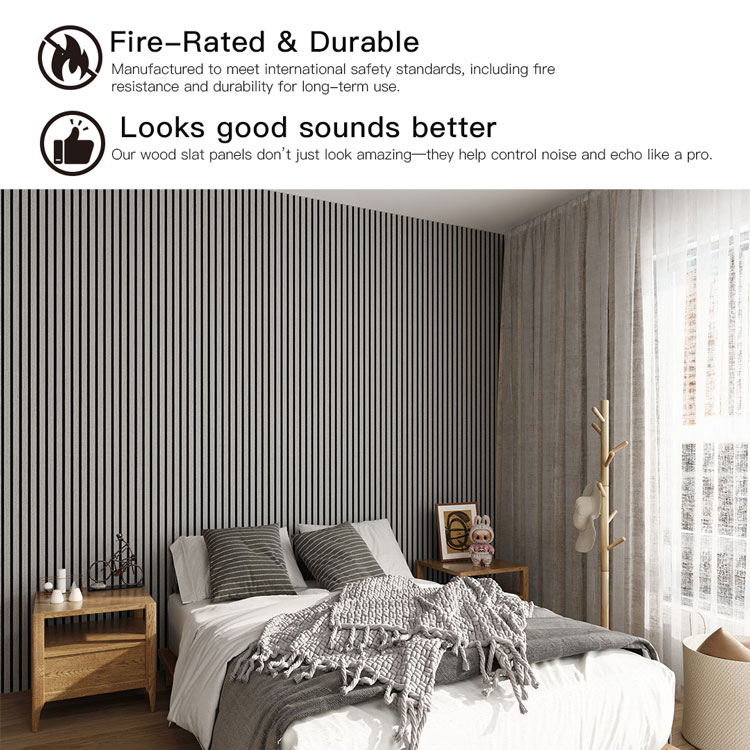
As more homeowners, designers, and business owners focus on improving indoor sound quality, acoustic treatment has become an essential part of modern interior design. Among the many solutions available, DIY acoustic panels are often seen as a budget-friendly alternative to professionally manufactured products. But one important question remains:

Are DIY acoustic panels as effective as professional ones?

The short answer is: DIY acoustic panels can offer basic sound absorption, but they generally do not match the performance, durability, appearance, or reliability of professional acoustic panels.

In this article, we’ll compare DIY and professional acoustic panels in detail, helping you understand which option is best for your acoustic needs.

Manufacturer Acoustic Wood Slat Panels


What Are DIY Acoustic Panels?

DIY acoustic panels are homemade sound-absorbing panels created using readily available materials. Typical components include:

  • Wooden frames
  • Foam, mineral wool, or polyester fiber
  • Fabric covers
  • Basic mounting hardware

They are commonly used in:

  • Home studios
  • Gaming rooms
  • Small personal offices
  • Budget acoustic projects

DIY panels are popular because they are affordable and customizable, but their effectiveness depends heavily on the builder’s skills and material selection.


What Are Professional Acoustic Panels?

Professional acoustic panels are engineered and manufactured using specialized acoustic materials and tested designs to ensure reliable sound absorption performance.

They typically feature:

  • High-density sound-absorbing cores
  • Precision manufacturing
  • Consistent material thickness and density
  • Fire-resistant and eco-friendly materials
  • Decorative surface finishes

Professional panels are widely used in:

  • Offices
  • Commercial spaces
  • Hotels
  • Recording studios
  • Restaurants
  • High-end residential interiors

1. Acoustic Performance Comparison

DIY Acoustic Panels

DIY acoustic panels can reduce basic echo and reverberation if built correctly. However, performance often varies because:

  • Material density may not be optimized
  • Construction quality may differ from panel to panel
  • Thickness may be inconsistent
  • Frequency absorption range may be limited

Professional Acoustic Panels

Professional acoustic panels are specifically engineered to deliver optimized sound absorption across targeted frequencies.

Benefits include:

  • Better mid- and high-frequency absorption
  • More consistent acoustic performance
  • Improved overall room sound balance

👉 Winner: Professional Acoustic Panels


2. Durability and Lifespan

DIY Panels

DIY panels may degrade over time due to:

  • Weak structural support
  • Material sagging
  • Fabric wear
  • Moisture sensitivity

Professional Panels

Manufactured panels are designed for long-term use and durability, often featuring:

  • Reinforced structure
  • Stable acoustic core materials
  • Wear-resistant finishes
  • Moisture-resistant options

👉 Winner: Professional Acoustic Panels


3. Appearance and Interior Design Integration

DIY Panels

DIY acoustic panels often prioritize function over appearance. While some can look attractive, they may lack the polished finish required for professional interiors.

Professional Panels

Modern acoustic panels are designed to enhance interiors, especially decorative options like wood slat acoustic panels, which combine:

  • Architectural style
  • Decorative finishes
  • Premium craftsmanship

These panels can serve as both acoustic treatment and interior décor.

👉 Winner: Professional Acoustic Panels


4. Safety and Compliance

DIY Panels

Homemade panels may not meet building or fire safety standards, which can be a concern in:

  • Commercial buildings
  • Public spaces
  • Hospitality environments

Professional Panels

Professional manufacturers often provide products tested for:

  • Fire resistance
  • Environmental safety
  • Material certification

This is essential for large-scale or commercial projects.

👉 Winner: Professional Acoustic Panels


5. Installation and Convenience

DIY Panels

DIY projects require:

  • Material sourcing
  • Construction time
  • Assembly tools
  • Design planning

Professional Panels

Pre-manufactured panels are ready to install and save:

  • Labor time
  • Installation complexity
  • Project management effort

👉 Winner: Professional Acoustic Panels


When DIY Acoustic Panels Make Sense

DIY acoustic panels may be suitable if:

  • You have a limited budget
  • You need temporary sound treatment
  • The space is informal or personal
  • Aesthetic requirements are low

They can be a practical option for hobbyists and basic home setups.


When Professional Acoustic Panels Are the Better Choice

Professional acoustic panels are ideal when:

  • Acoustic performance is critical
  • Long-term durability is required
  • Appearance matters
  • Safety standards must be met
  • Large-scale installation is involved

For offices, hospitality projects, showrooms, and modern homes, professional solutions provide much greater value.


Why Wood Slat Acoustic Panels Are a Premium Professional Choice

Among professional solutions, wood slat acoustic panels have become one of the most sought-after products due to their unique ability to combine:

  • Sound absorption
  • Decorative elegance
  • Architectural texture
  • Modern aesthetics

These panels feature:

  • Precision wood slats
  • Acoustic felt backing
  • Engineered spacing for enhanced performance

They are widely used in:

  • Luxury homes
  • Office interiors
  • Conference rooms
  • Hotels
  • Restaurants

Guangdong Leeyin Acoustics: Your Trusted Professional Acoustic Panel Manufacturer

At Guangdong Leeyin Acoustics, we specialize in manufacturing premium wood slat wall panels and acoustic panels for clients around the world.

As a leading exporter of wood slat acoustic panels in China, we are committed to delivering superior products backed by professional manufacturing standards.

Why Choose Leeyin?

  • 20,000㎡ modern manufacturing facility
  • Advanced automated production equipment
  • Strict quality management in accordance with international standards
  • Strong large-scale production capacity
  • Extensive global export experience

Our products are trusted by:

  • Interior designers
  • Architects
  • Contractors
  • Distributors worldwide

We deliver acoustic solutions that combine performance, durability, and modern aesthetics.


Final Thoughts

So, are DIY acoustic panels as effective as professional ones?

While DIY acoustic panels can help reduce some echo and improve room acoustics in basic setups, they typically fall short when compared to professional acoustic panels in terms of:

  • Performance
  • Durability
  • Safety
  • Appearance
  • Reliability

For projects where quality, design, and long-term performance matter, professional acoustic panels are the superior investment.


And for those seeking the perfect combination of acoustic treatment and modern style, wood slat acoustic panels remain one of the best options available today.

Low-frequency noise is one of the most challenging acoustic problems in both residential and commercial spaces. Whether it comes from traffic, home theater subwoofers, HVAC systems, or neighboring apartments, low-frequency sound tends to travel farther and penetrate walls more easily than higher frequencies.

Many people ask: Do acoustic panels work for low-frequency noise? The answer depends on the type of acoustic panel, its thickness, and how it is installed. In this article, we’ll explore how acoustic panels interact with low-frequency sound and how to improve acoustic performance in your space.


Understanding Low-Frequency Noise

Low-frequency noise typically refers to sounds in the 20 Hz to 250 Hz range. These sounds include:

  • Bass from music or home theater systems

  • Heavy footsteps or structural vibrations

  • Traffic rumble or construction noise

  • Mechanical equipment or HVAC systems

Unlike higher-frequency sounds such as speech or clattering objects, low-frequency waves have longer wavelengths. Because of this, they can easily pass through walls and reflect around large spaces.

This makes them significantly harder to absorb using standard acoustic treatments.

Leading Distributor of Acoustic Wood Slat Panels


How Acoustic Panels Work

Acoustic panels are designed to absorb sound energy and reduce reflections within a room. Most panels use materials such as:

  • Polyester fiber

  • Mineral wool

  • Acoustic foam

  • Felt-based sound-absorbing cores

When sound waves hit the surface of the panel, the porous material converts sound energy into small amounts of heat, reducing echo and reverberation.

However, standard acoustic panels are most effective at mid- and high-frequency sound absorption, which includes speech, office noise, and everyday household sounds.


Are Acoustic Panels Effective for Low-Frequency Noise?

The short answer is: standard acoustic panels only partially help with low-frequency noise.

Because low-frequency waves are longer and more powerful, they require thicker and denser acoustic materials to be effectively absorbed. Thin decorative panels or lightweight materials may not significantly reduce deep bass sounds.

However, acoustic panels can still contribute to improved sound control in several ways.

1. Reducing Overall Room Resonance

Even if they do not fully absorb deep bass, acoustic panels reduce reflections and reverberation in the room. This helps prevent bass buildup and acoustic imbalance, improving the overall listening experience.

2. Improving Sound Clarity

By controlling mid- and high-frequency reflections, acoustic panels make voices and music clearer, even when low-frequency sounds are present.

3. Supporting a Complete Acoustic Treatment System

In many cases, acoustic panels work best when combined with other acoustic solutions such as:

  • Bass traps

  • Acoustic ceiling panels

  • Sound insulation materials

Together, these elements create a balanced acoustic environment.


How to Improve Low-Frequency Noise Control

If low-frequency noise is your main concern, several strategies can improve performance.

Use Thicker Acoustic Panels

Panels with greater thickness and density can absorb lower frequencies more effectively. Thicker panels provide deeper sound absorption and help manage bass reflections.

Install Panels with Air Gaps

Mounting acoustic panels slightly away from the wall can improve low-frequency absorption. The air gap allows sound waves to penetrate deeper into the panel, increasing acoustic efficiency.

Combine with Bass Traps

Bass traps are specifically designed to absorb low-frequency sound. They are typically placed in room corners where bass energy tends to accumulate.

Increase Surface Coverage

The more acoustic treatment installed in a room, the more effective it becomes. Covering multiple surfaces—walls, ceilings, and corners—helps control both high and low frequencies.


Why Wood Slat Acoustic Panels Are a Popular Choice

Modern wood slat acoustic panels offer a combination of sound absorption and interior design enhancement. These panels typically consist of:

  • Decorative natural wood or MDF slats

  • Sound-absorbing acoustic felt backing

  • Precision-engineered spacing for improved acoustic performance

This structure allows the panels to reduce echo and reverberation while maintaining a sophisticated architectural appearance.

While they primarily target mid- and high-frequency sound, when installed correctly and combined with other acoustic treatments, wood slat panels can contribute to a more balanced acoustic environment.


Applications of Acoustic Panels in Real Spaces

Acoustic panels are widely used in spaces where sound quality and comfort are important, including:

  • Home theaters

  • Recording studios

  • Offices and meeting rooms

  • Restaurants and cafés

  • Hotels and commercial interiors

  • Residential living spaces

In these environments, controlling reflections and reverberation significantly improves speech clarity, listening comfort, and overall acoustic quality.


Guangdong Leeyin Acoustics: Professional Wood Slat Panel Manufacturer

At Guangdong Leeyin Acoustics, we specialize in the design and manufacturing of wood slat wall panels and acoustic panels for global markets.

As one of the leading exporters of wood slat acoustic panels in China, we provide high-quality products backed by strong production capabilities.

Our advantages include:

  • 20,000 square meters of modern manufacturing facilities

  • Advanced production equipment and technology

  • Strict quality management following international standards

  • Large-scale production capacity for global distribution

  • Extensive experience supplying architectural and commercial projects worldwide

Our wood slat acoustic panels are designed to combine acoustic performance, durability, and modern architectural aesthetics, making them ideal for designers, contractors, and distributors.


Final Thoughts

So, do acoustic panels work for low-frequency noise?

Standard acoustic panels are most effective at reducing mid- and high-frequency reflections, but they can still play an important role in managing overall room acoustics. When combined with thicker materials, proper installation techniques, and additional acoustic treatments such as bass traps, they can contribute to better control of low-frequency sound.

For projects that require both sound control and modern interior design, wood slat acoustic panels offer an excellent solution.


If you are looking for high-quality acoustic panels for residential or commercial projects, Guangdong Leeyin Acoustics provides professional manufacturing, reliable quality, and strong global supply capabilities.

In today’s architectural and interior design world, aesthetics alone are no longer enough. Modern spaces are expected to be beautiful, functional, and comfortable—and one often overlooked factor in achieving that balance is acoustic performance. Whether in homes, offices, restaurants, or hospitality venues, poor acoustics can negatively affect the overall experience of a space.

This is why more designers and architects are turning to acoustic panels as a solution that improves both sound quality and visual appeal. Once considered purely functional products, acoustic panels have evolved into stylish design elements that contribute significantly to modern interiors.

In this article, we’ll explore how acoustic panels enhance interior design and why they have become an essential feature in contemporary spaces.

Factory Direct Pricing High-Quality Acoustic Wood Slat Panels


The Role of Acoustics in Interior Design

Interior design is not just about what people see—it’s also about what they hear and feel. Sound has a major impact on how comfortable and inviting a space feels.

Hard surfaces like:

  • Glass
  • Marble
  • Concrete
  • Tile
  • Metal

can reflect sound and create:

  • Echo
  • Reverberation
  • Noise buildup
  • Poor speech clarity

Even the most beautifully designed room can feel uncomfortable if the acoustics are poor. Acoustic panels help solve this issue by absorbing unwanted sound reflections and creating a more balanced acoustic environment.


1. Acoustic Panels Improve Both Function and Style

One of the biggest advantages of modern acoustic panels is that they no longer need to look industrial or unattractive.

Today’s acoustic panels are designed to provide:

  • Excellent sound absorption
  • Decorative finishes
  • Architectural textures
  • Customizable aesthetics

This means they can become part of the design itself rather than something hidden away.

Designers can now use acoustic panels to improve room acoustics without sacrificing visual beauty.


2. Creating Stunning Feature Walls

Acoustic panels can transform ordinary walls into decorative focal points.

Especially with wood slat acoustic panels, designers can create:

  • Elegant accent walls
  • Textured architectural surfaces
  • Warm, natural visual effects

Wood slat panels add dimension and depth to interiors while maintaining a modern and minimalist look.

They are frequently used in:

  • Living rooms
  • Hotel lobbies
  • Office reception areas
  • Conference rooms
  • Retail showrooms

3. Enhancing Spatial Perception

Acoustic panels can also influence how a room feels spatially.

For example:

  • Vertical slat panels make ceilings appear taller
  • Horizontal installations can make walls feel wider
  • Patterned panel layouts add rhythm and movement

This allows designers to manipulate visual perception while also solving acoustic problems.


4. Supporting Minimalist and Modern Design Trends

Modern interior design trends emphasize:

  • Clean lines
  • Simplicity
  • Natural materials
  • Functional décor

Acoustic panels—especially wood slat styles—perfectly complement these trends.

Their sleek appearance makes them ideal for:

  • Scandinavian interiors
  • Minimalist homes
  • Contemporary offices
  • Luxury commercial environments

They blend naturally into modern spaces while adding texture and warmth.


5. Improving Comfort in Open-Plan Spaces

Open-plan interiors are increasingly popular, but they often suffer from excessive noise due to fewer dividing walls and more reflective surfaces.

Acoustic panels help:

  • Reduce ambient noise
  • Improve speech clarity
  • Minimize distractions
  • Enhance privacy

This is especially important in:

  • Open offices
  • Restaurants
  • Co-working spaces
  • Reception halls

By improving sound comfort, acoustic panels make these spaces more functional and enjoyable.


6. Adding Warmth Through Natural Materials

Many acoustic panel designs, particularly wood slat acoustic panels, incorporate natural wood finishes.

Wood introduces:

  • Warmth
  • Organic texture
  • Natural elegance

This helps soften modern interiors that may otherwise feel too cold or sterile due to heavy use of glass, metal, and stone.

Natural wood acoustic panels help create spaces that feel more inviting and comfortable.


7. Offering Flexible Design Possibilities

Acoustic panels are highly versatile and can be used in many creative ways, including:

  • Wall cladding
  • Ceiling decoration
  • Partition walls
  • Decorative room dividers
  • Integrated furniture design

This flexibility allows architects and designers to fully integrate acoustic treatment into the overall design concept.


Why Wood Slat Acoustic Panels Are So Popular

Among all acoustic solutions, wood slat acoustic panels are currently one of the most popular options in modern interiors.

Their layered construction typically includes:

  • Decorative wood slats
  • Acoustic felt backing
  • Precision spacing for sound absorption

They offer the perfect combination of:

  • Acoustic functionality
  • Premium appearance
  • Architectural sophistication

This makes them a preferred choice for projects requiring both style and performance.


Guangdong Leeyin Acoustics: Your Professional Acoustic Panel Partner

At Guangdong Leeyin Acoustics, we specialize in producing high-quality wood slat wall panels and acoustic panels for global markets.

As one of China’s leading exporters of wood slat acoustic panels, we provide reliable, modern acoustic solutions trusted by clients worldwide.

Our Core Strengths

  • 20,000 square meters of modern production facilities
  • Advanced automated manufacturing equipment
  • Strict quality management in line with international standards
  • Strong large-scale production capabilities
  • Rich experience serving global distributors, designers, and contractors

We are committed to delivering products that combine:

  • Outstanding acoustic performance
  • Elegant visual design
  • Long-term durability
  • Consistent manufacturing quality


Our acoustic panel systems are widely used in residential, commercial, and hospitality projects around the world.

Creating a comfortable acoustic environment is essential for many modern spaces, including offices, restaurants, recording studios, home theaters, and commercial interiors. While acoustic panels are one of the most effective tools for reducing echo and improving sound clarity, the best results are often achieved when they are combined with other sound treatment solutions.

In this article, we will explore how to combine acoustic panels with other sound treatments to create a balanced acoustic environment and achieve optimal sound performance.

Factory Direct Acoustic Wood Slat Panels


Understanding the Role of Acoustic Panels

Acoustic panels are designed to absorb sound reflections that bounce off hard surfaces like walls, ceilings, and floors. When sound waves strike these panels, the porous materials inside convert sound energy into small amounts of heat, reducing echo and reverberation.

Acoustic panels are especially effective at controlling mid- and high-frequency sounds, such as:

  • Speech

  • Office noise

  • Music reflections

  • Background chatter

However, in larger or more complex spaces, acoustic panels alone may not fully solve all acoustic problems. That is why combining them with other sound treatments can significantly improve results.


Why Combining Multiple Acoustic Solutions Matters

Sound behaves differently depending on room size, materials, and layout. Some surfaces reflect sound, while others absorb or diffuse it.

Using a combination of acoustic treatments helps control:

  • Echo and reverberation

  • Bass buildup

  • Sound diffusion and balance

  • Speech clarity and listening comfort

A well-designed acoustic system typically includes absorption, diffusion, and sometimes sound isolation elements working together.


1. Combine Acoustic Panels with Bass Traps

One of the most common acoustic challenges is low-frequency buildup, especially in corners of rooms.

Acoustic panels mainly absorb mid- and high-frequency sounds, while bass traps are specifically designed to absorb low-frequency energy.

How They Work Together

  • Acoustic panels reduce echo and reflections on walls.

  • Bass traps absorb deep bass frequencies that accumulate in room corners.

Best Placement

  • Install acoustic panels on walls and ceilings.

  • Place bass traps in vertical corners or ceiling corners where bass energy is strongest.

This combination is especially effective for home theaters, recording studios, and music rooms.


2. Combine Acoustic Panels with Acoustic Ceilings

Ceilings are often one of the largest reflective surfaces in a room, yet they are frequently overlooked when designing acoustic treatments.

Adding ceiling treatments such as acoustic ceiling panels or suspended baffles can significantly improve sound quality.

Benefits

  • Reduces vertical sound reflections

  • Improves speech clarity in large rooms

  • Enhances overall acoustic balance

Ideal Spaces

  • Offices

  • Conference rooms

  • Restaurants

  • Open-plan commercial environments

When wall panels and ceiling treatments are used together, they create a more complete acoustic solution.


3. Combine Acoustic Panels with Diffusers

While absorption materials remove sound reflections, too much absorption can sometimes make a room sound unnaturally dull or flat.

This is where acoustic diffusers play an important role.

Diffusers scatter sound waves in multiple directions, helping to maintain a natural and balanced acoustic environment.

Advantages of Diffusion

  • Preserves natural room ambiance

  • Prevents overly “dead” acoustics

  • Improves sound distribution

Diffusers are commonly used in:

  • Recording studios

  • Home theaters

  • Music rehearsal rooms

When combined with acoustic panels, they create a balanced acoustic design with both absorption and diffusion.


4. Combine Acoustic Panels with Soft Furnishings

Soft materials in a room can also contribute to sound absorption. Items such as:

  • Carpets

  • Rugs

  • Upholstered furniture

  • Thick curtains

can help reduce sound reflections and improve overall acoustic comfort.

While these materials cannot replace professional acoustic panels, they can complement them by providing additional sound absorption throughout the space.


5. Use Decorative Acoustic Wall Systems

Modern architectural design increasingly favors solutions that combine acoustic performance with visual aesthetics.

One of the most popular solutions today is wood slat acoustic panels, which integrate decorative wood elements with sound-absorbing materials.

These panels typically feature:

  • Natural wood veneer or MDF slats

  • Acoustic felt backing

  • Engineered spacing for improved sound absorption

This design allows them to enhance both the visual appearance and acoustic performance of interior spaces.

Wood slat acoustic panels are widely used in:

  • Offices and meeting rooms

  • Hotels and restaurants

  • Residential interiors

  • Retail spaces

  • Corporate reception areas


The Importance of Professional Acoustic Design

Every room has unique acoustic characteristics based on its size, shape, materials, and usage. A successful acoustic solution requires careful planning of:

  • Panel placement

  • Surface coverage

  • Material selection

  • Combination of acoustic treatments

By integrating acoustic panels with other sound treatments, it is possible to create a comfortable and balanced acoustic environment that supports communication, productivity, and enjoyment.


Guangdong Leeyin Acoustics: Expertise in Wood Slat Acoustic Panels

At Guangdong Leeyin Acoustics, we specialize in the manufacturing of high-quality wood slat wall panels and acoustic panels designed for modern architectural spaces.

As one of the leading exporters of wood slat acoustic panels in China, we provide products that combine excellent acoustic performance with elegant interior design.

Our strengths include:

  • 20,000 square meters of modern production facilities

  • Advanced manufacturing technology

  • Strict quality management following international standards

  • Strong production capacity to support large global orders

  • Extensive experience serving international distributors, designers, and contractors


Our wood slat acoustic panels are widely used in commercial buildings, residential interiors, offices, and hospitality projects, delivering both acoustic improvement and modern aesthetics.

Acoustic panels have become a popular solution for improving sound quality in homes, offices, studios, restaurants, and commercial interiors. They help reduce echo, control reverberation, and create a more comfortable acoustic environment. However, many people install acoustic panels without fully understanding how they work, which can lead to disappointing results.

In this article, we will explore the most common mistakes when using acoustic panels and how to avoid them to achieve the best acoustic performance.

 Leading Distributor of Acoustic Wood Slat Panels


Understanding the Purpose of Acoustic Panels

Before discussing the mistakes, it’s important to understand what acoustic panels are designed to do.

Acoustic panels are primarily used to absorb sound reflections inside a room, reducing echo and reverberation. They improve speech clarity and listening comfort but are not designed to completely block sound from entering or leaving a room.

Many misunderstandings about acoustic treatment come from confusing sound absorption with soundproofing, which leads to improper installation or unrealistic expectations.


Common Mistake #1: Expecting Acoustic Panels to Soundproof a Room

One of the most frequent mistakes is assuming that acoustic panels will completely block outside noise, such as traffic sounds or noise from neighbors.

In reality, acoustic panels are designed to control sound reflections within a room, not to stop sound transmission through walls or ceilings.

The Right Approach

If your goal is to reduce external noise, you will need soundproofing solutions, such as:

  • Adding mass to walls

  • Sealing air gaps

  • Using specialized sound insulation materials

Acoustic panels are best used to improve internal sound quality, not full sound isolation.


Common Mistake #2: Installing Too Few Panels

Another common issue is installing only a few panels and expecting a dramatic improvement in acoustics.

Sound reflections occur across multiple surfaces in a room, including walls, ceilings, and corners. If only a small portion of the room is treated, sound waves will continue reflecting from untreated surfaces.

The Right Approach

For effective acoustic treatment:

  • Cover 20–30% of reflective surfaces in the room

  • Treat multiple walls instead of only one

  • Consider ceiling treatment in large spaces

Increasing the treated surface area significantly improves acoustic performance.


Common Mistake #3: Placing Panels in the Wrong Locations

Even high-quality acoustic panels will not perform well if they are installed in ineffective positions.

Many people place panels randomly on walls, focusing only on decoration rather than acoustic function.

The Right Approach

Panels should be installed at key reflection points, including:

  • Side walls near listening or seating areas

  • Behind speakers or sound sources

  • Opposite reflective surfaces

  • Ceilings in rooms with strong echo

Proper placement ensures that sound reflections are absorbed before they bounce around the room.


Common Mistake #4: Ignoring Ceiling Acoustics

In many spaces, the ceiling is a major reflective surface. However, it is often overlooked when installing acoustic panels.

In large rooms, offices, or restaurants, untreated ceilings can create strong reverberation even if wall panels are installed.

The Right Approach

Consider installing:

  • Ceiling-mounted acoustic panels

  • Suspended acoustic baffles

  • Decorative acoustic ceiling systems

Treating both walls and ceilings creates a more balanced acoustic environment.


Common Mistake #5: Choosing Panels Based Only on Appearance

Decorative panels may look attractive but might not provide effective sound absorption if the materials are not designed for acoustic performance.

Low-density materials or thin decorative panels often have limited acoustic capabilities.

The Right Approach

Choose panels with:

  • Proper sound-absorbing materials

  • Sufficient thickness and density

  • Verified acoustic performance

Modern wood slat acoustic panels are a good example of combining design aesthetics with real acoustic functionality.


Common Mistake #6: Installing Panels Directly on Highly Reflective Surfaces Without Planning

Mounting panels directly on walls without considering spacing or layout may reduce their efficiency.

The Right Approach

Some acoustic systems benefit from small air gaps behind panels, which can enhance sound absorption performance.

Proper spacing and layout planning can significantly improve acoustic results.


The Advantages of Wood Slat Acoustic Panels

Wood slat acoustic panels have become increasingly popular because they combine functional acoustic treatment with architectural design.

These panels typically consist of:

  • Natural wood veneer or MDF slats

  • Sound-absorbing acoustic felt backing

  • Carefully engineered spacing between slats

This structure allows the panels to reduce echo and reverberation while maintaining a modern decorative appearance, making them suitable for a wide range of environments.

Common applications include:

  • Offices and meeting rooms

  • Restaurants and cafés

  • Hotels and commercial spaces

  • Home theaters and living rooms

  • Recording studios and creative spaces


Guangdong Leeyin Acoustics: Professional Acoustic Panel Manufacturer

At Guangdong Leeyin Acoustics, we specialize in the manufacturing of wood slat wall panels and acoustic panels designed for both acoustic performance and architectural aesthetics.

As a leading exporter of wood slat acoustic panels in China, our company provides reliable products for global markets.

Our advantages include:

  • 20,000 square meters of modern manufacturing facilities

  • Advanced production technology and equipment

  • Strict quality management following international standards

  • Strong production capacity to support global supply

  • Extensive experience working with distributors, designers, and contractors

Our products are widely used in residential, commercial, and architectural projects, offering a combination of durability, sound absorption, and elegant design.

In recent years, wood slat acoustic panels have become one of the most sought-after design elements in residential and commercial interiors. From luxury homes and modern offices to hotels, restaurants, and retail spaces, these panels are appearing everywhere in contemporary architecture. But what exactly is driving their popularity?

The answer lies in their unique ability to combine aesthetic beauty, acoustic functionality, and architectural versatility—three qualities that are essential in modern interior design.

In this article, we’ll explore why wood slat acoustic panels are trending in modern interiors and why they have become a preferred choice for designers, architects, and developers worldwide.


Premium Acoustic Wood Slat Panels ManufacturerThe Rise of Multi-Functional Interior Materials

Modern design is no longer just about creating beautiful spaces—it’s about creating environments that are:

  • Functional
  • Comfortable
  • Sustainable
  • Visually appealing

Today’s clients want materials that do more than simply look good. They expect products to improve the usability and comfort of a space while supporting modern aesthetics.

Wood slat acoustic panels meet all of these demands by offering both decorative appeal and acoustic performance in one product.


1. They Combine Style and Acoustic Performance

One of the biggest reasons for the growing popularity of wood slat acoustic panels is that they provide two major benefits in one solution:

Decorative Appeal

Their sleek linear design and natural wood finishes create a modern, elegant appearance that enhances interior aesthetics.

Sound Absorption

The acoustic felt backing and slatted construction help reduce:

  • Echo
  • Reverberation
  • Background noise

This makes spaces more acoustically comfortable while maintaining visual sophistication.


2. They Match Modern Design Trends Perfectly

Wood slat acoustic panels align seamlessly with today’s most popular design styles, including:

  • Minimalist interiors
  • Scandinavian design
  • Japandi aesthetics
  • Contemporary architecture
  • Biophilic/nature-inspired spaces

Their clean lines and natural textures make them ideal for interiors focused on simplicity, warmth, and balance.


3. Natural Wood Adds Warmth to Interiors

Many modern interiors use materials like:

  • Concrete
  • Glass
  • Steel
  • Stone

While these materials look sophisticated, they can sometimes make spaces feel cold or sterile.

Wood slat acoustic panels help soften these environments by introducing:

  • Warm natural tones
  • Organic textures
  • Visual depth

This creates a more welcoming and balanced atmosphere.


4. They Improve Acoustic Comfort in Open Spaces

Open-plan spaces are highly popular today, but they often come with acoustic challenges due to:

  • High ceilings
  • Hard flooring
  • Large glass windows
  • Minimal partitions

These features can cause sound to bounce excessively throughout the room.

Wood slat acoustic panels help control noise by absorbing sound reflections, making them ideal for:

  • Open offices
  • Conference rooms
  • Restaurants
  • Hotel lobbies
  • Residential living areas

5. They Create Stunning Feature Walls

Wood slat acoustic panels are frequently used to build feature walls that act as visual focal points in a room.

Their textured, dimensional appearance adds:

  • Architectural character
  • Wall depth
  • Premium visual interest

This transforms plain walls into statement design elements.


6. They Offer Versatile Installation Options

Another reason for their popularity is their installation flexibility.

Wood slat acoustic panels can be installed on:

  • Walls
  • Ceilings
  • Partitions
  • Curved surfaces (depending on design)

This versatility allows designers to incorporate them into a wide range of interior concepts.


7. They Support Sustainable Design Goals

Sustainability has become a major priority in modern construction and interior design.

Many wood slat acoustic panels are manufactured using:

  • Eco-friendly materials
  • Recyclable acoustic felt
  • Low-emission adhesives
  • Sustainable wood sources

This makes them a strong choice for environmentally conscious projects.


8. They Enhance Property Value and Perceived Luxury

Wood slat acoustic panels create a premium, upscale look that increases the perceived value of a space.

Their high-end appearance makes interiors feel:

  • More luxurious
  • More professionally designed
  • More architecturally refined

This is especially valuable in:

  • Hospitality projects
  • High-end residences
  • Commercial showrooms
  • Luxury retail spaces

Why Businesses and Designers Prefer Professional Manufacturers

As demand for wood slat acoustic panels continues to rise, quality becomes increasingly important.

Professional manufacturing ensures:

  • Precise slat spacing
  • Consistent acoustic performance
  • Durable construction
  • High-end finishing quality

This is why sourcing from experienced manufacturers is critical for long-term project success.


Guangdong Leeyin Acoustics: Leading the Wood Slat Acoustic Panel Industry

At Guangdong Leeyin Acoustics, we specialize in the production of premium wood slat wall panels and acoustic panels, serving clients around the world.

As one of China’s leading exporters in the wood slat acoustic panel industry, we are trusted by distributors, contractors, and designers for our quality, reliability, and manufacturing expertise.

Our Advantages Include:

  • 20,000㎡ modern production facility
  • Advanced automated manufacturing equipment
  • Strict quality management following international standards
  • Strong production capacity for bulk orders
  • Extensive experience in global export markets

We focus on delivering products that combine:

  • Excellent sound absorption performance
  • Superior craftsmanship
  • Elegant modern design
  • Long-lasting durability


Our wood slat acoustic panels are used in residential, commercial, hospitality, and architectural projects across the globe.

1. Compliance with International Building Codes

Many countries require acoustic panels used in public and commercial spaces to meet strict fire standards, such as:

  • EN 13501-1 (Europe)

  • ASTM E84 / Class A (USA)

  • BS 476 (UK)

Fire-rated acoustic panels are often mandatory in:

  • Offices and coworking spaces

  • Hotels and hospitality projects

  • Schools and universities

  • Cinemas, theaters, and studios

  • Shopping malls and airports

Choosing non-compliant panels can lead to project delays, failed inspections, or legal risks.

High-Quality Supplier Acoustic Wood Slat Panels


2. Enhanced Safety for Occupants

Acoustic panels cover large surface areas. In the event of a fire, low-quality materials can:

  • Ignite quickly

  • Spread flames rapidly

  • Produce toxic smoke

Fire-resistant acoustic panels help:

  • Slow down fire spread

  • Reduce smoke emission

  • Provide extra evacuation time

This makes them an essential component of responsible architectural and interior design.


3. Essential for Commercial & Public Projects

While residential users may prioritize aesthetics, commercial buyers focus on risk control. Architects, contractors, and developers increasingly demand:

  • Fire-retardant wood slat acoustic panels

  • Tested and certified acoustic materials

  • Full documentation for project approval

Fire resistance is no longer optional—it is a core purchasing criterion.


Fire Resistance in Wood Slat Acoustic Panels

Wood slat acoustic panels combine natural wood aesthetics with acoustic functionality. However, natural wood must be properly treated to meet fire standards.

Professional manufacturers achieve this by:

  • Using fire-retardant MDF or engineered wood slats

  • Applying fire-resistant surface treatments

  • Pairing wood slats with Class B or Class A polyester fiber acoustic backing

When engineered correctly, wood slat panels can offer both excellent sound absorption and reliable fire performance.


How Guangdong Leeyin Acoustics Ensures Fire Safety

As a leading manufacturer and exporter of wood slat acoustic panels in China, Guangdong Leeyin Acoustics integrates fire resistance into every stage of production.

Our Manufacturing Advantages:

  • 20,000㎡ modern factory with large-scale production capacity

  • Advanced production lines for wood slat wall panels and acoustic panels

  • Strict quality control systems aligned with international standards

  • Fire-retardant material options tailored for different market requirements

What We Offer:

  • Fire-rated wood slat acoustic panels

  • Polyester fiber acoustic panels with tested fire performance

  • Customized solutions for commercial and export projects

  • Stable quality for large-volume international orders

Our products are widely exported and trusted by clients seeking safe, compliant, and high-performance acoustic solutions.


What Buyers Should Look for in Fire-Resistant Acoustic Panels

Before purchasing acoustic panels, always confirm:

  • Fire rating classification and test standards

  • Core material fire performance

  • Manufacturer’s quality management system

  • Export experience and certification support


Choosing a professional manufacturer ensures both acoustic effectiveness and safety compliance.

Sound-absorbing panels work by absorbing sound energy and reducing reflections, thus eliminating echoes and reverberation. Their effectiveness largely depends on:


Material density and porosity

Leading Distributor of Acoustic Wood Slat Panels

Internal structure


Fire resistance and safety


Environmental performance


Visual design compatibility


Choosing the wrong material can lead to poor sound insulation, short product lifespan, or safety hazards.


Common Materials for Sound-Absorbing Panels


1. PET Felt (Recycled Polyester Fiber)


PET felt boards are widely used for basic sound absorption.


Advantages:


Lightweight and easy to install


Made from recycled plastic bottles


Good sound absorption for mid-to-high frequencies


Environmentally friendly and recyclable


Disadvantages:


Limited sound absorption for low frequencies


Softer surface, lower impact resistance


Functionality outweighs aesthetics


PET felt is commonly used in offices, schools, and projects with limited budgets.


2. Sound-Absorbing Foam


Sound-absorbing foam is commonly found in small recording studios and home recording studios.


Advantages:


Affordable entry-level option


Easy to install yourself


Reduces flutter echo


Disadvantages:


Weaker low-frequency performance


Will deform over time


Limited fire resistance of low-quality foam


Not suitable for high-end interior decoration


Foam is best suited for temporary or small-scale acoustic treatments.


3. Mineral Wool/Glass Fiber (Core)


Mineral wool and glass fiber are typically used inside acoustic panels, not as exposed surfaces.


Advantages:


Excellent sound absorption across the entire frequency range


High density enhances performance


Fire-resistant after proper treatment


Disadvantages:


Requires fabric or solid surface covering


Less aesthetically pleasing


Requires careful handling during production


These materials form the core of many professional-grade acoustic panels.


4. Medium-Density Fiberboard (MDF)


High-density medium-density fiberboard is a key structural material for high-end acoustic panels, especially wood slat wall panels.


Advantages:


Stable density ensures consistent acoustic performance


Strong structural integrity


Smooth surface for easy veneer application


Ideal for strip and perforated designs


Limitations:


Performance depends on density and quality


Low-grade MDF may release higher levels of volatile organic compounds (VOCs)


Our company uses rigorously selected high-density MDF that meets international standards.


5. Natural Wood Veneer (Decorative and Functional Layer)


Natural wood veneer plays a crucial role in wood strip acoustic panels.


Advantages:


Enhances aesthetics and interior value


Utilizes slat spacing to diffuse and absorb sound


Natural, warm appearance


Complements modern and luxury design styles


Limitations:


Vene thickness and bonding quality are critical


Requires specialized production control


When used in conjunction with acoustic backing, wood veneer offers both performance and aesthetics.

One of the most frequently asked questions by buyers when choosing acoustic panels is:


Are thicker acoustic panels better?

Custom Solutions Acoustic Wood Slat Panels

In short, the answer is yes—but not always in the way people expect.


Panel thickness does affect sound absorption, but it's only one part of the overall acoustic performance. In this article, we'll explain how thickness works, when thicker panels are more beneficial, and how to choose the right solution for your space.


How Acoustic Panels Absorb Sound


Acoustic panels reduce echoes and reverberation in a room by absorbing sound energy, especially mid-to-high frequency sound waves.


Key factors affecting performance include:


Panel thickness


Material density


Surface design


Installation method


Air gap behind the panel


Thickness alone does not guarantee better results.


Does thickness really improve sound absorption?


Yes—especially for low frequencies.


Generally speaking:


Thicker panels can absorb a wider frequency range.


They are more effective at low frequencies than thinner panels.


For example:


12-25 mm thick panels primarily absorb high frequencies.


40-50 mm thick panels absorb mid-frequency frequencies more effectively.


Thick panels with backing systems help control low-frequency energy.


However, for everyday residential and commercial spaces, ultra-thick panels are often unnecessary.


Thicker with Smarter Design


Modern acoustic solutions are not simply about increasing thickness, but about balancing design.


For example, wood slat acoustic panels use:


Rigid medium-density fiberboard slats for sound diffusion


High-density polyethylene terephthalate (PET) felt for sound absorption


Thickness optimized for the actual space


This combination achieves effective acoustic control without adding excessive volume or visual clutter.


When to Need Thicker Acoustic Panels


Thicker acoustic panels are best suited for:


Recording studios


Music rehearsal rooms


Home theaters


Large open-plan commercial spaces


In these environments, low-frequency control is crucial.


When Thicker Acoustic Panels Are Not Needed


For example:


Living rooms


Bedrooms


Offices


Conference rooms


Restaurants and hotels


Standard-thickness acoustic panels or wood strip acoustic panels, if installed properly, already provide excellent sound absorption.


In these cases, installation location and coverage are more important than thickness.


The Role of Air Gap (Often Overlooked)


An important professional insight:


Adding an air gap behind the acoustic panel can significantly improve low-frequency absorption—sometimes even better than increasing thickness.


This is why wall-mounted wood strip acoustic panels with felt backing are so effective in actual installations.


Why Wood Strip Acoustic Panels are the Ideal Balanced Choice


Wood strip acoustic panels offer the following advantages:


Moderate thickness, suitable for most environments


Natural sound diffusion and absorption


Aesthetically pleasing, perfectly complementing modern interior design


Highly effective sound absorption without excessive space occupation


Achieving an ideal balance between functionality, design, and ease of installation

keyboard_arrow_up