The Science Behind Better Sound Control
Echoes and reverberation are two of the most common acoustic problems in modern indoor environments. Whether it's a home office, recording studio, restaurant, or commercial space, excessive sound reflections make a room feel noisy, uncomfortable, and difficult to use.

So, how exactly do acoustic panels reduce echoes and reverberation? Why are wood slat acoustic panels one of the most effective solutions currently available?
This guide will explain the acoustic principles behind sound absorption and highlight the expertise of Guangdong Leeyin Acoustics, a leading Chinese manufacturer of wood slat wall panels and acoustic panels.
What are Echoes and Reverberation?
Before understanding how acoustic panels work, it's essential to understand their design purpose.
An echo is sound that, after being reflected from a hard surface, returns to the listener's ear with a significant delay.
Reverberation (or echo) is the phenomenon where sound persists due to multiple reflections and merges over time.
Rooms using hard materials such as concrete, glass, drywall, and tile are often most prone to reverberation problems.
Why do exposed rooms have poor sound quality?
Sound waves behave like energy. When they strike a hard surface, they are reflected back into the room, rather than absorbed.
Common problems include:
Speech becoming muffled or "muddy"
Music lacking clarity
Increased background noise
Hearing fatigue in offices and public spaces
Even high-end audio equipment cannot perform to its full potential without proper acoustic treatment.
How acoustic panels reduce echoes and reverberation
Acoustic panels work by absorbing sound energy, not reflecting it.
When sound waves strike an acoustic panel:
Sound penetrates the surface material
Energy is converted into heat through friction within the panel
Reflected sound energy is significantly reduced
This process shortens the reverberation time (RT60) and prevents sound from reflecting uncontrollably within the room.
The role of materials and structure
Not all acoustic panels perform the same way. Its effectiveness depends on several key factors:
1. Sound-absorbing core material
High-performance sound-absorbing panels use the following materials:
PET sound-absorbing felt
Mineral fiber
High-density sound-absorbing backing
These materials are specially designed to effectively absorb sound waves, especially in the mid-to-high frequency range where echoes are most pronounced.
2. Surface design and sound diffusion
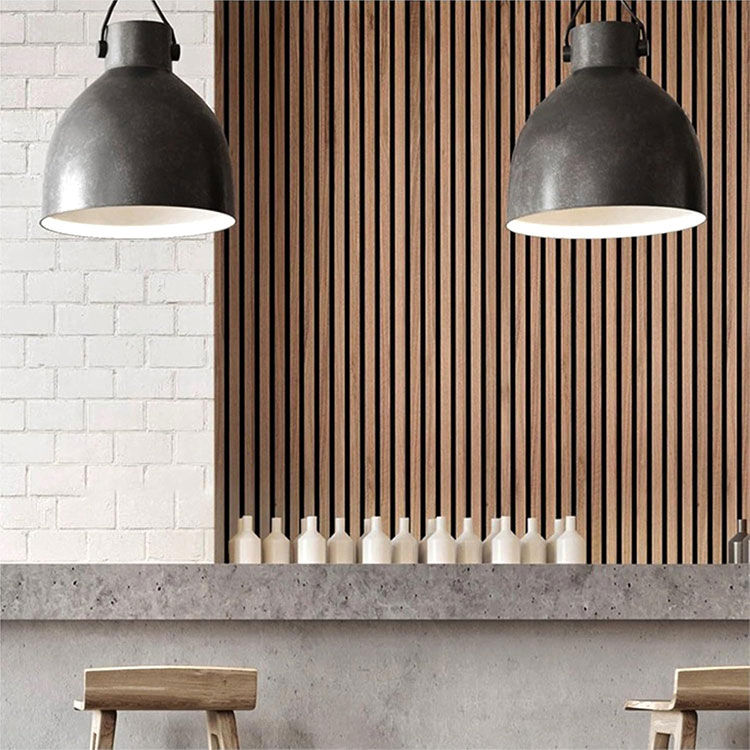
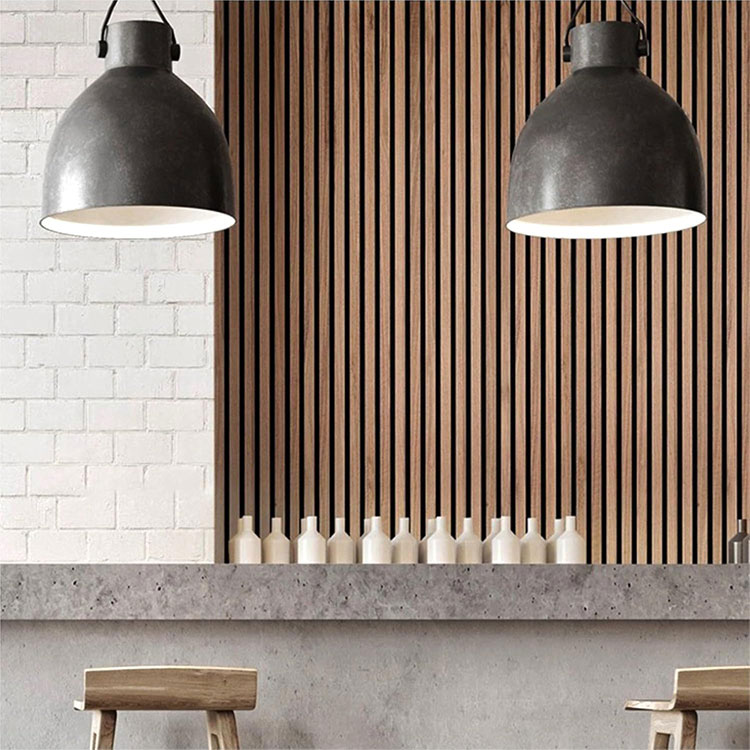
In wood strip acoustic wall panels, the strip-shaped MDF surface plays a crucial role.
The gaps between the wood strips allow sound to pass through.
The backing material absorbs sound energy.
The wood strips help to evenly diffuse reflected sound.
This combination achieves balanced acoustic control without making the room feel "dead."
Why wood strip acoustic panels are so effective
Wood strip acoustic panels are becoming increasingly popular because they combine superior acoustic performance with interior design value.
Benefits include:
Excellent echo and reverberation elimination
Improved speech intelligibility
Warm, modern aesthetics
Suitable for residential and commercial spaces
Its performance is particularly significant when installed at the first reflection point, such as the wall behind speakers or seating areas. Proper installation maximizes performance.
Even the best acoustic panels require proper installation to function effectively.
Installation considerations:
Cover 20%–40% of the reflective wall surface.
Focus on the primary reflection point.
Optional air gaps can enhance low-frequency absorption.
For large spaces, combine wall and ceiling installation.
Professional-grade acoustic panels ensure predictable acoustic results in various environments.