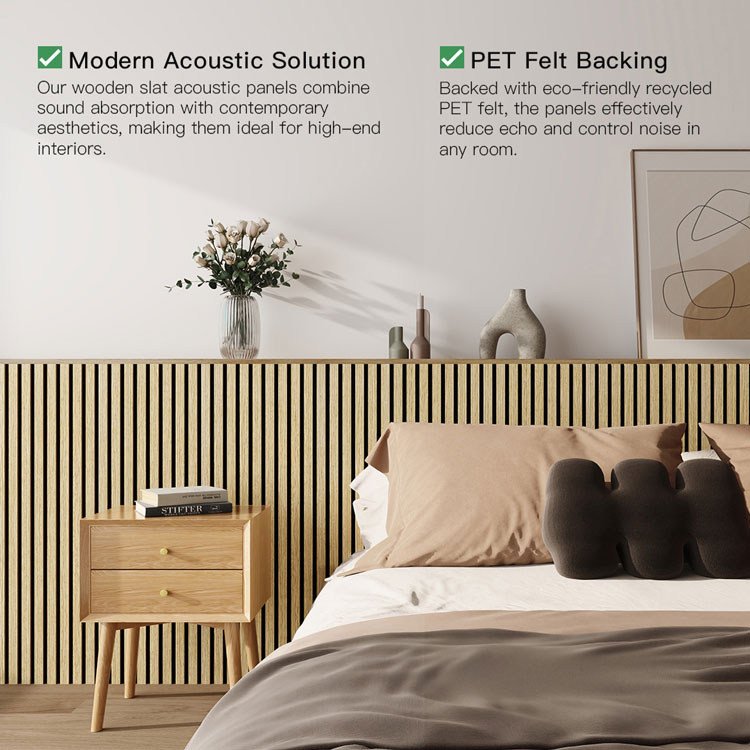
Yes—and doing so is crucial for improving acoustic performance.


Many people believe that acoustic panels should be directly attached to the wall when installing them. However, leaving a small air gap behind the panel can significantly improve low-frequency absorption and enhance overall acoustics.

Premium Acoustic Wood Slat Panels Manufacturer

🔍 Why Leaving an Air Gap is Beneficial


Installing acoustic panels slightly off-wall can:


✔ Enhance low-frequency absorption


✔ Improve overall sound absorption efficiency


✔ Improve indoor acoustics without requiring additional materials


✔ Maximize the performance of wood strips and PET acoustic panels


Even a 1-2 cm gap can make a significant difference.


🎯 Best Practices from Acoustics Experts


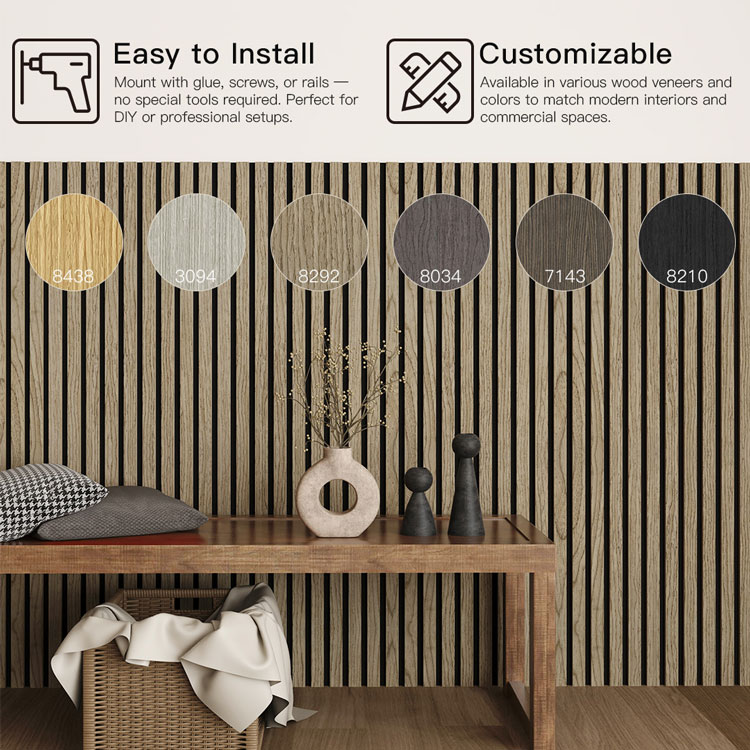
The wood strip wall panels and PET acoustic panels designed by Guangdong Liyin Acoustics Co., Ltd. deliver superior performance whether installed flush or with an air gap. Our panels can be installed using the following methods:


Snap-on


Wooden strips


Adhesive + gaskets


Acoustic frame


This flexible installation method allows users to create their ideal acoustic environment based on space, style, and acoustic needs.


Why Choose Guangdong Liyin Acoustics Technology Co. Ltd.?

1. Industry Leadership

As a leading manufacturer and exporter of Natural Oak Acoustic Slat Panels, our company has set the benchmark in the field, delivering superior quality and innovative designs worldwide.

2. Advanced Production Facility

Our 20,000-square-meter modern factory is equipped with state-of-the-art machinery, enabling us to meet large-scale demands without compromising on quality.

3. Strict Quality Control

We adhere to international quality standards at every stage of production, ensuring every wood slat panel we produce meets the highest expectations.

4. Eco-Friendly Practices

Sustainability is at the core of our operations. From sourcing natural oak to our production methods, we are committed to protecting the environment.

5. Global Trust

Our products, including akupanel and Natural Oak Acoustic Slat Panels, are trusted by customers across the globe for their outstanding performance

If you're planning to upgrade your space with acoustic panels but are worried they might affect your WiFi signal—the good news is: acoustic panels won't block WiFi signals.

Leading Acoustic Wood Slat Panel Manufacturer & Distributor

✔ Why Acoustic Panels Won't Affect WiFi


WiFi signals can easily pass through materials commonly used in acoustic panels, including:


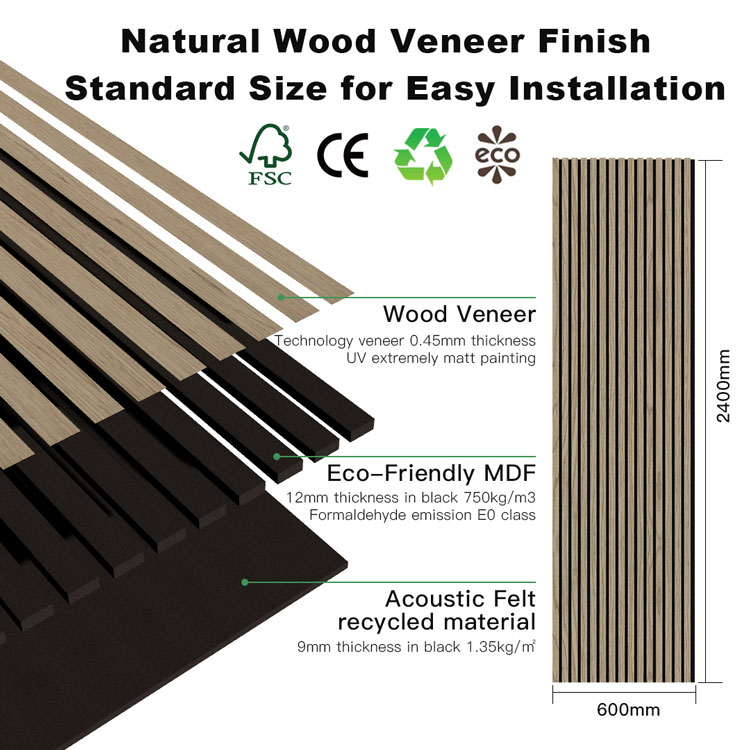
Medium-Density Fiberboard (MDF)


Recycled PET felt


Wood veneer or PET/PVC finish


These materials don't contain metals or dense barriers that interfere with electromagnetic signals. This means your WiFi signal will remain strong even if you install acoustic panels in your room.


⭐ What Do Acoustic Panels Affect?


They improve the acoustic comfort of a room but don't affect WiFi signals.


Liyin Wood Strip Acoustic Panels are designed to:


Absorb echoes and reduce reverberation


Improve sound clarity in homes, offices, and recording studios


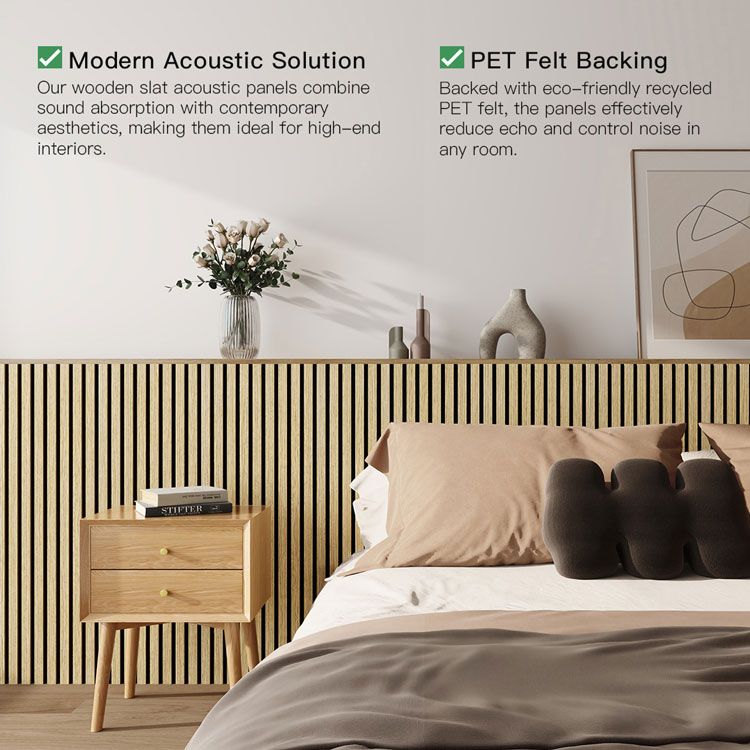
Add beauty and warmth with premium wood veneer finishes


Contribute to eco-friendly building using E0 grade MDF and recycled PET materials.

If you're tired of your neighbor's footsteps, conversations, or TV noise, you're not alone. Many people wonder if sound barriers can reduce neighbor noise—the answer is: yes, they do help, but there are limitations.


🎧 The Role of Sound Barriers

Premium Acoustic Wood Slat Panels Manufacturer

Sound barriers are designed to absorb indoor sound, reduce echoes, improve clarity, and make your space feel quieter and more comfortable. If installed properly—especially high-density sound barriers—they can also reduce some noise from outside.


🚫 Limitations of Sound Barriers


Traditional sound barriers don't completely block out noise. If your neighbors are very noisy, or if the noise is coming from the building structure (such as walls, floors, pipes), you may need to use a combination of soundproofing materials, such as high-density fiberboard (MDF), thermal insulation, or other soundproofing solutions.

keyboard_arrow_up