One of the most frequently asked questions by buyers when choosing acoustic panels is:


Are thicker acoustic panels better?
Custom Solutions Acoustic Wood Slat Panels

In short, the answer is yes—but not always in the way people expect.


Panel thickness does affect sound absorption, but it's only one part of the overall acoustic performance. In this article, we'll explain how thickness works, when thicker panels are more beneficial, and how to choose the right solution for your space.


How Acoustic Panels Absorb Sound


Acoustic panels reduce echoes and reverberation in a room by absorbing sound energy, especially mid-to-high frequency sound waves.


Key factors affecting performance include:


Panel thickness


Material density


Surface design


Installation method


Air gap behind the panel


Thickness alone does not guarantee better results.


Does thickness really improve sound absorption?


Yes—especially for low frequencies.


Generally speaking:


Thicker panels can absorb a wider frequency range.


They are more effective at low frequencies than thinner panels.


For example:


12-25 mm thick panels primarily absorb high frequencies.


40-50 mm thick panels absorb mid-frequency frequencies more effectively.


Thick panels with backing systems help control low-frequency energy.


However, for everyday residential and commercial spaces, ultra-thick panels are often unnecessary.


Thicker with Smarter Design


Modern acoustic solutions are not simply about increasing thickness, but about balancing design.


For example, wood slat acoustic panels use:


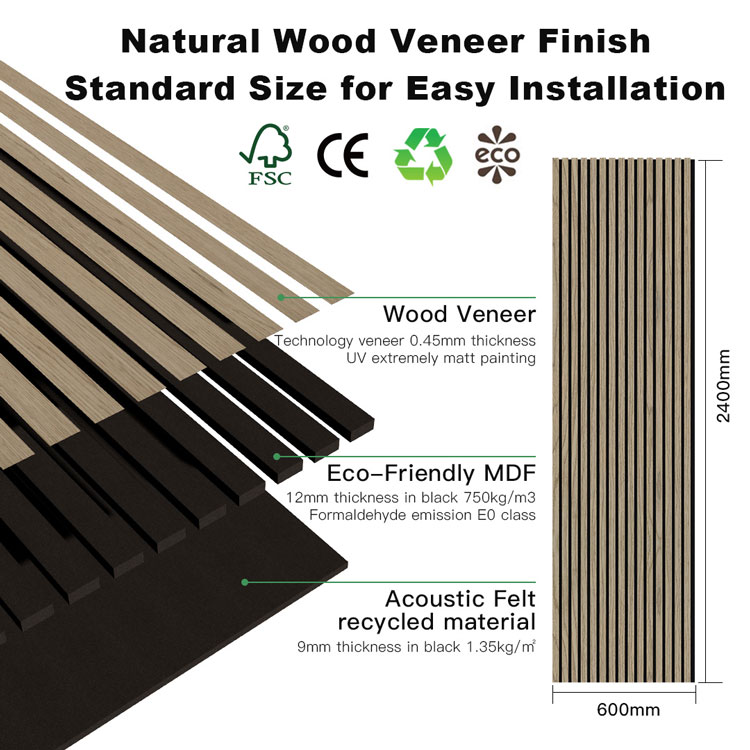
Rigid medium-density fiberboard slats for sound diffusion


High-density polyethylene terephthalate (PET) felt for sound absorption


Thickness optimized for the actual space


This combination achieves effective acoustic control without adding excessive volume or visual clutter.


When to Need Thicker Acoustic Panels


Thicker acoustic panels are best suited for:


Recording studios


Music rehearsal rooms


Home theaters


Large open-plan commercial spaces


In these environments, low-frequency control is crucial.


When Thicker Acoustic Panels Are Not Needed


For example:


Living rooms


Bedrooms


Offices


Conference rooms


Restaurants and hotels


Standard-thickness acoustic panels or wood strip acoustic panels, if installed properly, already provide excellent sound absorption.


In these cases, installation location and coverage are more important than thickness.


The Role of Air Gap (Often Overlooked)


An important professional insight:


Adding an air gap behind the acoustic panel can significantly improve low-frequency absorption—sometimes even better than increasing thickness.


This is why wall-mounted wood strip acoustic panels with felt backing are so effective in actual installations.


Why Wood Strip Acoustic Panels are the Ideal Balanced Choice


Wood strip acoustic panels offer the following advantages:


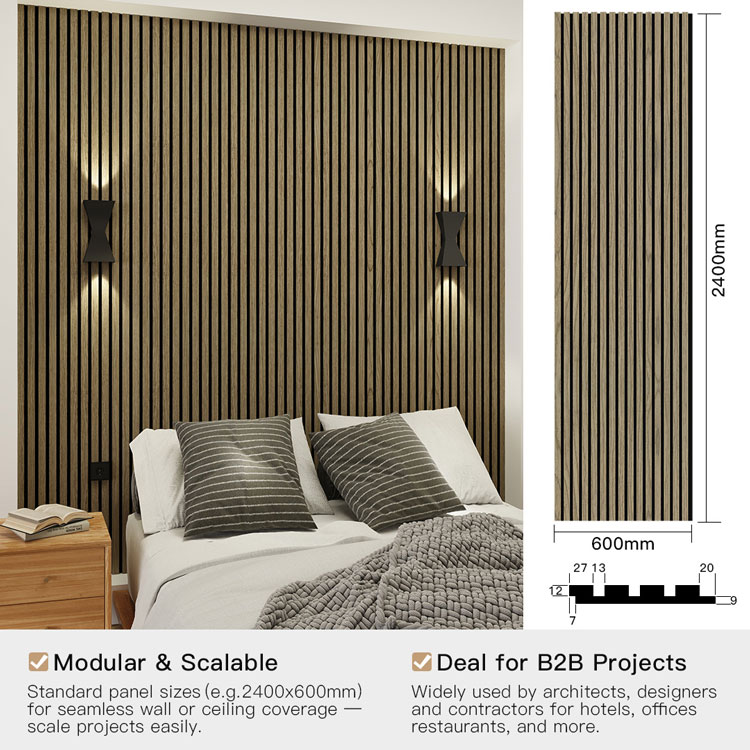
Moderate thickness, suitable for most environments


Natural sound diffusion and absorption


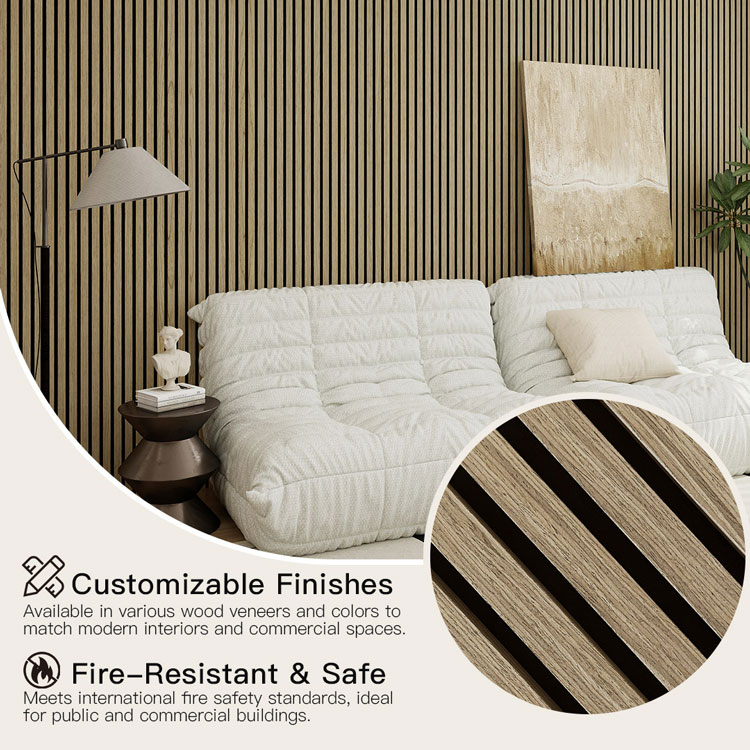
Aesthetically pleasing, perfectly complementing modern interior design


Highly effective sound absorption without excessive space occupation


Achieving an ideal balance between functionality, design, and ease of installation

Many people seeking better sound insulation often ask:


What's the difference between acoustic panels and soundproofing panels?


While these two terms are often used interchangeably, their uses are quite different. Understanding their differences is crucial for choosing the right solution for your residential, office, or commercial project.


In this guide, we'll detail how each system works, where it's applicable, and why acoustic panels (especially wood strip acoustic panels) are the most practical choice for most spaces.


Acoustic Panels vs. Soundproofing Panels: Core Differences


The main difference lies in the problem you want to solve.


Type Main Function Uses

Acoustic Wood Slat Panels Supplier

Acoustic Panels Absorbs indoor sound Reduces echoes, reverberation, and noise reflections


Soundproofing Panels Blocks sound from entering or leaving Prevents noise transmission between spaces


In short:


Acoustic panels improve sound quality


Soundproofing panels block sound transmission


What are acoustic panels?


Acoustic panels are designed to absorb sound waves reflected within an indoor space.


They help to:


Reduce echo and reverberation


Improve speech clarity


Enhance music and audio quality


Create a more comfortable indoor environment


Widely used in:


Residential and apartment buildings


Offices and meeting rooms


Restaurants and hotels


Studios and commercial spaces


How Sound-Absorbing Panels Work


Sound-absorbing panels use porous materials that convert sound energy into heat energy through friction.


High-quality sound-absorbing panels typically combine the following features:


Sound-absorbing backing materials (such as PET felt)


Optimized thickness and density


Carefully designed surface


Wood strip sound-absorbing panels go a step further, combining sound absorption with sound diffusion for balanced acoustic control and modern aesthetics.


What are Sound Insulation Panels?


Sound insulation panels are designed to block the transmission of sound between rooms.


They rely on:


Heavy materials


Structural isolation


Sealed structure


True sound insulation typically includes:


High-density materials (concrete, drywall layers)


Resilient partitions


Insulation materials within walls and ceilings


Sealing of gaps


Therefore, soundproofing panels are:


Heavy


More expensive


Usually part of the building structure, not decoration


Why sound-absorbing panels are often the better choice


Many people want “soundproofing” when they actually need better acoustic control.


Sound-absorbing panels are ideal because they:


Easy to install


Immediately improve sound quality


No construction required


Enhance interior design


Excellent cost-effectiveness


For apartments, offices, and most commercial interior spaces, sound-absorbing panels can solve 80-90% of common noise problems.


Can sound-absorbing panels replace soundproofing panels?


Not entirely—but they can significantly improve perceived noise comfort.


Acoustic panels:


Reduce indoor reflected noise


Make conversations clearer


Reduce overall auditory fatigue


However, they do not completely prevent sound from penetrating walls. Complete soundproofing requires structural sound insulation.


Wood strip acoustic panels: Performance and design combined


Wood strip acoustic panels are a modern solution that combines:


Sound absorption


Partial sound diffusion


The beauty of natural wood


They are particularly suitable for:


Modern residences


Offices


Hotel projects


Commercial interior design


This achieves an ideal balance between functionality, aesthetics, and practicality.

Living next to noisy neighbors can be annoying—but with the right soundproofing strategies, you can create a quieter, more comfortable space. Here are some ways to effectively block noise from shared walls.

Custom Solutions Acoustic Wood Slat Panels

🧱 1. Increase Wall Mass


Noise can easily penetrate thin walls. Increasing wall density helps block sound.


Options include:


High-density materials


Double-layer gypsum board


High-density sound-absorbing panels


High-density MDF sound-absorbing panels, produced by Guangdong Liyin Acoustics Technology Co., Ltd., increase wall mass and enhance aesthetics.


🔊 2. Use Sound-absorbing panels to Absorb Sound


Installing sound-absorbing panels helps reduce sound reflections within the room, significantly reducing noise from the other side.


Our wood strip sound-absorbing panels combine:


✔ High-density medium-density fiberboard (MDF)


✔ Sound-absorbing PET felt


✔ Natural wood veneer


✔ Modern interior design aesthetics


Perfect for bedrooms, home offices, and apartments.


🔧 3. Seal Gaps and Cracks


Small cracks around sockets, windows, and walls can leak a lot of noise.


Seal these gaps with sealant or weatherstripping.


🛠 4. Create Air Gaps


For more severe noise problems, leave small air gaps on the back of the sound-absorbing panels.


This enhances low-frequency absorption and significantly improves sound insulation.

Absolutely—with the right methods, the soundproofing effect is remarkable! 🎯


Soundproofing is not just about blocking noise; more importantly, it's about controlling the propagation of sound through walls, ceilings, and floors. Using suitable materials, such as high-density sound-absorbing panels, can significantly reduce noise transmission, creating a quieter space—whether it's a home office, studio, or living room.

Customizable Acoustic Wood Slat Panels Supplier

Guangdong Leeyin Acoustics Co., Ltd. specializes in wood slat wall panels and sound-absorbing panels, combining sound absorption with aesthetics. Our panels use high-quality medium-density fiberboard (MDF), recycled PET felt, and fine natural wood veneer, perfectly blending effective soundproofing with modern interior design.


🌟 Advantages of Leeyin Acoustic Panels:


✅ High-density medium-density fiberboard (MDF) for superior sound insulation


✅ PET felt backing for effective echo reduction and durability


✅ Precision-designed slats for acoustic balance


✅ Manufactured in strict accordance with international quality standards


With over 20,000 square meters of advanced production facilities, Leeyin is one of China's leading exporters of acoustic wood slat wall panels, providing trusted, customized, and environmentally friendly solutions for architects and designers worldwide.

keyboard_arrow_up