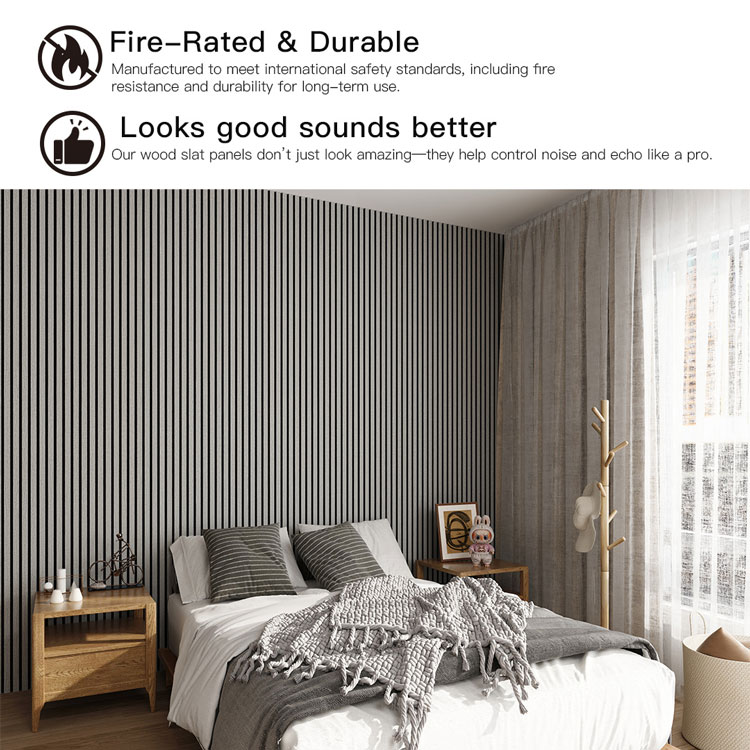
Wood slat acoustic panels have become increasingly popular in offices, homes, studios, and commercial interiors. They are praised for their modern design and natural wood appearance—but a common question remains:
Are wood slat acoustic panels really effective for sound absorption, or are they just decorative?
The answer is yes—when properly designed and manufactured, wood slat acoustic panels are highly effective at absorbing sound. In this article, we explain how they work, what affects their performance, and why professional manufacturing makes all the difference.
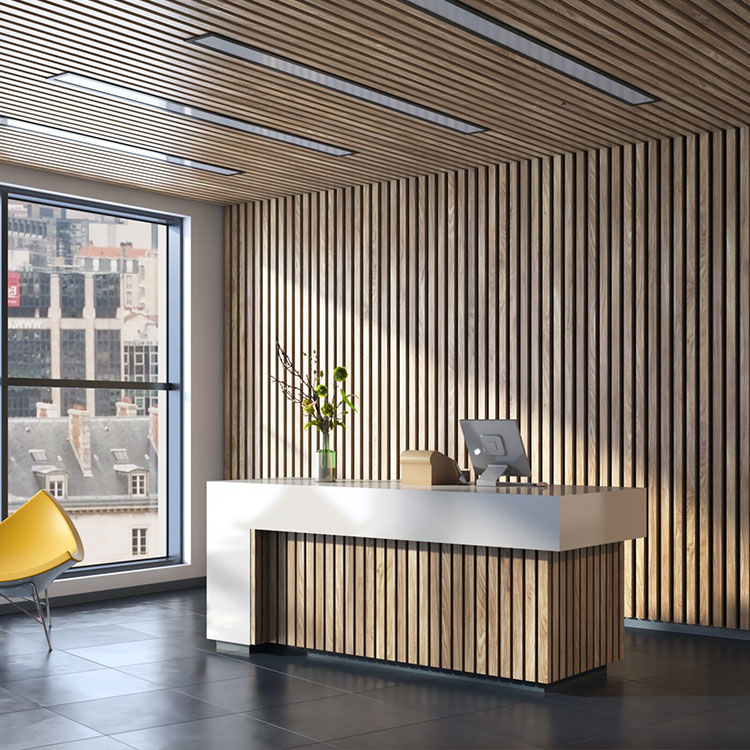
What Are Wood Slat Acoustic Panels?
Wood slat acoustic panels are engineered acoustic systems, not solid wood boards.
A typical high-quality wood slat acoustic panel consists of:
-
Natural wood veneer or finished wood slats
-
High-density MDF core
-
Acoustic backing such as PET felt or mineral wool
This layered construction allows the panel to control sound reflections while maintaining a warm, architectural aesthetic.
How Do Wood Slat Acoustic Panels Absorb Sound?
Unlike soft foam panels, wood slat acoustic panels work through a combination of diffusion and absorption.
1. Slat Spacing Diffuses Sound
The gaps between wood slats:
-
Break up direct sound reflections
-
Reduce flutter echo
-
Improve sound clarity
This diffusion helps prevent harsh reflections, especially in medium and large spaces.
2. Acoustic Backing Absorbs Sound Energy
Behind the slats is the real acoustic engine.
High-quality acoustic backing:
-
Traps sound waves
-
Converts sound energy into heat
-
Absorbs mid and high frequencies effectively
When paired with the right density and thickness, backing materials significantly improve overall absorption.
3. MDF Density Enhances Performance
High-density MDF slats:
-
Improve structural stability
-
Enhance mid-frequency sound control
-
Maintain consistent spacing over time
Low-density materials often warp or lose performance, which is why professional manufacturers carefully control material density.
Are Wood Slat Acoustic Panels as Effective as Traditional Acoustic Panels?
Yes—in many real-world applications, they perform just as well or better, with added design benefits.
| Feature | Wood Slat Acoustic Panels | Foam Panels |
|---|---|---|
| Sound Absorption | High (engineered systems) | Moderate |
| Aesthetics | Premium, architectural | Basic |
| Durability | Long-lasting | Shorter lifespan |
| Fire Safety | Easier to certify | Often limited |
| Commercial Use | Ideal | Limited |
For offices, meeting rooms, home theaters, restaurants, and apartments, wood slat acoustic panels offer an excellent balance of performance and appearance.
What Affects the Sound Absorption Performance?
Not all wood slat acoustic panels perform the same. Key factors include:
✔ Slat Thickness and Spacing
Proper spacing improves diffusion and absorption efficiency.
✔ MDF Density
Higher density provides better sound control and durability.
✔ Acoustic Backing Material
PET felt and mineral wool perform better than thin foam layers.
✔ Installation Method
Adding a small air gap between the panel and wall can further improve absorption, especially at lower frequencies.
Are Wood Slat Acoustic Panels Suitable for Noise Reduction?
It’s important to clarify:
-
Wood slat acoustic panels absorb sound inside a room
-
They reduce echo, reverb, and noise buildup
-
They do not fully soundproof or block sound transmission
For neighbors’ noise or soundproofing, additional construction methods are required. However, for improving room acoustics and comfort, wood slat acoustic panels are highly effective.
Why Professional Manufacturing Matters
Effective sound absorption depends on precision engineering, not just appearance.
At Guangdong Leeyin Acoustics, we specialize in the production of wood slat wall panels and acoustic panels for global markets.
Our manufacturing advantages include:
-
20,000㎡ modern production facility
-
Controlled MDF density selection
-
Engineered acoustic backing systems
-
Strict quality management following international standards
-
Leading exporter of wood slat acoustic panels in China
This ensures every panel delivers consistent acoustic performance, durability, and visual quality.
Where Are Wood Slat Acoustic Panels Most Effective?
They are widely used in:
-
Offices and meeting rooms
-
Home theaters and living spaces
-
Recording studios and media rooms
-
Restaurants, hotels, and lobbies
-
Apartments and shared living spaces
In these environments, wood slat acoustic panels significantly improve speech clarity, comfort, and overall sound quality.
Final Verdict: Are Wood Slat Acoustic Panels Effective for Sound Absorption?
Yes—when designed and manufactured correctly, wood slat acoustic panels are highly effective for sound absorption.
They combine:
-
Acoustic performance
-
Architectural aesthetics
-
Structural durability
-
Long-term reliability
This makes them a preferred solution for both residential and commercial projects worldwide.
With professional production, optimized materials, and strict quality control, Guangdong Leeyin Acoustics delivers wood slat acoustic panels that meet both design and performance expectations for global clients.