As sustainability becomes a core consideration in modern architecture and interior design, many designers, developers, and homeowners are asking an important question: Are acoustic panels eco-friendly and sustainable?
The short answer is yes—when they are designed and manufactured responsibly. In this article, we explore what makes acoustic panels sustainable, which materials matter most, and how professional manufacturers ensure both acoustic performance and environmental responsibility.

What Makes an Acoustic Panel Eco-Friendly?
An eco-friendly acoustic panel is defined by more than just sound absorption. True sustainability involves the entire product lifecycle, including:
-
Raw material sourcing
-
Manufacturing processes
-
Product durability and lifespan
-
Indoor air quality impact
-
End-of-life recyclability
High-quality acoustic panels are designed to improve acoustic comfort without compromising environmental standards.
Sustainable Materials Used in Acoustic Panels
1. Wood Slat Acoustic Panels from Responsible Sources
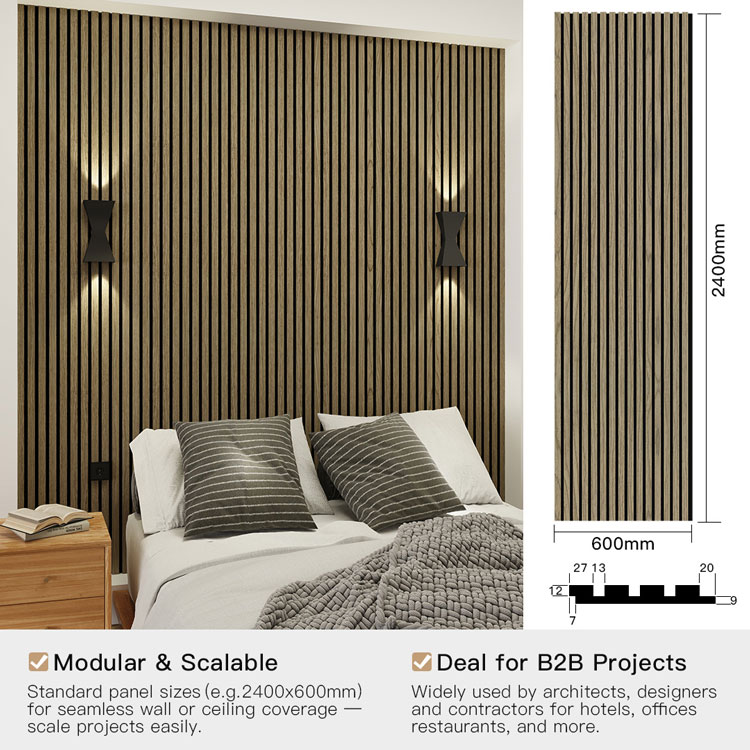
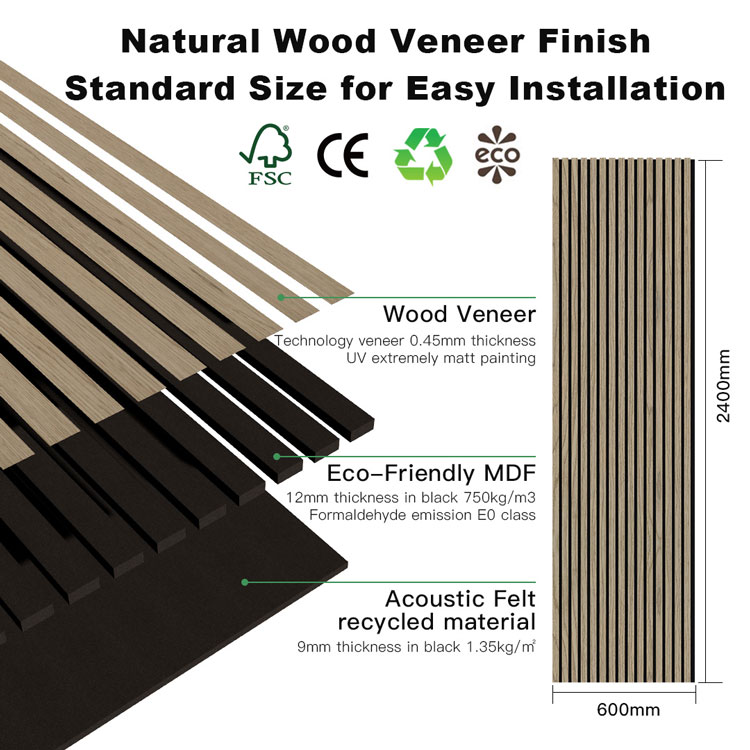
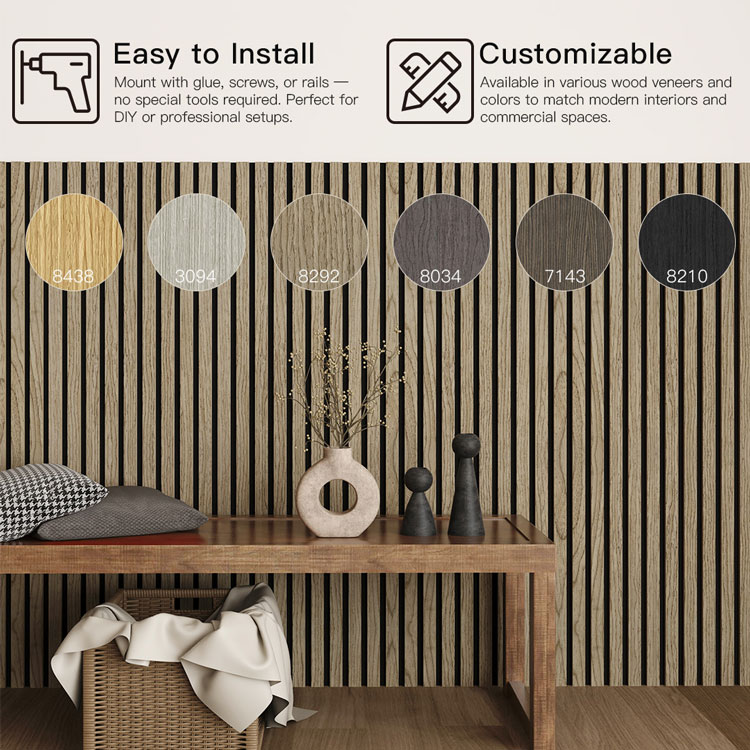
Wood slat acoustic panels are highly popular due to their natural appearance and excellent acoustic performance. When produced using:
-
Engineered wood or MDF from sustainable forestry
-
Optimized material usage to reduce waste
-
Long-lasting surface finishes
they become a renewable and eco-conscious wall solution.
Wood-based acoustic panels also store carbon throughout their lifecycle, contributing positively to sustainable building goals.
2. Polyester Fiber Acoustic Panels (PET Panels)
Polyester fiber acoustic panels are widely recognized as one of the most sustainable acoustic materials available today.
Key eco-friendly advantages include:
-
Made from recycled PET plastic bottles
-
Fully recyclable
-
Low VOC emissions
-
Lightweight and energy-efficient to transport
These panels offer excellent sound absorption while supporting circular economy principles.
3. Low-Emission & Safe Indoor Materials
Eco-friendly acoustic panels should contribute to healthy indoor environments by:
-
Minimizing formaldehyde emissions
-
Using non-toxic adhesives
-
Meeting international indoor air quality standards
This is especially important for offices, schools, homes, and public buildings.
Manufacturing Processes Matter
Sustainability is not only about materials—it also depends on how acoustic panels are produced.
Professional manufacturers focus on:
-
Efficient material utilization
-
Energy-saving production lines
-
Waste reduction and recycling systems
-
Consistent quality control to reduce product replacement
Well-made acoustic panels last longer, reducing environmental impact over time.
Guangdong Leeyin Acoustics: Sustainability with Scale and Expertise
As a leading manufacturer and exporter of wood slat acoustic panels in China, Guangdong Leeyin Acoustics integrates sustainability into both product design and production management.
Our Strengths Include:
-
20,000㎡ modern manufacturing facility
-
Large-scale production capacity for global supply
-
Specialized focus on wood slat wall panels and acoustic panels
-
Strict quality management aligned with international standards
-
Stable, long-term export experience in global markets
By combining efficient manufacturing with responsible material selection, we help clients achieve both acoustic excellence and sustainable building goals.
Are Acoustic Panels Worth It for Green Buildings?
Yes. Eco-friendly acoustic panels:
-
Improve sound comfort and productivity
-
Enhance interior aesthetics using natural materials
-
Support green building certifications
-
Offer long service life with minimal maintenance
For architects and developers, acoustic panels are a functional and sustainable investment.
How to Choose Sustainable Acoustic Panels
When selecting acoustic panels, look for:
-
Recycled or renewable core materials
-
Low-emission certifications
-
Long product lifespan
-
Experienced manufacturers with export and quality control expertise
A reliable supplier ensures sustainability is verified, not just claimed.
Conclusion
So, are acoustic panels eco-friendly and sustainable?
Absolutely—when they are thoughtfully designed and professionally manufactured.
With advanced production facilities, international quality management, and deep expertise in wood slat acoustic panels and sound-absorbing solutions, Guangdong Leeyin Acoustics provides acoustic products that balance performance, aesthetics, and sustainability for modern spaces worldwide.