In the context of modern architecture’s pursuit of efficiency, energy savings, and safety, constructing houses with PIR (polyisocyanurate) sandwich panels has demonstrated significant advantages. The core strengths lie in the exceptional fire resistance and high thermal insulation performance of the PIR core material, which not only greatly enhance the building's safety rating and energy efficiency but, combined with the lightweight yet high-strength characteristics of the panels, also enable rapid installation and structural durability. These features make PIR sandwich panels an ideal choice for industrialized rapid construction and high-quality, energy-efficient buildings.


Houses built with PIR sandwich panels offer numerous advantages. PIR sandwich panels are a construction material composed of polyisocyanurate foam and two layers of metal sheets. Below are some of the key advantages of building houses with PIR sandwich panels:

PIR sandwich panels 

☆Excellent Thermal Insulation Performance

PIR sandwich panels provide outstanding thermal insulation, with a thermal conductivity lower than other common building materials such as concrete and bricks. This means that houses built with PIR sandwich panels can better maintain stable indoor temperatures, thereby reducing energy consumption and lowering heating and cooling costs.


☆High Strength and Lightweight

The combination of the metal surfaces and the high-strength polyisocyanurate foam allows PIR sandwich panels to withstand high pressure and gravity loads. Compared to traditional building materials, PIR sandwich panels are lightweight, which reduces the load on the building structure and improves construction efficiency.


☆Fire Resistance

PIR sandwich panels exhibit good fire resistance, effectively preventing the spread of flames. The outer metal layers protect the polyisocyanurate foam from direct exposure to fire, thereby enhancing the safety of the building structure and internal facilities.


☆Good Sound Insulation Performance

PIR sandwich panels effectively block external noise, providing a quieter indoor environment. This is particularly important for spaces that require high concentration and quiet, such as libraries, offices, and schools.

PIR roof sandwich panels 

☆Environmental Friendliness and Sustainability

PIR sandwich panels are an environmentally friendly building material, with minimal waste and pollutants generated during production. Additionally, PIR sandwich panels are recyclable, reducing construction waste. They also have a long service life, decreasing the need for alternative materials.


☆Fast Construction and Low Cost

Thanks to their lightweight and modular nature, PIR sandwich panels can be installed quickly and easily. This significantly shortens construction timelines and reduces labor and resource consumption. Furthermore, the relatively low cost of PIR sandwich panels helps lower overall construction expenses.


☆High Adaptability

PIR sandwich panels can be customized to meet different building requirements, such as varying thicknesses, dimensions, and shapes. They can also be combined with other building materials, such as glass, wood, and steel structures. This versatility makes PIR sandwich panels suitable for various types of buildings, including residential, commercial, and industrial structures.

PIR wall buildings 

In summary, with its comprehensive performance including exceptional thermal insulation, fire resistance, lightweight yet high strength, and rapid installation, PIR sandwich panels provide an efficient, energy-saving, and high-quality solution for modern house construction. They not only significantly enhance the comfort and safety of buildings but also align precisely with the development direction of green buildings and prefabricated construction due to their low energy consumption and high adaptability. This demonstrates their broad prospects and enduring value in shaping modern human living environments.


If you have any questions,please contact the Yumisteel team for tailored solutions!Thank you!

In the precast concrete industry, traditional methods of securing formwork are not only time-consuming and labor-intensive but can also damage expensive steel casting beds. Is there an efficient, non-destructive solution? The answer is the shutter magnet. This revolutionary tool is transforming formwork fixation, significantly accelerating production cycles.


Shuttering Magnets


What is a Shutter Magnet?

 A shutter magnet, also known as a magnetic box or box magnet, is a standard tool used to securely fasten formwork, side rails, and other components to steel casting beds in the precast concrete industry. Its core consists of a robust steel housing enclosing a high-performance neodymium magnet array. Unlike older methods requiring welding or drilling, it enables non-destructive, powerful magnetic attachment, protecting the work surface and allowing for rapid adjustment and release.


Understanding the Working Principle: The Key to Success

 1. Basic Principle:

Shutter magnets function as an on/off switch for magnetic force. When activated, the internal magnet array engages, creating a powerful pull directly onto the clean steel surface. This pure magnetic hold requires no bolts, welding, or mechanical locks.

 2. The Critical Need for Direct Contact:

Maximum holding force is achieved only with complete, direct contact between the magnet's base and the steel bed. Any contaminant—concrete residue, rust, paint, or debris—acts as a gap. Unlike a bolted connection, magnetic force cannot "clamp through" such obstacles; even minor gaps drastically reduce performance.

 3. How Air Gaps Defeat the Magnet:

The magnetic force diminishes exponentially with distance. A gap of just 1-2 mm can reduce effective holding force by 50% or more. This is why a magnet rated for 1800 kg may fail in the field. Vibration can worsen these gaps, leading to dangerous "creep" or sudden displacement of the formwork.


Six-Step Installation Guide for Secure Fixation

 1.  Surface Preparation (Most Critical Step): Thoroughly clean both the magnet base and the steel bed. Remove all dust, oil, grease, and hardened concrete debris. This ensures metal-to-metal contact.

2.  Formwork Placement: Position all side rails, stop ends, and other formwork components accurately on the bed according to the shop drawings.

3.  Magnet Placement & Adapter Use: Place the shutter magnet against the formwork. If fixing to non-ferrous materials (e.g., timber, aluminum), first attach the appropriate non-magnetic adapter to the magnet's mounting points.

4.  Activation & Locking: Firmly press the activation handle or lever. You should hear/feel a solid "clunk," indicating the internal magnets are fully engaged and gaps are eliminated. Always perform a **manual tug-test** to confirm a secure lock.

5.  Pouring & Curing: Proceed with concrete placement and vibration. The magnet's design ensures stability against standard construction vibrations.

6.  Safe Deactivation & Removal: After the concrete has cured, use the dedicated release tool (lever) to disengage the magnetic field. Never pry the magnet off. Clean the magnet immediately after removal.


Shuttering MagnetsShuttering MagnetsShuttering Magnets


Avoiding Common and Costly Installation Errors

 Improper installation can lead to formwork blow-outs, dimensional inaccuracies, and serious safety incidents. The most frequent errors stem from neglecting the core principles above.

Error Categories Core risks Key Corrective Actions
Inadequate cleaning Adsorption capacity is severely insufficient, template displacement occurs. Thoroughly clean both sides before installation to ensure no particulate oil or dirt remains.
Inefficient layout Local deformation of template, out-of-tolerance dimensions of components Based on mechanical calculations, the layout is optimized with increased density at the end corners to ensure sufficient quantity.
Incorrect operation sequence Equipment damage, difficulty in adjustment, damage during disassembly Strictly follow the sequence of "placement → fitting → activation" and use a special tool to release.
Neglecting maintenance and inspection Sudden failure poses significant safety risks. Regularly inspect the base plate for wear and tear and mechanical parts, and test the magnetic force.
Insufficient safety awareness Pinching injury, being struck by an object Wear protective gloves and verify the security of the lock after locking.


Core Principle to Remember:

The reliability of a shutter magnet depends not just on its powerful magnetic rating, but on absolutely clean contact surfaces, a calculated layout based on concrete pressure, and strict adherence to the correct operating procedure. Avoiding these common mistakes is essential for safety, efficiency, and perfect precast product quality.


Specific Application Scenario

A copper mine in the Atacama Desert region of Chile produces tailings slurry with a consistently low pH of 2-4 (highly acidic) and contains soluble metal ions. The project required the construction of a 50-hectare tailings storage facility with a 30-year design life. The core challenge was to find an absolutely reliable primary containment liner that could withstand the combined stresses of intense UV radiation (at 3000m altitude), significant daily temperature fluctuations (-5°C to 30°C), and chemical corrosion, to prevent toxic leachate from contaminating the underlying aquifer.


Solution and Long-Term Performance Data

After rigorous chemical compatibility testing, the project selected a 1.5mm thick textured HDPE geomembrane as the primary liner. The textured surface provided a high interface friction angle of up to 30 degrees, ensuring stability on 1:2.5 (H:V) slopes.

Material Specification: Virgin high-density polyethylene resin, density ≥0.940 g/cm³, with 2.5% carbon black content for UV resistance.

Chemical Durability Evidence: Laboratory accelerated immersion tests showed that after 18 months in a simulated tailings solution (pH=2) at 40°C, the membrane retained >95% of its original tensile strength and elongation at break.

Field Welding Quality Control: All seams were double-track fusion welded, with 100% non-destructive air pressure channel testing and destructive shear/peel tests performed every 500 meters. All welders held international certifications.

Five-Year Monitoring Results: Through a installed leakage detection layer and regular groundwater quality monitoring, no anomalous fluctuations were detected in the downgradient aquifer, confirming a zero-leakage containment system.


Comparative Analysis: Why Other Materials Were Not Selected


Alternative Option Primary Risk in This Scenario Conclusion vs. HDPE Geomembrane
LLDPE Geomembrane

Slightly inferior chemical resistance

(especially to stress cracking), presenting higher risk in long-term contact with strong acids and metal ions.


Not Suitable. Insufficient long-term chemical safety.
PVC Geomembrane


Plasticizers can migrate in acidic environments, causing material embrittlement and a sharp drop in puncture resistance


Not Suitable. Fundamental chemical compatibility flaw.
Compacted Clay Liner


Acidic leachate alters the clay mineral structure, causing its hydraulic conductivity to increase by several orders of magnitude within years.


Not Suitable. Cannot serve as a sole reliable barrier.
1.0mm HDPE Geomembrane


Weaker resistance to stress concentration from differential settlement and puncture risks during construction


1.5mm thickness is a more robust choice, providing a greater safety margin.


Conclusion

For mining tailings ponds in extreme chemical environments, 1.5mm textured HDPE geomembrane is the globally engineered and proven "gold standard." Its success relies not only on the material's superior chemical resistance and UV stability but also on the entire quality control system encompassing raw material certification, welding procedures, and integrity testing. When procuring such critical materials, it is essential to demand complete resin traceability reports and chemical compatibility test data specific to the project's intended medium.


Weed Barrier Quality Testing

 When faced with different brands of weed barrier fabric that "look similar," how do you judge their true quality? This article provides guidance from both professional procurement and on-site inspection perspectives.


Part 1:4 Core Laboratory Metrics Suppliers Must Provide

This demonstrates "Expertise and Authoritativeness" in E-E-A-T. A reliable weed barrier manufacturer should provide third-party test reports.


1:Mass Per Unit Area (Weight, gsm): This is the most basic yet metric. For example, a product labeled 150 gsm might only be 130 gsm. Weight directly correlates with lifespan and strength. Action: Request the weight tolerance range per roll from the supplier (e.g., 150 gsm ±5%).

2:Ultraviolet (UV) Stability Data: Look for the "Tensile Strength Retention after UV Exposure" test. For instance, after 1500 hours of xenon-arc aging per ASTM G154 (simulating 1-2 years outdoors), strength retention should be > 50%. Quality products use carbon black masterbatch, not just a surface coating, for UV resistance.

3:Tensile Strength & Elongation at Break: For woven fabric, machine and cross-machine tensile strength (kN/m) are key. For nonwoven, grab strength (N) and puncture/CBR strength (N) are more important. This determines its ability to withstand mulch weight and installation traffic.

:4:Permeability Performance: Pay attention to Vertical Permeability Coefficient (m/s) and Equivalent Opening Size (O90). Poor permeability leads to waterlogging; overly large openings allow weed penetration. Quality landscape fabric typically has an O90 between 0.1-0.2 mm.


Part 2: 3 On-Site Quick Tests You Can Perform

Even without a lab, you can perform these checks upon delivery or before purchase:

1:"Tear and Inspect" Test: Take a small sample and tear it forcefully in both directions. Low-quality nonwoven fabric will tear loosely like cotton, with sparse fibers. High-quality fabric requires more force, shows significant fiber interconnection at the tear edge, and has a dense structure. For woven fabric, check for even, tight weaving without obvious thin or thick spots.


2:"Light and Water" Simple Test: Drape the fabric over a bright LED flashlight. Low-quality fabric may show obvious light spots (large openings) or very uneven light transmission. Then, drip a few drops of water onto the fabric. High-quality fabric should allow rapid penetration; water droplets should not sit on the surface for long.


3:"Check Edges and Packaging": High-quality product rolls have neatly cut edges that do not fray. Packaging should have clear information: brand, specifications, production batch, and date. Unbranded bulk products or those with blurry labels carry high risk.


Conclusion:

Don't be fooled by "price per roll" alone. By combining "requesting reports for metrics" and "performing hands-on quality checks," you can effectively filter for high-quality landscape fabric that will truly perform long-term, avoiding the costs and landscape damage caused by premature material failure. Choosing a weed barrier supplier that transparently provides this data and testing methodology is the first step to project success.


With the evolution of modern construction, precast concrete elements are assuming an increasingly vital role. Anchoring technology within these elements serves as a critical foundation for ensuring overall structural stability and safety.

Precast elements are factory-manufactured building components subsequently installed on-site. To establish strong and reliable connections—both between precast units and with the cast-in-place structure—specialized anchoring systems are essential. This article examines the working principles, application scenarios, and selection criteria for lifting anchors in precast construction.


Lifting Anchors


How They Work: The Mechanics of Load Transfer

A lifting anchor is an embedded mechanical interlocking device that creates a defined load path from the concrete element to the crane. During casting, the anchor—typically forged from high-strength carbon or stainless steel—is placed within the formwork and encased in concrete. As the concrete cures, it forms a robust mechanical connection with the anchor’s engineered geometry.


Load transfer occurs in three distinct stages:

1.  Direct Engagement: The anchor head—whether spherical, eye-shaped, or threaded—engages with the lifting clutch or hook, receiving the direct tensile force.

2.  Force Transmission: This force is transferred along the anchor’s shank to its embedded end.

3.  Load Distribution: Crucially, the anchor’s widened base or expansion fins transfer the load into the surrounding concrete. This occurs primarily through bearing pressure and the formation of a concrete shear cone, rather than relying on simple friction.


Anchor Types and Their Uses

Depending on the component and lifting requirements, anchors are available in several forms:

-   Threaded Inserts: Ideal for thinner elements, offering straightforward installation.

-   Lifting Loops/Rings: Provide multi-angle flexibility and are common in wall panels.

-   Plate Anchors: Ensure stable load distribution for large-span beams and columns, preventing concentrated stresses.

Each design is precisely engineered to ensure stresses in the concrete remain within a safe range during hoisting.


Lifting Anchors


Key Application Scenarios and Selection Guide

Precast component types Recommended main anchor types Application Scenarios and Explanations
Precast concrete wall panels Pre-embedded lifting nails/nuts, plate anchors - Standard wall panel: 4-8 pre-embedded hanging nails are symmetrically arranged at the top for vertical hoisting.

- Large integrated insulation and decorative panel: Plate anchors are used to distribute the load and avoid localized damage.

- Thin-walled decorative panel: Self-tapping screws (post-anchoring) or small pre-embedded parts may be used.
Precast floor slabs/stairs Pre-embedded lifting nails/nuts, and rebar lifting rings - Large integrated thermal insulation and decorative panels: Utilize plate-type anchors to distribute the load and prevent localized damage.

- Thin-walled decorative panels: May use self-tapping screws (post-anchoring) or small embedded parts.

- Composite floor slabs: Typically have 4 lifting points, using pre-embedded nuts, resulting in a smooth surface after installation.

- Precast stairs: Lifting points are often located near the upper platform, allowing the stairs to naturally form an installation angle. The center of gravity needs to be calculated.
Structural components such as beams and columns Embedded hanger nails/nuts, prestressed tendon ends - Precast columns: 2-4 symmetrical lifting points are set at the top for vertical hoisting.

- Large prestressed beams (double T-slabs, I-beams): Lifting points are usually set at or near both ends; sometimes prestressed ends are used directly.

- Pipe galleries and tunnel segments: Plate anchorages must be used to evenly bear the enormous hoisting forces.
Irregularly shaped components/municipal components Combination use, special lifting tools - Utility tunnels and tunnel segments: Plate anchors must be used to evenly distribute the enormous lifting forces.

- Irregularly shaped balconies and bay windows: Based on the center of gravity analysis, multiple pre-embedded hangers should be placed in sturdy areas, and balance beams or multi-point suspension systems may be used to ensure stability.
Thin sheet/small components Self-tapping lifting screws, small embedded parts - Thin plates less than 100mm thick: Insufficient pre-embedding depth; self-tapping screws are a better choice for post-installation.

- Curbs, small paving stones: Specialized clamps may be used instead of anchors.


Anchor selection depends on the component's type, weight, shape, center of gravity, and production process. However, misuse remains a leading cause of failure. Common errors include:

-   Incorrect Type Selection: Using anchors designed for thick sections in thin panels, or for edge/bevel lifts, can cause failure.

-   Equipment Mismatch: Employing a lifting clutch not fully compatible with the anchor head leads to partial engagement and uneven force distribution.

-   Premature Lifting: Hoisting before concrete achieves its specified strength is hazardous. Inconsistent curing on tight schedules can leave the concrete around the anchor too weak, causing failure before the steel reaches its capacity.

-   Poor Placement: Anchors placed too close to an edge, with insufficient embedment, or in poorly compacted concrete create stress concentrations, making the concrete the weak link.


Core Design and Safety Principles

1.  Calculated Design: The quantity, size, and placement of anchors must be calculated by a structural engineer, considering the component's weight, a dynamic factor (typically 1.5), concrete strength, and lift angle.

2.  Center of Gravity: Lifting points must be arranged so their connection line passes through or above the component's center of gravity to ensure stable, balanced lifts.

3.  Preventing Cone Failure: The primary failure mode involves the concrete fracturing in a cone shape around the anchor. Adequate spacing between anchors and distance from edges are required to prevent these cones from intersecting or breaking to the surface.

4.  Safe Lifting Angles: When using slings, the horizontal angle must be considered. Smaller angles drastically increase the force on the anchors; angles below 45 degrees are strictly prohibited.

5.  Quality Assurance: Only certified, high-strength anchors compliant with relevant standards (e.g., GB/T 37610) must be used. The use of makeshift anchors from bent rebar is unacceptable.


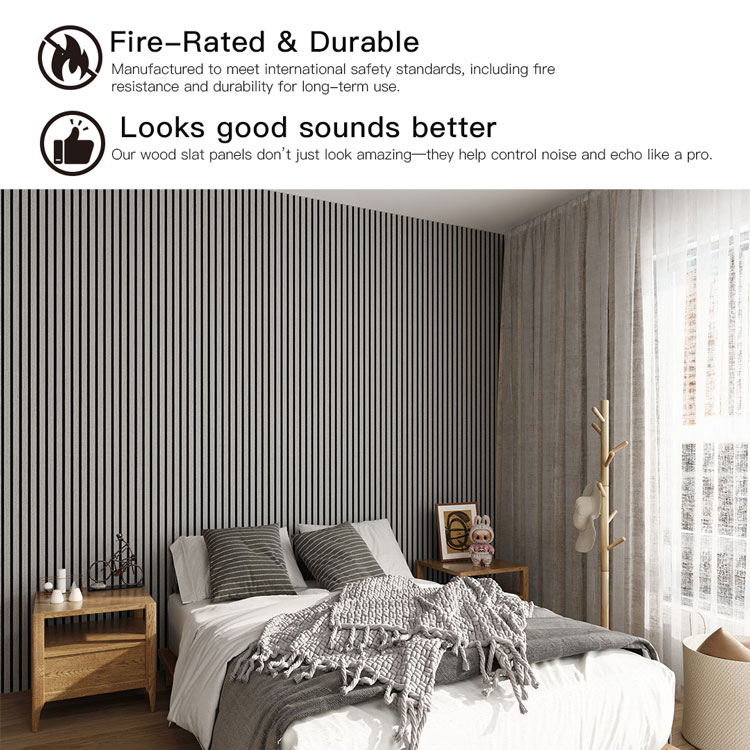
As sustainability becomes a core consideration in modern architecture and interior design, many designers, developers, and homeowners are asking an important question: Are acoustic panels eco-friendly and sustainable?

The short answer is yes—when they are designed and manufactured responsibly. In this article, we explore what makes acoustic panels sustainable, which materials matter most, and how professional manufacturers ensure both acoustic performance and environmental responsibility.

Leading Acoustic Wood Slat Panel Distributor


What Makes an Acoustic Panel Eco-Friendly?

An eco-friendly acoustic panel is defined by more than just sound absorption. True sustainability involves the entire product lifecycle, including:

  • Raw material sourcing

  • Manufacturing processes

  • Product durability and lifespan

  • Indoor air quality impact

  • End-of-life recyclability

High-quality acoustic panels are designed to improve acoustic comfort without compromising environmental standards.


Sustainable Materials Used in Acoustic Panels

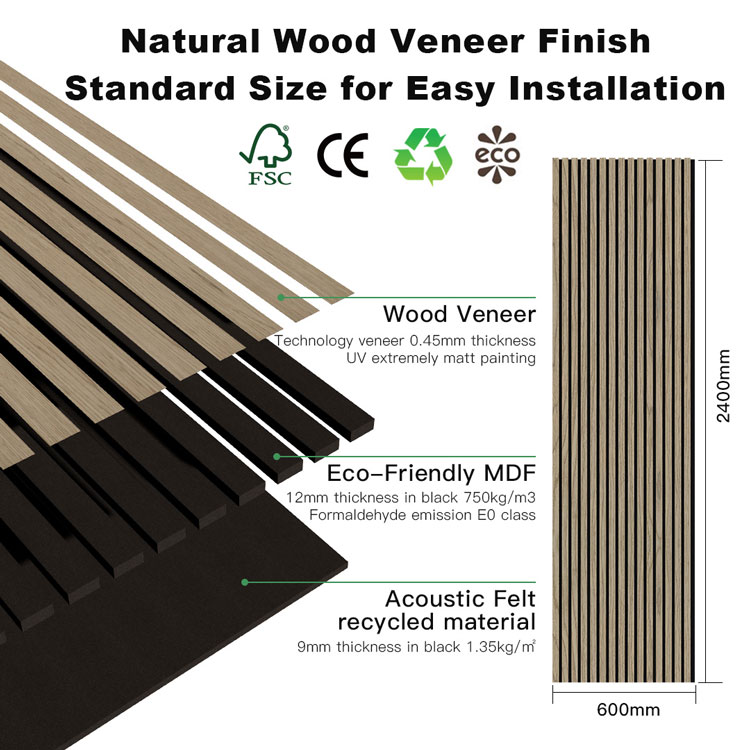
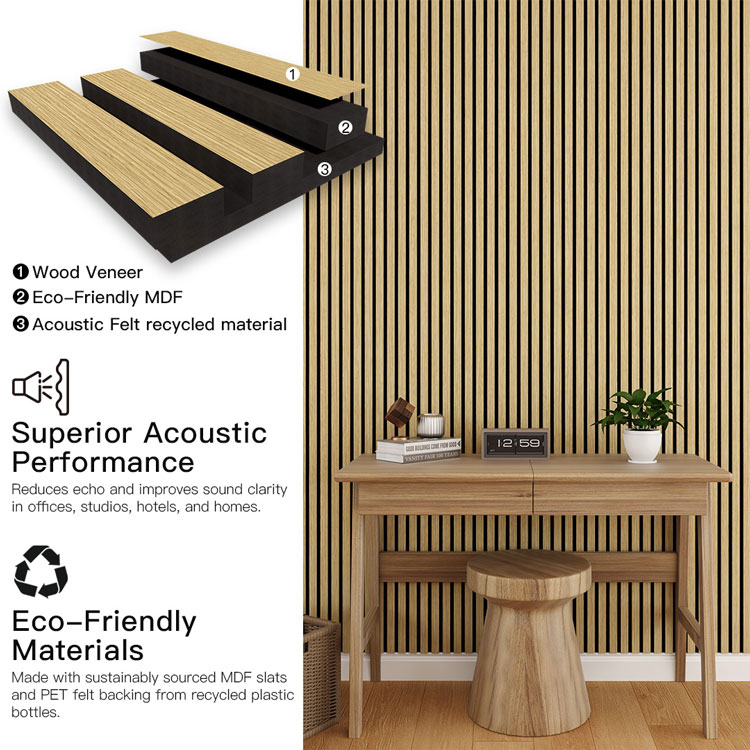
1. Wood Slat Acoustic Panels from Responsible Sources

Wood slat acoustic panels are highly popular due to their natural appearance and excellent acoustic performance. When produced using:

  • Engineered wood or MDF from sustainable forestry

  • Optimized material usage to reduce waste

  • Long-lasting surface finishes

they become a renewable and eco-conscious wall solution.

Wood-based acoustic panels also store carbon throughout their lifecycle, contributing positively to sustainable building goals.


2. Polyester Fiber Acoustic Panels (PET Panels)

Polyester fiber acoustic panels are widely recognized as one of the most sustainable acoustic materials available today.

Key eco-friendly advantages include:

  • Made from recycled PET plastic bottles

  • Fully recyclable

  • Low VOC emissions

  • Lightweight and energy-efficient to transport

These panels offer excellent sound absorption while supporting circular economy principles.


3. Low-Emission & Safe Indoor Materials

Eco-friendly acoustic panels should contribute to healthy indoor environments by:

  • Minimizing formaldehyde emissions

  • Using non-toxic adhesives

  • Meeting international indoor air quality standards

This is especially important for offices, schools, homes, and public buildings.


Manufacturing Processes Matter

Sustainability is not only about materials—it also depends on how acoustic panels are produced.

Professional manufacturers focus on:

  • Efficient material utilization

  • Energy-saving production lines

  • Waste reduction and recycling systems

  • Consistent quality control to reduce product replacement

Well-made acoustic panels last longer, reducing environmental impact over time.


Guangdong Leeyin Acoustics: Sustainability with Scale and Expertise

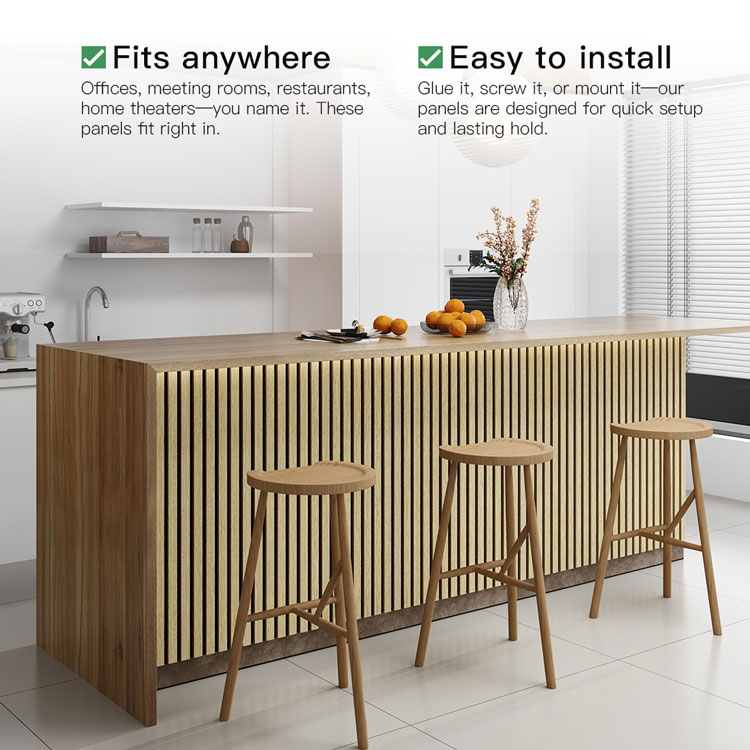
As a leading manufacturer and exporter of wood slat acoustic panels in China, Guangdong Leeyin Acoustics integrates sustainability into both product design and production management.

Our Strengths Include:

  • 20,000㎡ modern manufacturing facility

  • Large-scale production capacity for global supply

  • Specialized focus on wood slat wall panels and acoustic panels

  • Strict quality management aligned with international standards

  • Stable, long-term export experience in global markets

By combining efficient manufacturing with responsible material selection, we help clients achieve both acoustic excellence and sustainable building goals.


Are Acoustic Panels Worth It for Green Buildings?

Yes. Eco-friendly acoustic panels:

  • Improve sound comfort and productivity

  • Enhance interior aesthetics using natural materials

  • Support green building certifications

  • Offer long service life with minimal maintenance

For architects and developers, acoustic panels are a functional and sustainable investment.


How to Choose Sustainable Acoustic Panels

When selecting acoustic panels, look for:

  • Recycled or renewable core materials

  • Low-emission certifications

  • Long product lifespan

  • Experienced manufacturers with export and quality control expertise

A reliable supplier ensures sustainability is verified, not just claimed.


Conclusion

So, are acoustic panels eco-friendly and sustainable?
Absolutely—when they are thoughtfully designed and professionally manufactured.


With advanced production facilities, international quality management, and deep expertise in wood slat acoustic panels and sound-absorbing solutions, Guangdong Leeyin Acoustics provides acoustic products that balance performance, aesthetics, and sustainability for modern spaces worldwide.

When choosing acoustic panels, most buyers focus on surface design, thickness, or installation. However, one of the most critical factors affecting acoustic performance, durability, and application suitability is the panel core material.

Two of the most commonly used cores today are MDF (Medium-Density Fiberboard) and Polyester Fiber (PET Fiber). But which one is better?

The answer depends on how the panel is used, where it is installed, and what level of performance is required. In this article, we compare MDF and polyester fiber cores in detail to help you make the right decision.

 Custom Solutions Acoustic Wood Slat Panels


Understanding Acoustic Panel Core Materials

The core material of an acoustic panel directly influences:

  • Sound absorption efficiency

  • Structural stability

  • Durability and lifespan

  • Fire resistance and safety compliance

  • Visual and architectural applications

Let’s look at how MDF and polyester fiber perform across these key factors.


What Is MDF in Acoustic Panels?

MDF (Medium-Density Fiberboard) is a highly engineered wood-based material made from compressed wood fibers bonded under high pressure.

In acoustic applications, MDF is commonly used in:

Key Characteristics of MDF:

  • High density and uniform structure

  • Excellent dimensional stability

  • Strong load-bearing capacity

  • Ideal for precision machining and slat spacing


What Is Polyester Fiber in Acoustic Panels?

Polyester fiber (often PET fiber) is a synthetic, non-woven acoustic material made from recycled or virgin polyester.

It is widely used in:

  • Fabric-wrapped acoustic panels

  • Felt acoustic boards

  • Lightweight sound absorption panels

Key Characteristics of Polyester Fiber:

  • Lightweight and flexible

  • Good mid-to-high frequency absorption

  • Easy to install

  • Often eco-friendly (recycled PET)


MDF vs Polyester Fiber: Acoustic Performance Comparison

1. Sound Absorption Efficiency

  • Polyester Fiber
    Excellent at absorbing mid and high frequencies due to its porous structure.

  • MDF (in wood slat panels)
    MDF itself is reflective, but when combined with slat spacing and acoustic backing, it creates a hybrid system that offers controlled diffusion and absorption.

👉 Best Result:
MDF-based wood slat panels with PET felt or mineral wool backing provide balanced acoustic control, not just absorption.


2. Structural Strength and Stability

  • MDF
    High-density MDF offers superior rigidity, ensuring panels remain flat, aligned, and stable over time—especially important for large wall installations.

  • Polyester Fiber
    Lightweight but less rigid; prone to bending or deformation if unsupported.

👉 Winner: MDF
Ideal for architectural wall systems and long-term commercial use.


3. Aesthetic and Design Flexibility

  • MDF
    Perfect for wood veneer finishes, CNC cutting, and precise slat designs. Creates a premium architectural look.

  • Polyester Fiber
    Limited design options; typically flat panels or felt shapes.

👉 Winner: MDF
Preferred for modern interiors where design and acoustics must coexist.


4. Fire Safety and Compliance

  • MDF (treated)
    Can meet international fire standards when produced with certified treatments and finishes.

  • Polyester Fiber
    Fire performance varies significantly by grade and manufacturer.

👉 Key Point:
Fire performance depends heavily on manufacturing standards, not just material type.


5. Durability and Lifespan

  • MDF
    Long-lasting, resistant to wear, ideal for high-traffic commercial spaces.

  • Polyester Fiber
    Softer material; more susceptible to surface damage.

👉 Winner: MDF for commercial and long-term projects.


MDF vs Polyester Fiber: Application Scenarios

Application Better Choice
Wood slat acoustic wall panels MDF
Architectural interiors MDF
Offices & commercial spaces MDF
Lightweight acoustic treatment Polyester Fiber
Temporary installations Polyester Fiber
Budget acoustic solutions Polyester Fiber

Why MDF Is the Preferred Core for Wood Slat Acoustic Panels

In wood slat acoustic panels, MDF plays a critical structural and acoustic role:

This is why professional manufacturers consistently choose high-density MDF for premium wood slat acoustic systems.


Manufacturing Quality Makes the Real Difference

Material choice alone does not guarantee performance. How the panel is manufactured is just as important.

At Guangdong Leeyin Acoustics, we specialize in:

Our manufacturing strengths include:

This ensures every panel delivers consistent acoustic performance, structural reliability, and visual excellence.


Final Verdict: MDF or Polyester Fiber?

There is no one-size-fits-all answer—but for wood slat acoustic panels and architectural acoustic applications, MDF is the superior core material.

For projects that demand both acoustic performance and high-end aesthetics, MDF-based wood slat acoustic panels remain the industry standard.

1. Compliance with International Building Codes

Many countries require acoustic panels used in public and commercial spaces to meet strict fire standards, such as:

  • EN 13501-1 (Europe)

  • ASTM E84 / Class A (USA)

  • BS 476 (UK)

Fire-rated acoustic panels are often mandatory in:

  • Offices and coworking spaces

  • Hotels and hospitality projects

  • Schools and universities

  • Cinemas, theaters, and studios

  • Shopping malls and airports

Choosing non-compliant panels can lead to project delays, failed inspections, or legal risks.

High-Quality Supplier Acoustic Wood Slat Panels


2. Enhanced Safety for Occupants

Acoustic panels cover large surface areas. In the event of a fire, low-quality materials can:

  • Ignite quickly

  • Spread flames rapidly

  • Produce toxic smoke

Fire-resistant acoustic panels help:

  • Slow down fire spread

  • Reduce smoke emission

  • Provide extra evacuation time

This makes them an essential component of responsible architectural and interior design.


3. Essential for Commercial & Public Projects

While residential users may prioritize aesthetics, commercial buyers focus on risk control. Architects, contractors, and developers increasingly demand:

  • Fire-retardant wood slat acoustic panels

  • Tested and certified acoustic materials

  • Full documentation for project approval

Fire resistance is no longer optional—it is a core purchasing criterion.


Fire Resistance in Wood Slat Acoustic Panels

Wood slat acoustic panels combine natural wood aesthetics with acoustic functionality. However, natural wood must be properly treated to meet fire standards.

Professional manufacturers achieve this by:

  • Using fire-retardant MDF or engineered wood slats

  • Applying fire-resistant surface treatments

  • Pairing wood slats with Class B or Class A polyester fiber acoustic backing

When engineered correctly, wood slat panels can offer both excellent sound absorption and reliable fire performance.


How Guangdong Leeyin Acoustics Ensures Fire Safety

As a leading manufacturer and exporter of wood slat acoustic panels in China, Guangdong Leeyin Acoustics integrates fire resistance into every stage of production.

Our Manufacturing Advantages:

  • 20,000㎡ modern factory with large-scale production capacity

  • Advanced production lines for wood slat wall panels and acoustic panels

  • Strict quality control systems aligned with international standards

  • Fire-retardant material options tailored for different market requirements

What We Offer:

  • Fire-rated wood slat acoustic panels

  • Polyester fiber acoustic panels with tested fire performance

  • Customized solutions for commercial and export projects

  • Stable quality for large-volume international orders

Our products are widely exported and trusted by clients seeking safe, compliant, and high-performance acoustic solutions.


What Buyers Should Look for in Fire-Resistant Acoustic Panels

Before purchasing acoustic panels, always confirm:

  • Fire rating classification and test standards

  • Core material fire performance

  • Manufacturer’s quality management system

  • Export experience and certification support


Choosing a professional manufacturer ensures both acoustic effectiveness and safety compliance.

Weed Barrier Installation Guide

Weed Barrier Installation Guide | 5oz Nonwoven Fabric | Backyard Vegetable Garden Slo

We have collected the most common questions from hundreds of home gardeners and provide direct answers based on engineering experience to help you get it right the first time.


Q1: Can weed barrier fabric completely stop weeds?

A: It can suppress nearly 100% of weeds germinating from the soil below. High-quality weed barrier fabric works by physically blocking light. Note: 1) Existing weed seeds on the soil surface may germinate but will die quickly without soil; 2) Seeds deposited by wind or birds in the mulch (e.g., gravel) on top of the fabric may still grow, but this is not a failure of the fabric.


Q2: Should I choose woven or nonwoven weed barrier fabric?

A: For most home gardens, needle-punched nonwoven weed barrier fabric is the more versatile and economical choice. It balances permeability, root resistance, and adequate strength. Woven weed barrier fabric offers higher strength and is better suited for high-load areas like driveways, under parking areas, or on steep slopes.


Q3: Can water still seep through after laying the fabric?

A: Yes, but you must choose a permeable fabric. Our 5oz nonwoven landscape fabric has a vertical permeability rate > 20 l/m²/s, meaning even during heavy rain, water can infiltrate quickly without causing surface ponding or runoff.


Q4: How to properly secure it, especially on a slope?

A: This is crucial for success. You must use "U"-shaped landscape fabric staples, not regular tent pegs. On flat ground, secure every 1-1.5 meters. On a slope, spacing should be tighter at 0.5-1 meter. Start installation from the top of the slope, and orient the roll perpendicular to the slope direction (short side up/down), with upper sheets overlapping lower ones like roof shingles.


Q5: How long does weed barrier fabric last?

A: Lifespan depends on ultraviolet (UV) stabilizer content. Cheap products (with little to no UV protection) can become brittle in 1-2 years. Our product contains ≥2% carbon black, providing an expected service life of 5-8 years in temperate climates (like most of North America). At end-of-life, it gradually fragments, eliminating difficult removal.


Q6: Can I put soil directly on top of the fabric to plant flowers?

A: Absolutely not. You must apply at least 5-7 cm of inorganic mulch (e.g., gravel, lava rock, pine bark) on top of the fabric. Adding soil will clog the pores, destroy permeability, and eventually allow weeds to root in the soil layer.


Q7: How to install around trees or shrubs?

A: Cut an "X" or "Y" shape centered on the trunk, drape the fabric over, then overlap and staple the cut edges. Crucially, leave a fabric-free zone of at least 15-20 cm in diameter around the trunk, covered with mulch, to prevent bark abrasion and allow for root respiration.


Q8: Do I need to remove it in winter? Will freeze-thaw cycles damage it?

A: No. High-quality fabric has good weatherability and can withstand freeze-thaw cycles. Leaving it in place helps suppress winter and early spring weeds.


Q9: Is it environmentally friendly?

A: From a lifecycle perspective, yes. It significantly reduces herbicide use and soil erosion, and its long service life minimizes waste. Our products use virgin polypropylene, are free of heavy metals, and are recyclable.


Q10: Where do most mistakes happen?

A: Two common errors:

1) Failing to prepare a smooth, clear base: Leaving stones or roots will eventually puncture the fabric.

2) Not covering it immediately: Exposing the fabric to direct sunlight without cover accelerates its degradation. Correct sequence: Clear → Level → Lay & Secure → Cover Immediately.


Heavy-Duty Weed Barrier

Heavy-Duty Weed Barrier |140gsm Woven Polypropylene|Commercial Blueberry Plantation


Specific Application Scenario:

On a 4-hectare highbush blueberry farm in Washington State, USA, with well-drained sandy loam soil and annual rainfall of approximately 1000 mm, the farmer faced three major challenges: 1) High annual cost of replenishing bark mulch; 2) Weed breakthrough during the rainy season, limiting herbicide use; 3) Excessive evaporation from drip irrigation.

Experimental Protocol and Quantitative Comparison (5-Year Data):

The farm was divided into two comparison zones. Zone A continued using traditional hardwood bark mulch (10 cm thickness). Zone B was installed with our 140 gsm woven polypropylene weed barrier fabric. Key metrics over five years are compared below:


Comparison Dimension


Zone A: Traditional Bark Mulch Zone B: Heavy-Duty Landscape Fabric Data Source & Impact


Initial Material & Installation Cost


$2,000/hectare $3,500/hectare Initial investment for Zone B is 75% higher.


Annual Maintenance Cost


High: $1,200/hectare/year (mulch replenishment + manual weeding)


Very Low: <$100/hectare/year (edge inspection only)


Over five years, Zone B's cumulative total cost is already lower than Zone A's.


Weed Control Efficacy


Moderate. Requires an average of 3 mechanical or manual weeding sessions per year.


Excellent. Nearly 100% suppression of inter-row weeds, only requiring attention around plants.


Zone B saved over 90% of weeding labor.


Soil Moisture Retention


Fair, but bark itself absorbs and evaporates moisture.


Superior. After 7 consecutive rainless days, soil moisture at 15cm depth was 22% higher in Zone B than in Zone A.


Directly reduced irrigation frequency by 15%, saving water and stabilizing the root zone.


Impact on Blueberry Yield


Baseline yield.


Average yield increase of 12%. Due to reduced root competition and stable moisture, fruit uniformity was also higher.


At local prices, this translates to an additional ~$3,600/hectare/year revenue for Zone B, quickly offsetting the initial investment.


Service Life & Disposal


Requires significant replenishment every 1-2 years; fully decomposes and needs clearing after 5 years.


Expected lifespan of 8-10 years. Testing after 5 years showed tensile strength retention exceeding 85%.


Zone B avoids the cyclical issue of large-scale organic waste disposal.


Conclusion and Procurement Advice:

For high-value perennial crops (e.g., blueberries, raspberries, wine grapes), investing in high-quality heavy-duty woven weed barrier fabric is a high-return agricultural infrastructure investment. The return is not only visible in reduced weeding and water costs but, more importantly, in enhanced crop yield and quality. When procuring, key questions for suppliers should be: the product's weight (gsm), ultraviolet (UV) stabilizer content, and whether they provide durability data specific to agricultural chemicals.


keyboard_arrow_up