In today's highly competitive market, clients need more than just products; they need complete, reliable, and efficient solutions.


Guangdong Leeyin Acoustics is a trusted one-stop acoustic panel manufacturer, dedicated to helping global brands and designers turn their visions into reality.

Customizable Acoustic Wood Slat Panels Supplier

Here are the reasons why global clients choose Leeyin's one-stop customization service:


🧩 1. End-to-End Customization from Design to Delivery


We offer end-to-end customization services—from wood veneer selection, panel size and acoustic performance design, to carton packaging, label printing, and sample box customization.


Every detail reflects your brand image and project style.


🏭 2. Strong Production Capacity


Leeyin boasts over 20,000 square meters of advanced production facilities and a modern quality management system, ensuring the highest quality for every order.


Our stringent international standards guarantee reliable quality—from raw materials to finished panels, we control the entire process.


🚀 3. Global Expertise, Local Support


As a leading exporter of wood strip wall panels in China, we have established partnerships with clients in Europe, North America, Asia, and beyond.


Our professional team provides rapid communication, technical support, and efficient logistics services to ensure your projects run smoothly.


🎯 4. Leeyin Streamlines Your Project Process


From design consultation to production and export, Leeyin provides everything you need—saving you time, costs, and effort.


This is why many global brands trust Leeyin and consider it their preferred sound-absorbing panel partner.

Reinforcing steel bars, hailed as the "skeleton" of a building, directly impact the safety, durability, and stability of concrete structures through their binding quality. Even a seemingly insignificant negligence in binding can sow the seeds of future structural problems. For project managers, technical supervisors, and frontline workers, mastering the core principles of reinforcing steel binding and avoiding common errors is crucial for ensuring project quality. This article will delve into typical errors in reinforcing steel binding operations and provide practical prevention and optimization methods to help you build a rock-solid building framework.
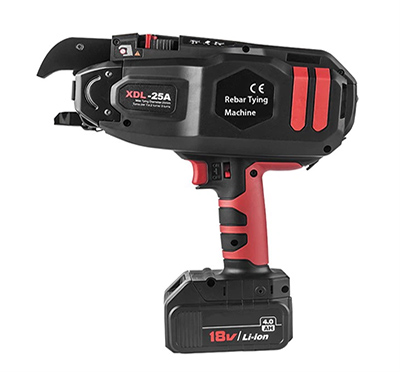
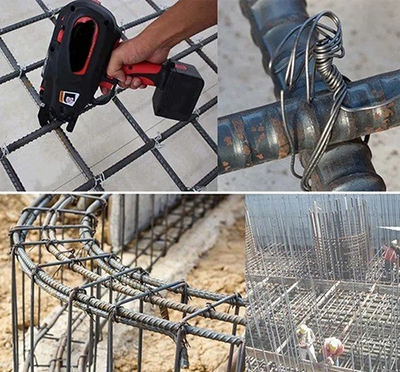
  

Rebar Tying Machines AutomaticRebar Tying Machines Automatic


I. Core Error Area: Uncontrolled Positioning and Spacing

Error Manifestations:

* Uneven Reinforcement Spacing: Overly dense reinforcement makes concrete pouring difficult, easily resulting in honeycombing and voids; overly sparse reinforcement cannot effectively bear loads, leading to cracking.

* Misalignment of Main Reinforcement Bars: Main reinforcement bars in beams, columns, and slabs are not placed in the correct positions as required by the drawings, greatly affecting the bending and compressive strength of the components.

Consequences: Reduced structural load-bearing capacity, inability to guarantee design strength, and serious safety hazards.

Optimized Solutions:

1. Use Standardized Spacing Fixtures: Before binding, prefabricate calipers or positioning bars with the same spacing as the design. During binding, use them as a ruler to ensure the accurate positioning of each reinforcement bar.

2. Fabricate and Fix Reinforcement Positioning Frames: For components such as beams and columns, simple positioning frames can be welded off-site before placing the main reinforcement bars inside the frames for binding, effectively preventing the reinforcement bars from shifting during construction.

3. Strengthen process inspection and acceptance: Before concrete pouring, a measuring tape must be used to check the spacing of the reinforcing bars and the thickness of the protective layer in each area to ensure that they meet the design requirements.


II. The "Hidden Killer" of Lap Joints and Anchorages

Error Manifestations:

* Insufficient Lap Length: To save materials, the lap length of reinforcing bars is arbitrarily shortened.

* Incorrect Lap Location: Lapping is performed at points of maximum stress (such as beam ends or column tops), or the lap ratio within the same cross-section exceeds the standard.

* Insufficient Anchorage Length: The reinforcing bar does not extend sufficiently into the support, failing to effectively transfer stress.

Consequences: The reinforcing bar cannot effectively transfer stress, creating weak points in the structure, making it highly susceptible to failure at the lap/anchorage points.

Optimized Solutions:

1. Strictly Follow Drawings and Memorize Specifications: Before construction, technicians must provide detailed instructions to the work team, clearly defining the lap and anchorage lengths for reinforcing bars of different diameters and in different locations. Key data should be compiled into simple charts and posted on the construction site.

2. Use Color Coding: Mark the ends of reinforcing bars with different lap lengths using different colors of paint for easy worker identification and inspection. 3. Use mechanical connections or welding: When connecting important components or large-diameter steel bars, mechanical connection methods such as straight threaded sleeves should be given priority. These methods provide more reliable connection quality and can avoid lap joint errors.

3. Use mechanical connections or welding: When connecting important components or large-diameter steel bars, mechanical connection methods such as straight threaded sleeves should be given priority, as they provide more reliable connection quality and can avoid lap joint errors.


III. Binding Secureness: More Than Just "Tying"

Incorrect Manifestations:

* Insufficient or Missing Binding Points: Especially at the corners of rebar intersections.

* Arbitrary Twisting Direction of Binding Wire: The ends of the binding wires are not bent inwards towards the concrete, but outwards, making them prone to rusting and creating seepage channels.

* Loose Binding Wires: Rebars easily shift under foot traffic or concrete impact.

Consequences: Poor overall integrity of the rebar cage, unable to work together effectively, and losing the overall load-bearing capacity assumed in the design.

Optimized Solutions:

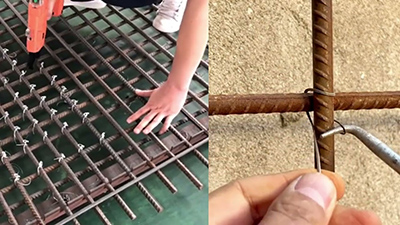
1. Follow the "Figure-Eight" Binding Method: For bidirectional rebar meshes, ensure that every intersection is securely bound.

2. Standardize Binding Wire Orientation: Clearly specify and bend the ends of the binding wires towards the inside of the concrete. This is a crucial step reflecting construction details and quality.

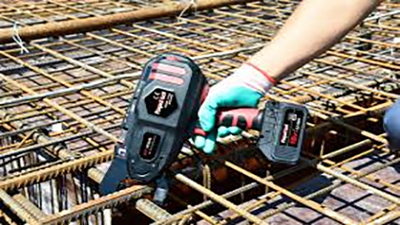
3. Use Dedicated Binding Tools: Using high-quality binding guns or pliers not only improves efficiency but also ensures tightness and secure binding. Conduct a "tightening test" and manually check the security of key nodes.


IV. Protective Layer Thickness: The Structure's "Golden Outer Garment"

Errors:

* Failure to use or incorrect use of spacers: Spacers are crushed due to insufficient strength, spaced too far apart, or even replaced directly with crushed stone.

* Improper placement of spacers: Spacers for the bottom reinforcement of beams and slabs are stepped on and removed, causing the reinforcement to adhere to the formwork.

Consequences: Insufficient protective layer leads to easy corrosion of the reinforcement, significantly reducing durability; excessive protective layer reduces the effective height of the component, lowering its load-bearing capacity.

Optimized Solutions:

1. Use high-strength dedicated spacers: Use customized cement mortar spacers, plastic clip-on spacers, or hub-type spacers with the same or higher strength as the concrete design strength.

2. Ensure proper spacer placement: The spacing between spacers should be 0.8-1 meter, with appropriate densification below the stressed reinforcement. After binding, a designated person should check whether the spacers are missing or in good working order.

3. Promote the use of stirrups: For the upper layer of steel bars in floor slabs, continuous stirrups must be used for support to ensure that they do not sink during the pouring process.
 

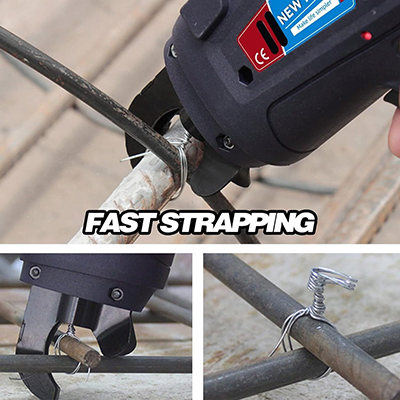
Rebar tyingRebar tying


To systematically avoid the above errors, the following core processes should be followed:

1. Pre-construction control (preparation): Detailed design and technical briefing – Thoroughly understand the drawings, lay out complex details, and provide visual and operational briefings to all workers.

2. In-construction control (execution): Standardized operations and process inspection – Promote the use of positioning clamps, high-strength spacers, and other tooling; construction workers and quality inspectors should supervise and inspect to promptly identify and correct problems.

3. Post-construction control (acceptance): Strict three-inspection system – Team self-inspection, inter-process handover inspection, and quality inspector-led inspection; complete the acceptance of all concealed rebar works before concrete pouring.


Remember: High-quality rebar tying is not only a reflection of technical skill but also a demonstration of responsibility. Every standardized operation contributes to the safety of the building. Starting with details and optimizing processes, let us jointly build a safer and stronger future.

 

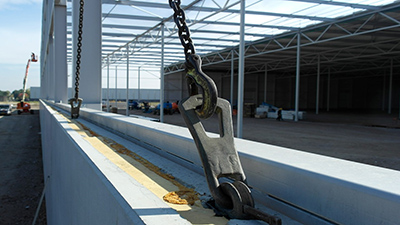
Erection AnchorsErection Anchors


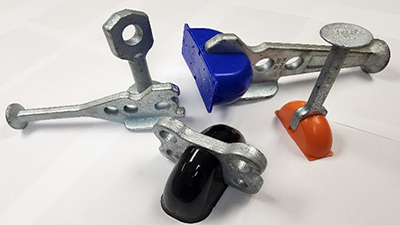
Anchor bolts are connectors used to securely fix precast components to concrete foundations or other structures. During the installation of precast components, anchor bolts act as a bridge, ensuring a tight connection between the precast component and the foundation. Depending on the installation method, anchor bolts can be divided into pre-embedded anchor bolts and post-installed anchor bolts.

Pre-embedded Anchor Bolts: Pre-embedded anchor bolts are installed inside the precast component during the precast component manufacturing process. These anchor bolts are fixed in the designated position when the precast component is poured with concrete. After the component is installed on site, it is tightly connected to the foundation using nuts and other connectors. The advantage of pre-embedded anchor bolts is their high installation precision, effectively ensuring the installation quality of the precast component.

Post-installed Anchor Bolts: Post-installed anchor bolts are installed into the foundation after the precast component is installed on site, using methods such as drilling. These anchor bolts are suitable for scenarios requiring flexible adjustment of the installation position. Post-installed anchor bolts offer relatively flexible installation, but it is necessary to ensure the accuracy and depth of the drilling to guarantee the anchor bolt's anchoring effect.


Why are they so crucial in building construction?

If prefabricated components are the "flesh and blood" of a building, then anchor bolt connections are its "skeleton." Their importance is reflected in the following vital aspects:

1. Fundamental Guarantee of Structural Safety: Resisting Loads and Disasters

This is the most core and indispensable responsibility of anchor bolts.

Load Transfer: Buildings must withstand their own weight, service loads, wind loads, snow loads, and even seismic forces. These forces need to be transferred between various components through joints. As a key part of the joint, anchor bolts bear complex stresses such as tension, shear, and bending, ensuring that the entire structural system works collaboratively, rather than disorganized.

Earthquake Resistance and Disaster Prevention: During an earthquake, buildings experience enormous horizontal forces and deformations. Anchor bolts embedded in column bases and beam ends must have sufficient ductility and strength to allow the structure to undergo a certain degree of plastic deformation to dissipate seismic energy, while preventing component detachment or overturning, buying precious time for escape. The failure of one anchor bolt can lead to the destruction of the entire joint, subsequently triggering a cascading collapse.

2. Core Technologies for Prefabricated Construction: The Cornerstone of Precision and Efficiency

The advantages of prefabricated buildings lie in their speed and accuracy, which heavily rely on anchor bolts.

Precision Control: Pre-embedded anchor bolts are installed in a factory environment, achieving millimeter-level positioning accuracy. This enables on-site "hole-to-hole" installation, allowing large components to be installed seamlessly, significantly reducing on-site adjustments and cutting work.

Improved Efficiency: Reliable anchor bolt connections mean rapid tightening. Workers only need to hoist the components into place, insert high-strength bolts, and tighten them to complete the main structural connections, significantly shortening the construction period.

3. Ensuring Building Integrity and Durability

Overall Stability: Through the effective connection of anchor bolts, dispersed prefabricated components are integrated into a spatial structure with sufficient rigidity and stability to collectively resist external forces.

Sealing and Corrosion Protection: Many anchor bolt connection nodes also integrate sealing strips and anti-corrosion designs to prevent moisture and harmful gases from penetrating the connection area, protecting the internal steel and prestressing tendons, and extending the building's lifespan.


Although small, anchor bolts play a crucial role in the installation of precast components. They not only ensure the installation accuracy and stability of precast components but also improve construction efficiency and enhance the seismic performance of buildings. In modern building construction, anchor bolt installation has become an indispensable part. However, please note the following key points in construction:

1. Anchor Bolt Selection and Design

During the design phase of precast components, it is necessary to select the appropriate anchor bolt type based on the component's intended use and stress conditions. Pre-embedded anchor bolts are suitable for scenarios requiring high precision and fixed installation positions; post-installed anchor bolts and chemical anchor bolts are suitable for scenarios requiring flexible adjustment of installation positions.

2. Installation Accuracy

The accuracy of anchor bolt installation directly affects the installation quality of precast components. During installation, high-precision measuring tools are required to ensure the accurate positioning of the anchor bolts. For pre-embedded anchor bolts, the pre-embedded position of the anchor bolts must be strictly controlled during the production of precast components.

3. Quality Inspection

After installation, the installation quality of the anchor bolts needs to be inspected. The anchoring force of anchor bolts can be ensured to meet design requirements through methods such as pull-out tests and ultrasonic testing. For chemical anchor bolts, the curing status of the chemical adhesive also needs to be tested to ensure the reliability of the anchor bolt.

4. Corrosion Protection Anchor bolts are typically exposed to complex environments and are susceptible to corrosion. Therefore, anti-corrosion treatments such as galvanizing and applying anti-corrosion paint are necessary to extend the service life of the anchor bolts.

With the continuous emergence of new technologies such as welding and mechanical connection, why does steel wire coil for rebar tying still occupy an absolutely mainstream position? Today, let's explore its main advantages in depth.


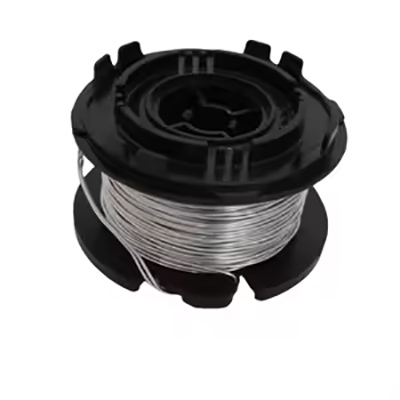
Rebar Tying Wire CoilsRebar Tying Wire Coils


1. Ultimate Flexibility and Adaptability

Building structures are not simply a combination of straight lines; they are full of complex nodes, corners, and irregularly shaped components. Reinforcing steel wire coils act like an all-around "engineering tailor," capable of handling any complex shape.

Three-Dimensional Flexible Winding:The wire can be wound around the intersections of reinforcing bars in any direction, making it particularly suitable for irregularly shaped components, dense beam-column joints, and curved walls—areas where welding is difficult or sleeves cannot be screwed in.

No Heat-Affected Zone:Avoids tempering, embrittlement, and deformation of the base material caused by high welding temperatures, maintaining the original design mechanical properties.

Compatible with All Reinforcing Steel Types:Whether it's 400 MPa ordinary threaded steel, 500 MPa high-strength steel, or seismic-resistant "E" grade steel or stainless steel reinforcement, the wire coils treat them all equally.


2. Unparalleled Economic Efficiency

In large-scale projects, cost control is paramount. Rebar tying wire coils offer a significant advantage in this regard.

Extremely Low Tool Costs: The required tools are very simple—a common hook or automatic tying gun, plus coils of wire. This initial investment is negligible compared to expensive specialized equipment such as welding machines and hydraulic pliers.

Low Material Costs: The tying wire itself is annealed low-carbon steel wire, inexpensive and widely available. While the cost per node is low, the sheer volume used throughout the building results in substantial overall cost-effectiveness.

Low Skill Barrier: Training a qualified rebar tying worker is far faster than training a skilled welder or mechanical connection operator, significantly reducing labor costs and training time.


3. Reliable Synergistic Performance

The essence of reinforced concrete structures lies in the "synergistic work" between the steel reinforcement and the concrete. Lap connections perfectly serve this core principle.

Preservation of Reinforcement Properties: Lap connections do not create a heat-affected zone in the parent material of the steel reinforcement, avoiding the risks of brittleness and strength reduction that can occur with welding. They fully preserve the original mechanical properties of the steel reinforcement.

Allowing Minor Slippage: Under ultimate loads, lap connections allow for minor slippage in the steel reinforcement, which is actually a beneficial "stress redistribution" mechanism. This avoids stress concentration, making the structure more ductile and exhibiting better seismic performance. In contrast, welded joints are too rigid and often become brittle upon failure.


4. Exceptional Construction Efficiency

For large-area, high-density steel mesh and frameworks, the binding efficiency is extremely high.

Assembly Line Operation: Workers can be distributed across different areas to perform binding operations simultaneously, forming a highly efficient assembly line. Especially with the widespread adoption of automatic binding guns, binding efficiency has seen a qualitative leap; a hook and pull takes less than a second, far exceeding the speed of welding.

No Pre-Preparation Required: Binding eliminates the need for tedious pre-preparation work such as cleaning weld joints and preheating; it's ready to use immediately, significantly saving time between processes.


5. Green and Sustainable: An Overlooked Low-Carbon Highlight

Energy Consumption Comparison—The entire process from steelmaking to galvanizing, each kilogram of binding wire emits approximately 2.3 kg of CO₂, while a weld of equivalent strength requires 4.1 kg (including welding materials and electricity), resulting in a 44% reduction in carbon footprint.

No Waste Gas, No Sparks—On-site PM2.5 and manganese dust emissions are zero, eliminating the need for investment in welding fume purification equipment. 100% Recyclable—During demolition, the steel wire and rebar enter the scrap steel recycling system together, while the alloy steel of the sleeve is mixed with the main steel type, reducing its recycling grade.


In summary, steel wire coils for rebar tying solve the core problem of "keeping the rebar in the correct position" in reinforced concrete structures with minimal cost, tools, and time; while also considering quality, low carbon footprint, and economic efficiency throughout the entire life cycle. With the emergence of high-zinc coated corrosion-resistant steel wire and mechanical pushing tying devices, this traditional method continues to evolve. For modern engineering projects that prioritize speed, cost-effectiveness, and environmental friendliness, steel wire tying is not a transitional solution but rather the optimal long-term solution.

keyboard_arrow_up